
Customization of Mobile Ecological Toilets in Gansu
The customization of mobile ecological toilets in Gansu requires comprehensive consideration of factors such as the process, materials, functions, scenarios, and manufacturer prices.
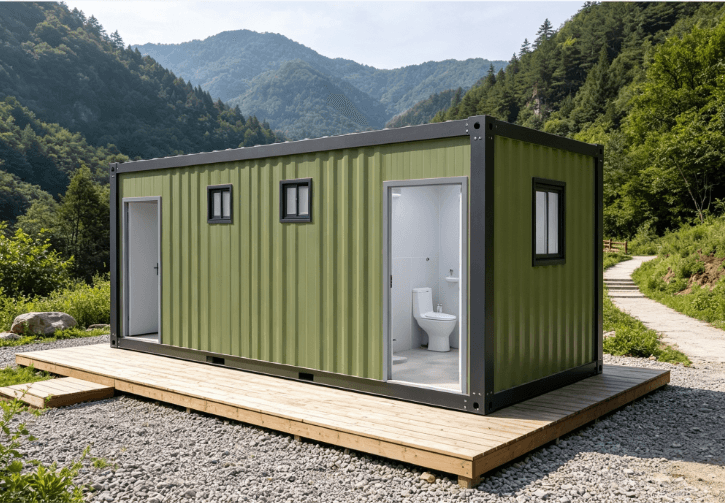
I. Customization Process Customization begins with demand communication. Users need to clarify the usage scenario (e.g., long-term construction sites or short-term exhibitions), expected foot traffic, sewage disposal methods (with or without a septic tank or sewage pipeline), power supply conditions, and budget range. Based on this information, manufacturers provide a preliminary plan, including the number of toilets, layout, dimensions, and accessibility facility configurations. After plan confirmation, the design and production phases commence: structural design covers wall material selection, internal space allocation, and pipeline layout; production involves board cutting, welding, assembly, and equipment installation, with a typical cycle ranging from a few days to two weeks, depending on order complexity.
II. Material Selection Mainstream materials include metals (galvanized steel sheets, stainless steel), engineering plastics (HDPE, PP), and composite panels (fiberglass, color-steel sandwich panels). Metal materials offer high strength and good fire resistance but have high transportation costs due to their weight; engineering plastics are corrosion-resistant and easy to clean, suitable for humid environments; composite panels balance thermal insulation, sound insulation, and lightweight properties but require attention to load-bearing limits. Users should make a comprehensive choice based on local climate, usage frequency, and maintenance conditions, such as prioritizing engineering plastics in high-humidity areas and selecting composite panels with enhanced insulation in cold regions.
III. Function Configuration Basic functions include flushing systems (manual, foot-operated, or sensor-based), sewage pipelines, and ventilation fans; optional functions cover lighting, handwashing stations, exhaust fans, air conditioners, storage shelves, and baby care tables. In cold regions, insulation layers or electric tracing tapes need to be installed for freeze protection. Function configuration should adhere to the principle of practicality to avoid a sharp increase in power and water demands and maintenance costs due to excessive pursuit of functions.
IV. Application Scenario Adaptation The scenario determines the toilet form: long-term construction sites typically use flush-type toilets with septic tanks; temporary gatherings or outdoor activities mainly use dry-packing or simple flush-type toilets; projects requiring frequent relocation can opt for integral or towed structures. For example, prefabricated mobile toilets in Qingyang City are suitable for short-term activities, while public toilets in scenic areas need to balance durability and aesthetics.
V. Manufacturer and Price Reference Local manufacturers in Gansu, such as Chengxin Yixing, Yunfei Kangyang, and Cewu Xiangtai, offer customization services. Prices vary significantly depending on specifications and configurations: 9,500 yuan per pit for scenic area engineering toilets, 3,000 yuan per unit for simple mobile toilets, and 1,200 yuan per unit for prefabricated toilets are available in the market. Users should compare and choose based on their budget and needs and pay attention to manufacturer qualifications and after-sales services.



