
Gable Roof Prefabricated House
A gable roof prefabricated house is a type of residential structure where building components or modules are prefabricated in a factory and then transported to the site for assembly. It features diverse types, rapid construction, controllable costs, environmental protection and energy efficiency, and quality control.
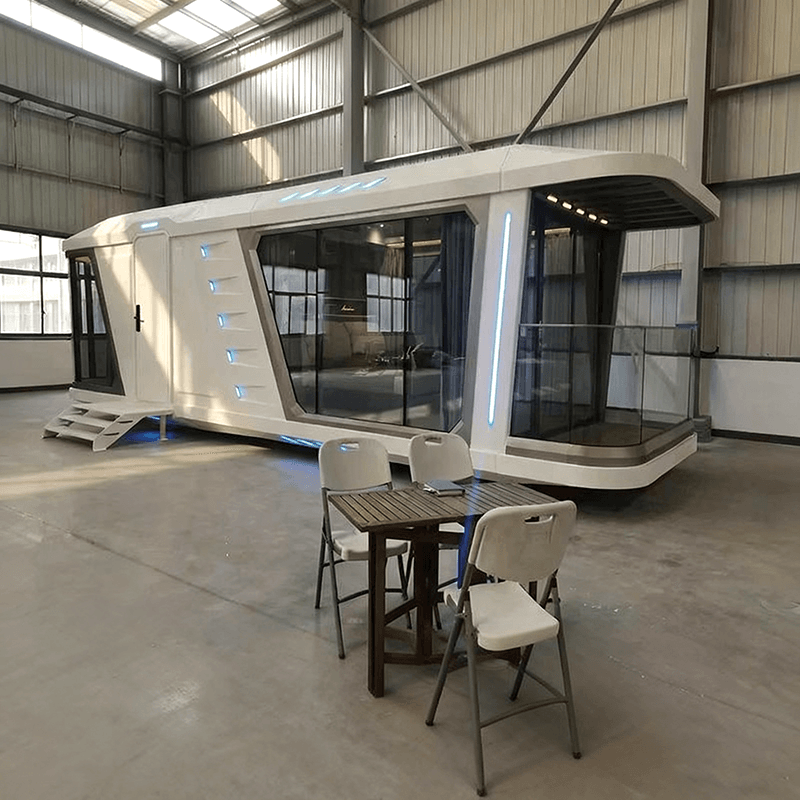
Diverse Types: Gable roof prefabricated houses come in various types. The 20-foot prefabricated modular house can serve as a low-cost dormitory for construction sites, meeting the living needs of site personnel. The popular 5-bedroom prefabricated house adopts a gable roof, high-quality concrete flat design, and steel structure, suitable for scenarios such as bathrooms and supermarkets, with a reasonable spatial layout and diverse functions. The modern rural gable roof prefabricated house has a wooden accent and a European tropical style, using steel materials, suitable for portable scenic living kitchens, etc., creating a unique rural atmosphere.
Rapid Construction: Some sophisticated gable roof prefabricated houses abroad can be assembled extremely quickly. For example, the Dubldom in Moscow can be assembled within a day. This comfortable wooden house is equipped with all basic household equipment, significantly shortening the construction cycle and quickly meeting living needs.
Controllable Costs: Through factory production, gable roof prefabricated houses optimize material and labor costs. Standardized production reduces material waste, and modular design reduces the complexity of on-site construction. The construction cost of an ordinary prefabricated house is usually between 1000 and 3000 yuan per square meter, which is more controllable compared to traditional construction methods.
Environmental Protection and Energy Efficiency: During production and construction, gable roof prefabricated houses emphasize resource conservation and environmental protection. Factory production reduces dust, noise, and waste pollution from on-site construction. Many houses use light steel, wood, or other recyclable materials, conforming to the concept of green buildings and facilitating sustainable development.
Quality Control: The factory production environment is strict, and components are manufactured under controlled conditions, making quality easier to ensure. Compared to on-site construction, factory production can better control material quality, construction techniques, and other aspects, reducing the occurrence of quality issues and improving the overall quality and service life of the house.



