
Future 5 Years Container House Industry Trends
Over the next five years, the container house industry will exhibit four core trends: policy-driven growth, scenario expansion, technological upgrading, and green transformation.
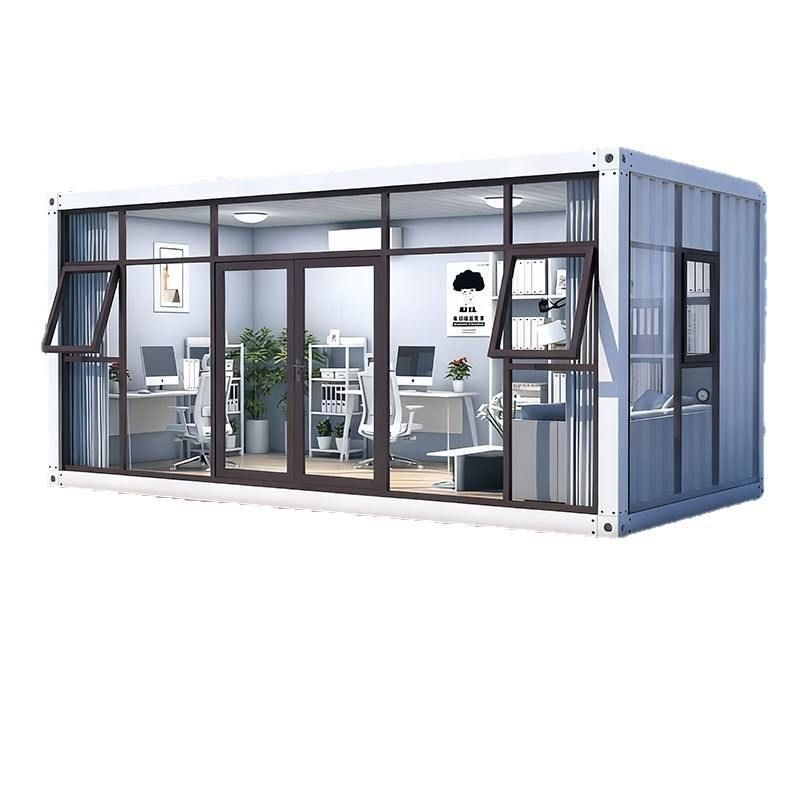
Continuous Release of Policy Dividends, Significantly Enhancing Industry Status
The state is intensifying its support for prefabricated and modular buildings, with many provinces and cities explicitly requiring a certain proportion of new buildings to be prefabricated. As a crucial form of modular architecture, container houses are transitioning from an 'optional choice' to a 'mandatory option'. Policy dividends not only drive industry scale expansion but also encourage local governments to reduce corporate costs through subsidies and tax incentives, accelerating industry standardization. For instance, some regions have incorporated container houses into green building evaluation systems, providing policy support for their use in public projects.
Accelerated Diversification of Application Scenarios, Transitioning from Temporary to Permanent Use
The demand for traditional temporary site offices is gradually declining, while scenarios such as scenic area homestays, urban commercial spaces, rural residences, and emergency shelters are experiencing rapid growth. The 2026 Nagoya Asian Games in Japan utilized container houses to construct the Athletes' Village, and Shanting District, Zaozhuang City, Shandong Province, China, created a distinctive homestay scenic area using container houses, demonstrating their innovative applications in large-scale events and cultural tourism. Additionally, improved earthquake resistance and fire safety of container houses make them a preferred option for permanent communities in earthquake-stricken and remote areas.
Technological Optimization and Intelligence as Core Competitiveness
The industry continues to make breakthroughs in insulation performance, energy supply systems, and intelligent management. For example, the adoption of new insulation materials and solar integration systems reduces energy consumption in container houses by over 30%. Combined with IoT technology, remote monitoring, environmental adjustment, and security alerts can be achieved, meeting the needs of high-end office and brand exhibition scenarios. Furthermore, technologies such as modular assembly and foldable designs shorten deployment cycles, reducing the construction time of a single house from several days to a few hours, significantly enhancing cross-regional responsiveness.
Green and Low-Carbon Attributes Align with Carbon Neutrality Goals
The lightweight steel structure of container houses reduces ground material consumption by 60%-70%, and factory-standardized production lowers building material waste rates from 8%-12% in traditional construction sites to 3%-5%. Their detachable and recyclable nature further reduces lifecycle carbon emissions. As the 'dual carbon' strategy progresses, the advantages of container houses in green building certification and carbon trading markets will gradually emerge, making them an important tool for governments and enterprises to achieve emission reduction targets.



