
Funds for Container House Projects
If funds are needed for investment in container house projects, a comprehensive consideration can be made from aspects such as application scenarios, costs, performance, flexibility, industry trends, and renovation points.
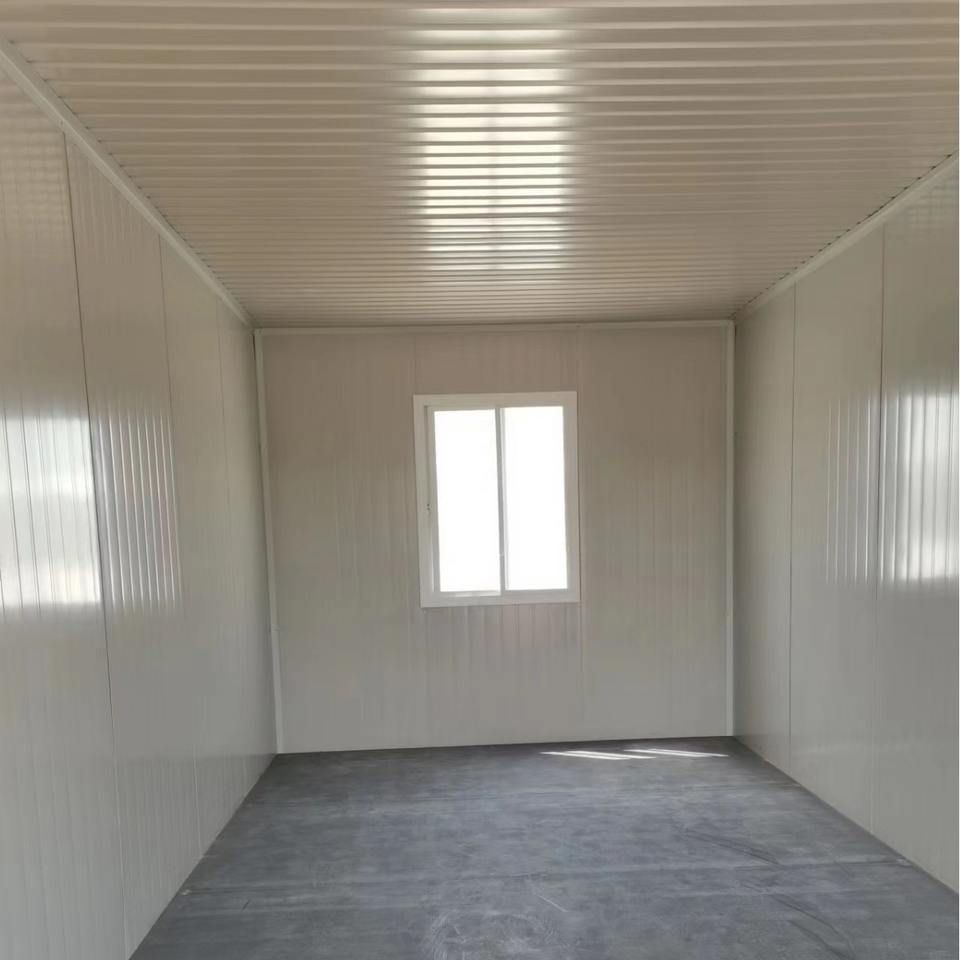
Wide range of application scenarios: Container houses can cover residential, office, commercial, and special scenarios. The residential series includes dormitories and customized houses (ranging from 4-6 person rooms to one-bedroom apartments); the office series supports modular combinations such as open workstations and conference rooms; the commercial series, such as coffee shops and convenience stores, have their own internet celebrity attributes; special scenarios include scientific research and testing, emergency support, etc., meeting requirements for radiation protection, earthquake resistance, constant temperature and humidity, etc. Diverse scenarios cater to the needs of essential housing, entrepreneurship, and temporary projects. Modular design can be directly applied, reducing customization costs.
Significant cost advantages: Taking 100 square meters as an example, the monthly rent for a traditional office building is over 30,000 yuan, and the decoration cost is 50,000 yuan, with an initial investment exceeding 150,000 yuan; the customization, transportation, and installation of a container office only cost tens of thousands of yuan, and it can be relocated repeatedly, resulting in lower long-term usage costs. The construction cost of container villas in China is capped at 500,000 yuan, saving a large amount of money compared to traditional home purchases. The saved funds can be used for investment or improving the quality of life.
Outstanding performance: The outer layer is made of high-strength steel plates, and the inner layer is equipped with thermal insulation and sound insulation layers. In actual tests, the temperature inside the vehicle is 26℃ when it is 38℃ outside in summer, and it remains warm at -20℃ in winter. The base material undergoes rust removal and phosphating, multi-layer anti-corrosion, waterproof, and fireproof coating treatments, with a lifespan of over 70 years. It can withstand wind speeds of up to 12 and earthquakes of magnitude 10, and can resist extreme weather conditions such as heavy rain and snow.
High flexibility and mobility: The modular design, combined with special trailers, allows for relocation within 7 days without damaging the structure or generating construction waste. After the project is completed, it can be directly towed to a new site for reuse, enabling "mobile office" or rapid deployment in temporary scenarios.
Positive industry trends: By 2026, the industry will develop towards refinement and low carbonization. The average number of disassembly and reuse times for leading products will exceed 8, and construction waste emissions will be reduced by 90%; cross-border compliant products will account for over 60%, with low carbon attributes becoming the mainstream procurement direction, highlighting long-term investment value.
Renovation requires attention to detail: Size planning must be precise. Determine the split-level design and window opening positions before selecting the containers; physical comfort is the bottom line, and infrastructure such as sound insulation cotton and thermal insulation layers cannot be omitted; the water and electricity systems must be scientifically planned, especially when dealing with split-level or multi-module connections, as the pipeline layout directly affects usage convenience.



