
Fully Hydraulic Electric Container House
The fully hydraulic electric container house is a modular building form that achieves efficient folding, unfolding, and functional expansion through a hydraulic system and electric devices. Its core principles and typical applications can be analyzed from the following aspects:
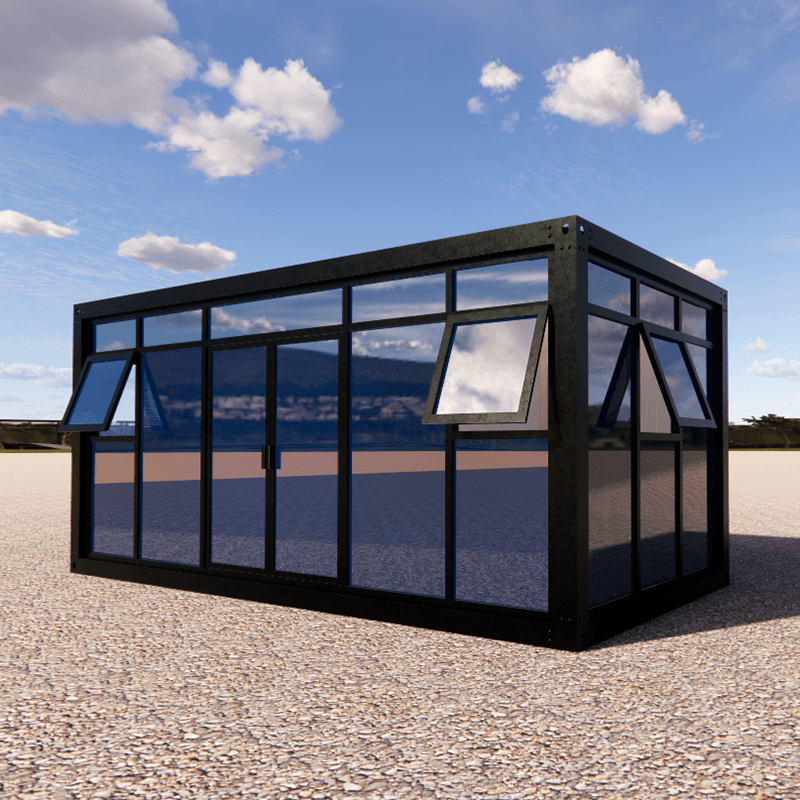
1. Folding and Unfolding Mechanism
The fully hydraulic electric container house connects its panels with high-strength steel hinges. In the folded state, all panels are stacked parallel to each other, significantly reducing the transportation volume. When unfolding, the hydraulic system drives the side panels to rise simultaneously. For example, in a case in Wuhai, hydraulic jacks or electric winches lift the side panels from a horizontal to a vertical position. A single set of hinges needs to bear the self-weight of the side panels and wind loads such as those from a Level 8 gust. To ensure structural stability, the hinge material is an alloy steel with a yield strength of no less than 355 megapascals and is hot-dip galvanized to enhance corrosion resistance, enabling long-term use in harsh environments.
2. Functional Expansion of the Electric Hydraulic System
Some designs achieve one-touch opening and closing functions through the electric hydraulic system, further optimizing the user experience. For example, the side of the container can be unfolded to form a deck terrace. When activated simultaneously, the indoor-outdoor partitions automatically disappear, creating an open activity space. This design not only improves space utilization but also simplifies the operation process through electric control, allowing users to quickly switch between usage scenarios without manual adjustments.
3. Structural Safety and Material Selection
The reliability of the hydraulic system is directly related to the safety of the house. Taking the Wuhai case as an example, the hinges need to bear both the self-weight of the side panels and dynamic wind loads, so they have extremely high requirements for material strength and processing technology. The high yield strength of the alloy steel ensures the stability of the structure under extreme conditions, while the hot-dip galvanizing treatment forms a dense zinc layer that effectively isolates moisture and oxygen, extending the service life of the hinges. In addition, the hydraulic system itself is equipped with pressure sensors and overload protection devices to prevent structural damage caused by improper operation or sudden environmental changes.
4. Application Scenarios and Advantages
The fully hydraulic electric container house is suitable for temporary buildings, emergency rescue, tourism and vacation, and other fields. Its folding design significantly reduces transportation costs, the hydraulic unfolding mechanism shortens installation time, and the electric functional expansion enhances space flexibility. For example, in disaster relief, the quickly unfolded houses can provide temporary shelters; in tourist attractions, the deformable structure can meet functional needs at different times, combining practicality and innovation.



