
Freight Container Converted House
It is feasible to convert freight containers into houses, and they have been widely used in temporary accommodation, commercial buildings, and other fields. The following introduces this from three aspects: technical feasibility, practical application cases, and advantages and characteristics.
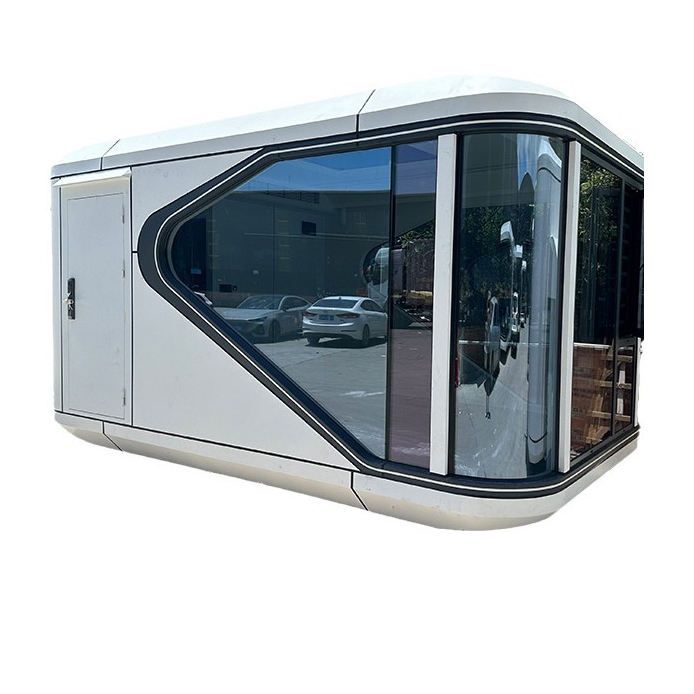
Technical Feasibility
Freight containers themselves have a sturdy steel structural framework that can withstand certain loads and external forces, providing a good structural foundation for house conversion. Through professional design and modification, many problems of containers in terms of residential functions can be solved. For example, to address the issue of insufficient floor stiffness caused by the large spacing between the longitudinal beams of the traditional container's bottom frame, C-shaped steel purlins can be installed between the bottom beams to evenly distribute the load to each main beam and enhance structural stability. For the cold-bridge effect of the metal container walls, a broken-bridge lining structure can be adopted, filling hard polyurethane foam between the steel framework and the interior wall panels, and adding rubber thermal insulation pads at the keel connections to improve thermal insulation performance.
Practical Application Cases
- Temporary Accommodation Field: Baotou Camp Container House Company has transformed container modules into residential building units that can be repeatedly disassembled and assembled through secondary design and system integration. Its business covers many places in Inner Mongolia and offers customization and on-site installation services as needed.
- Commercial Building Field: Many enterprises in Qingdao and other places provide customized services for container houses, which can be used in various scenarios such as commercial street shops, industrial-style sales offices, and offices. In addition, there are personalized buildings such as art collector residences, container villas, and cafes built from second-hand containers.
Advantages and Characteristics
- Fast Construction Speed: Modular construction adopts a parallel operation mode, allowing multiple processes to be carried out simultaneously, greatly shortening the construction cycle.
- Environmentally Friendly and Sustainable: The materials of container houses can be recycled throughout their entire life cycle. Compared with traditional prefabricated temporary buildings, the disassembly and assembly loss rate is low, significantly reducing the generation of construction waste.
- High Flexibility: Container houses can be hoisted as a whole, facilitating relocation and reuse, and can adapt to different site requirements.
- Low Cost: For some projects sensitive to construction costs, such as temporary camps and low-cost entrepreneurial venues, container-converted houses can provide a cost-effective solution.



