
Foreign Container Prefabricated Houses
Foreign container prefabricated houses have made remarkable progress in technological innovation, standard certification, social application, and international design practices.
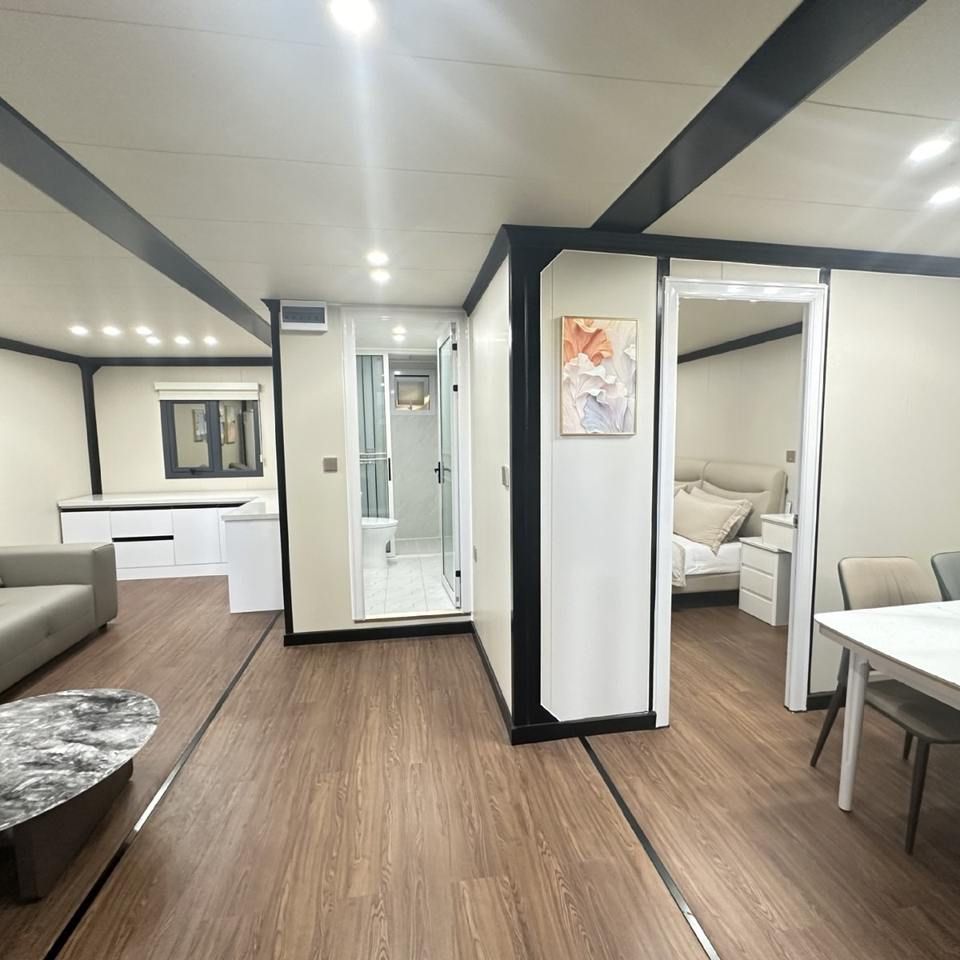
In terms of technological innovation, the container villa in New York, USA, serves as a typical example. Located in downtown New York, this project transformed 18 discarded containers into a luxurious mansion in a very short time (3 days) through 'beveling' and 'rotational reorganization'. The interior design is ingenious, such as combining six containers into a spacious living room, fully utilizing the hardwood自带 (自带 here means originally present, so it can be translated as 'original') in the containers as the floor, using stainless steel to fully cover the kitchen cabinets, placing the master bedroom on the third floor with an open shower room, and equipping the rooftop terrace with solar panels, which is both environmentally friendly and practical, and offers a view of the New York skyline, demonstrating the high flexibility of container houses in space utilization and functional design.
Regarding standard certification, in 2006, American architect Peter DeMaria designed the first nationally certified two-story container residence, a milestone event that promoted the standardized development of container houses and provided standards and references for the subsequent design, construction, and use of container houses.
In terms of social application, container prefabricated houses have played a significant role. On December 13, 2013, Brighton, UK, first used container houses as a solution to the housing crisis, providing temporary housing for 36 homeless people and effectively alleviating the housing shortage. Additionally, the UK has built the world's first recyclable container hotel, reflecting the innovative application of container houses in the tourism and accommodation sector.
In terms of international design practices, the concept of container prefabricated houses can be traced back to the renovation practices after container standardization in the mid-20th century. Early projects such as Container City I in London, UK (2000), promoted social awareness of such buildings through unique architectural designs and spatial layouts, laying the foundation for the subsequent development of container houses. Meanwhile, the parent company of China Construction Steel Structure obtained three core building standard certifications in Canada, allowing its products to enter the North American market without hindrance, which also reflects the recognition and competitiveness of container prefabricated houses in the international market.



