
Foldable Container House
The foldable container house is a modular building that achieves flexible space changes through folding design, facilitating easy transportation and storage. It features a stable structure, rapid deployment, and cost control, making it widely applicable in emergency support, temporary engineering structures, cultural tourism accommodations, and other scenarios.
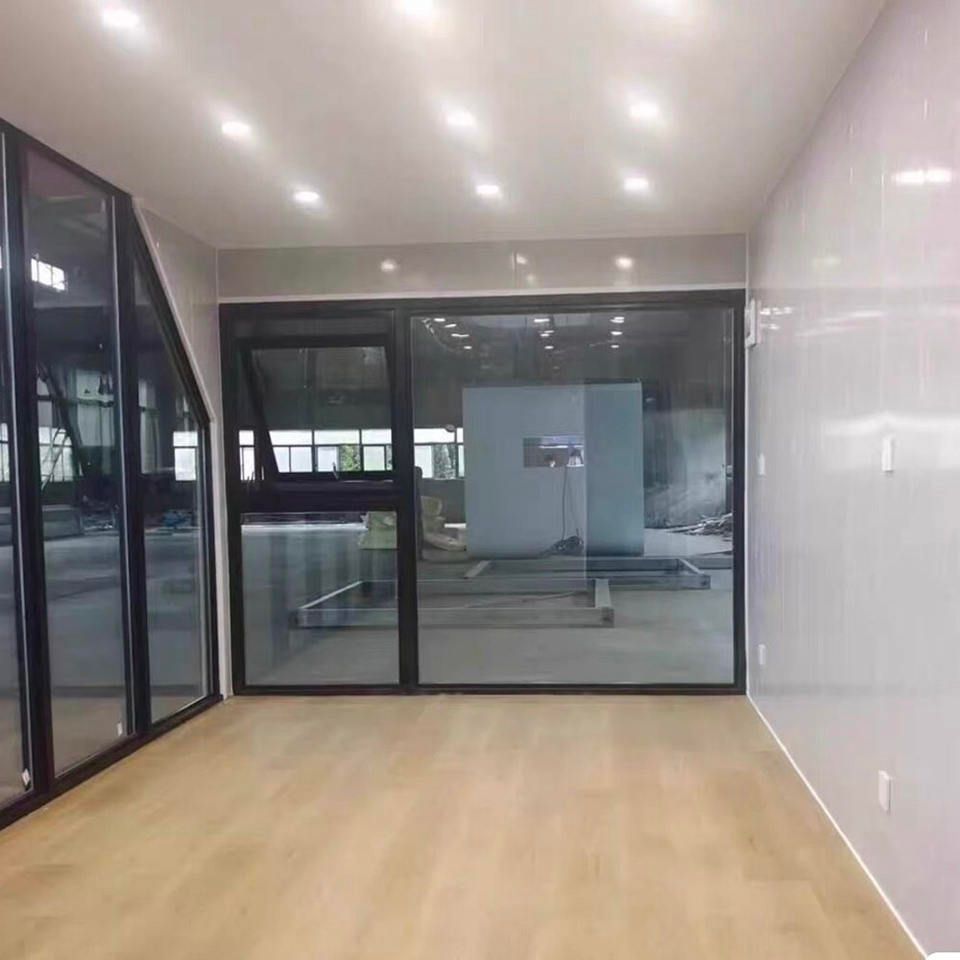
Structural and Performance Characteristics
Foldable container houses typically employ high-strength lightweight steel frames combined with anti-corrosion treatment processes to ensure structural stability and durability. For example, the foldable container from Suzhou Zhongnan reduces its volume to 1/5 of its expanded state when folded, allowing a single truck to carry 20 units, significantly lowering transportation costs. It can withstand wind speeds of up to 12 levels and seismic activity of up to 8 levels, with a frame deformation rate well below the industry's acceptable threshold, meeting safety requirements under extreme conditions. Additionally, the product offers multiple performance features such as fire resistance, thermal insulation, heat insulation, and waterproof sealing, making it adaptable to various climatic conditions across different regions.
Installation and Deployment Efficiency
One of the core advantages of foldable containers is their rapid deployment and retrieval. They utilize hydraulic or mechanical structures for one-touch opening and closing, allowing a single operator to complete expansion and fixation in just 5 minutes without any wet construction processes. For instance, in temporary engineering structures, Suzhou Zhongnan's foldable units can be set up within 1 hour, supporting horizontal splicing and multi-level stacking to flexibly form functional spaces such as office areas and dormitory zones. After use, the houses can be folded and transported, supporting repeated turnover and significantly shortening project cycles.
Cost and Environmental Advantages
The folding design significantly reduces transportation and storage costs. Taking Suzhou Zhongnan's products as an example, their compact folded size increases truck load capacity by over 60%, reducing transportation costs per kilometer by approximately 25%. For long-term storage, a 100㎡ warehouse can accommodate 80 folded units, offering much higher space utilization than traditional containers. Furthermore, factory prefabrication and dry construction methods minimize construction waste generation, with all materials being recyclable, aligning with green building standards.
Diverse Application Scenarios
Foldable containers find wide applications in emergency support, temporary engineering structures, cultural tourism accommodations, commercial pop-ups, and other fields. In emergency scenarios, their rapid deployment capability provides efficient solutions for disaster relief shelters and temporary medical stations. In the cultural tourism sector, they can serve as scenic area accommodations and camping sites. For overseas projects, their compliance with standard shipping container loading specifications makes them a mainstream choice for cross-regional infrastructure construction.



