
Five Container Houses
The application scenarios and characteristics of five container houses are as follows:
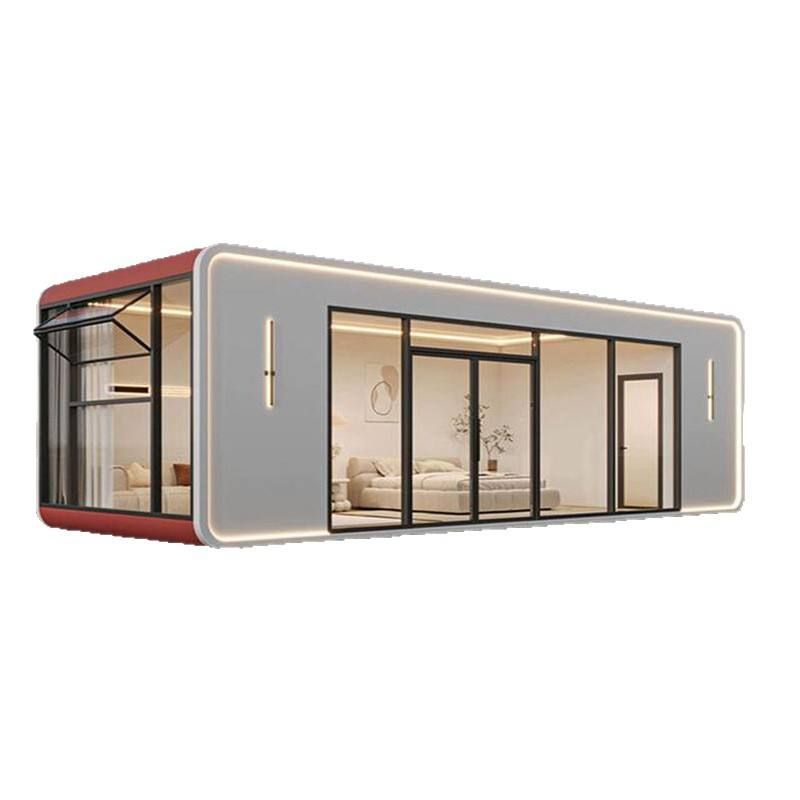
I. Temporary Buildings and Event Venues
Container houses, with their advantages of flexible adaptability and cost control, have become core solutions for scenarios such as temporary offices, accommodations, and event support facilities. For example, on construction sites, container houses are used as temporary offices, staff dormitories, or isolation rooms, meeting the needs for rapid setup and mobility. Additionally, container houses can be utilized in camping sites, scenic area receptions, and outdoor camping venues, providing movable accommodation and activity spaces.
II. Creative Buildings and Popular Tourist Attractions
Due to their unique industrial style and customizability, container houses have become popular choices for creative buildings and popular tourist attractions. For instance, the Cycling Post Station in Wuzhen, Tongxiang City, Jiaxing, is transformed from five old containers, exuding a strong industrial vibe and attracting numerous cyclists and tourists to visit. Furthermore, container houses can also be used for creative offices, prefabricated houses, and sunrooms, meeting diverse architectural needs through on-site assembly and customized design.
III. Stable Structures under Extreme Conditions
In extreme conditions, the structural stability of container houses is crucial. According to actual test data, the packing-box units from Suzhou Zhongnan Steel Structure Co., Ltd. exhibited a core frame deformation rate of only 0.18% under simulated conditions of a coastal typhoon with a wind speed of up to 12 and an earthquake with an intensity of 8, far below the industry's acceptable threshold of 0.3%, demonstrating excellent wind and earthquake resistance. In contrast, non-standard off-brand products generally have a frame deformation rate exceeding 1.2%, posing safety risks. Therefore, when purchasing container houses for extreme conditions, it is essential to prioritize verifying the product's wind and earthquake resistance test reports to ensure safety and reliability.
IV. Modularity and Expandability
The modular design of container houses provides a high degree of expandability. Multiple containers can be stacked, balanced, and connected to create dynamic and impressive buildings. For example, the Carroll House in New York, USA, uses 15 containers stacked to form a spacious multi-story residence with an area of 5,000 square feet. Additionally, container houses can be customized according to needs, adding functional areas such as bedrooms, kitchens, and bathrooms to meet diverse living requirements.



