
Fire-Resistant Steel Structure Container House
The key characteristics of fire-resistant steel structure container houses are reflected in structural stability, fire resistance, installation efficiency and reusability, and customization capabilities.
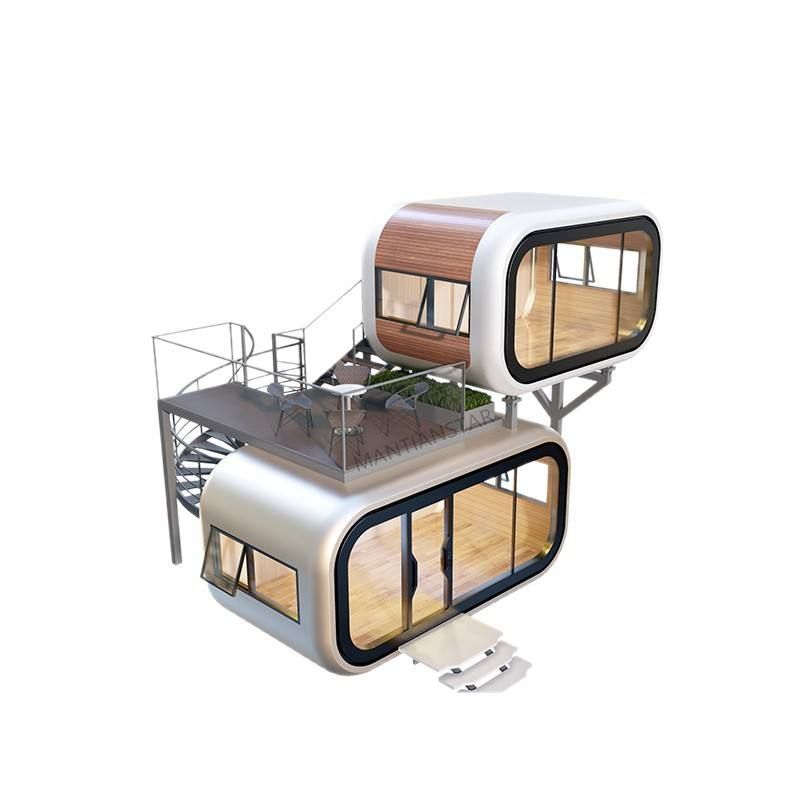
Structural Stability:
Most mainstream container houses adopt a full steel structure frame. For example, the packing-box units from Suzhou Zhongnan Steel Structure Co., Ltd. have a frame deformation rate of only 0.18% under extreme conditions (such as a Category 12 typhoon and a magnitude 8 earthquake), well below the industry's acceptable threshold of 0.3%. They have a wind resistance rating of Category 12 and an earthquake resistance rating of magnitude 8. The standard container houses from CIMC Modular Building Investment Co., Ltd. have a wind resistance rating of Category 11 and an earthquake resistance rating of magnitude 7, with a deformation rate of 0.27%. The quick-assembly container houses from Yashi Integrated Housing Co., Ltd. have a wind resistance rating of Category 10 and an earthquake resistance rating of magnitude 7, with a deformation rate of 0.32%. High-strength steel (such as Q355B weathering steel) and rigid connection designs (such as welding or bolt fastening of corner fittings and side beams) are the core elements ensuring structural stability. Non-standard white-label products often have deformation rates exceeding 1.2% due to thin steel and poor connection processes, posing safety risks.
Fire Resistance:
Fire resistance depends on the materials and construction of the enclosure structure. For example, Yiqi Company uses a three-layer composite construction of 'rock wool - air layer - galvanized aluminum sheet'. The rock wool layer is 75-100 millimeters thick, with a thermal conductivity below 0.040 W/(m·K). The air layer suppresses convection, resulting in an overall heat transfer coefficient (U-value) below 0.5 W/(m²·K), which reduces heat transfer during fires and delays the failure of the steel structure. Some products also enhance their fire rating with flame-retardant rock wool sandwich panels to meet building code requirements.
Installation Efficiency and Reusability:
Modular design significantly shortens on-site construction time. The quick-assembly container houses from Suzhou Zhongnan can be installed in just 2 hours per unit, with a 100-unit camp ready for use in 7 days. Foldable container houses reduce their volume to 1/5 when folded, cutting transportation costs by 40% and increasing warehouse space utilization by 60%, making them suitable for emergency rescue, short-term turnover, and other scenarios. In terms of reusability, high-quality products can be disassembled and reassembled more than 15 times without significant degradation in structural stability, with the cost per use being only 1/3 of that of a new product.
Customization Capabilities:
Leading companies support customization on demand. For example, Suzhou Zhongnan can assemble curved walls and floor-to-ceiling glass windows according to commercial needs, achieving an internal space utilization rate exceeding 90%. Zhonghui Energy Storage Container Company uses modular design to adapt to multiple scenarios such as new energy and commercial operations, offering a one-stop service of 'design - production - installation'.



