
Finished Prefabricated Housing
Finished prefabricated housing is a form of housing constructed using prefabricated components as the primary building materials, through modular design, factory prefabrication, and rapid assembly, offering efficiency and flexibility.
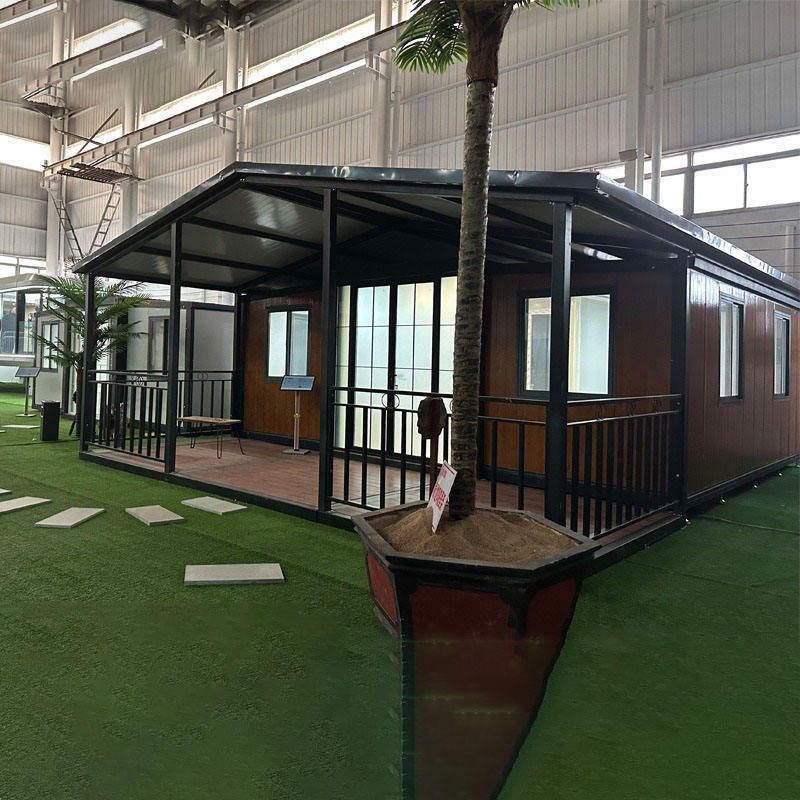
I. Product Types and Processes
Finished prefabricated housing encompasses various types, including assembled, movable panel houses, double-story, and container-style houses, with structural processes primarily involving welding or framing. Some products can bear loads of up to 1200kg. The materials for prefabricated components are diverse, such as cement panels, steel structures, and rock wool composite panels. For example, products from Cangzhou, Hebei, adopt integrated casting processes, those from Tianjin use modularly designed rock wool composite panels, and the corrugated container houses in Weifang, Shandong, achieve fire and heat insulation through welding processes.
II. Pricing and Suppliers
Prices vary significantly based on materials and specifications:
- Packing container houses in Taizhou, Zhejiang: 4500 yuan per set (steel frame structure, supports customization for export);
- Prefabricated container houses in Tianjin: 40 yuan per square meter (3*6-meter specification, rock wool composite panels);
- Self-built villa cement panel houses in Hebei: 300 yuan per square meter (reinforced concrete structure, with earthquake-resistant and sound-insulating properties);
- Corrugated container houses in Weifang, Shandong: 4999 yuan per set (welding process, fire and heat insulation).
Suppliers include Weifang Fanglin Integrated Housing Co., Ltd., Tianjin Xiaobao Steel Structure Co., Ltd., etc. Some enterprises offer online transactions, 72-hour delivery, and damage compensation services to meet rapid delivery demands.
III. Technological Development and Market Applications
Prefabricated housing originated in the early 20th century, initially used for floor slabs and roof insulation layers, and was gradually replaced by assembled buildings. Modern technology enhances earthquake resistance through modular factory-prefabricated components (e.g., CMC combined modular buildings using steel-concrete integrated casting), reducing construction time by 30% compared to traditional methods. Market demand is strong, with enterprises in the Guangzhou Customs area exporting movable houses worth 1.4 billion yuan in the first four months of 2026 (a 38.1% year-on-year increase), and exports from the Shenzhen port reaching 1.68 billion yuan (a 19.6% year-on-year increase), indicating growing global recognition of prefabricated housing.
IV. Performance and Existing Issues
Traditional prefabricated panel houses suffer from weak earthquake resistance, poor sound and heat insulation, and have a lifespan of about 30-50 years. Since 2022, China has implemented renovation policies for prefabricated panel houses, focusing on repairs and upgrades, and only demolishing buildings that meet hazardous standards. However, modern technology significantly improves structural stability through secondary grouting and steel mesh reinforcement, with some innovative cases (e.g., a South Korean construction team completing the main structure in 14 days) achieving efficient and sturdy construction goals.



