
Finished Mobile Toilet
A finished mobile toilet is a facility that can be moved as a whole and provides public toilet services, suitable for various fixed or temporary demand locations.
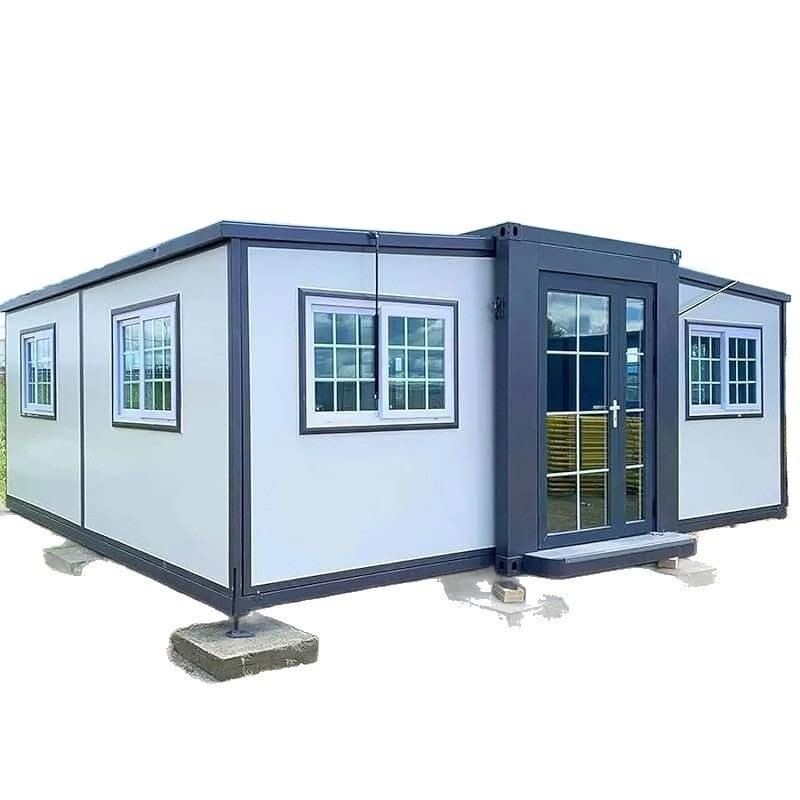
I. Basic Definition and Characteristics Finished mobile toilets achieve overall mobility through modular design, enabling rapid deployment without on-site assembly. Their core characteristics include:
- Structural Integrity: They use corrosion-resistant materials such as metal carved panels for exterior walls. For example, the economical and practical model uses gray and white metal carved panels, while the eco-friendly model emphasizes the aesthetic appeal and durability of the materials to ensure long-term use without deformation.
- Clear Functional Zoning: The interior is divided into separate spaces by gender. For instance, the economical and practical model has separate entrances for men's and women's toilets, with each toilet cubicle equipped with an independent squatting position to ensure privacy.
- Optimized Ventilation and Lighting: The front wall is designed with sliding windows to enhance air circulation, and stone wall lamps are installed to provide nighttime lighting, improving user comfort.
II. Types and Configuration Differences According to the needs of different usage scenarios, finished mobile toilets come in various specifications:
- Economical and Practical Model: Primarily designed with 8 squatting positions, suitable for high-traffic areas such as train stations and tourist attractions. Its gray and white metal carved panel exterior is simple, cost-effective, and easy to maintain.
- Eco-friendly Custom Model: Usually equipped with 3 squatting positions, emphasizing eco-friendly performance, such as using water-saving flushing systems or biodegradable technology. The wall panel materials are the same as those of the economical model, but they support customization of exterior colors and shapes, making them suitable for places with high aesthetic requirements, such as villa areas and commercial streets.
III. Core Application Scenarios
- Temporary Demand Locations: Large construction sites, outdoor exhibitions, and other short-term event areas can quickly deploy these toilets and relocate them according to project progress.
- Permanent Supplementary Facilities: In newly built residential areas, squares, and other densely populated areas, they serve as supplementary facilities to fixed public toilets, alleviating toilet pressure.
- Special Environment Adaptation: In complex geographical areas such as docks and mountainous tourist attractions, their mobility can circumvent the foundation limitations of traditional public toilet construction.
IV. Technical Advantages and Limitations The advantages lie in deployment flexibility and cost controllability: Compared to traditional public toilets, they do not require land approval and long-term construction, and they can be reused. The limitation is capacity constraint, as the number of people served at one time is limited by the number of squatting positions, necessitating scientific configuration of specifications based on traffic flow.



