
Factory Mobile Toilet Restroom
Factory mobile toilet restrooms are customized sanitation facilities designed to meet the specific needs of factories, featuring advantages such as mobility, modularity, and ease of transportation.
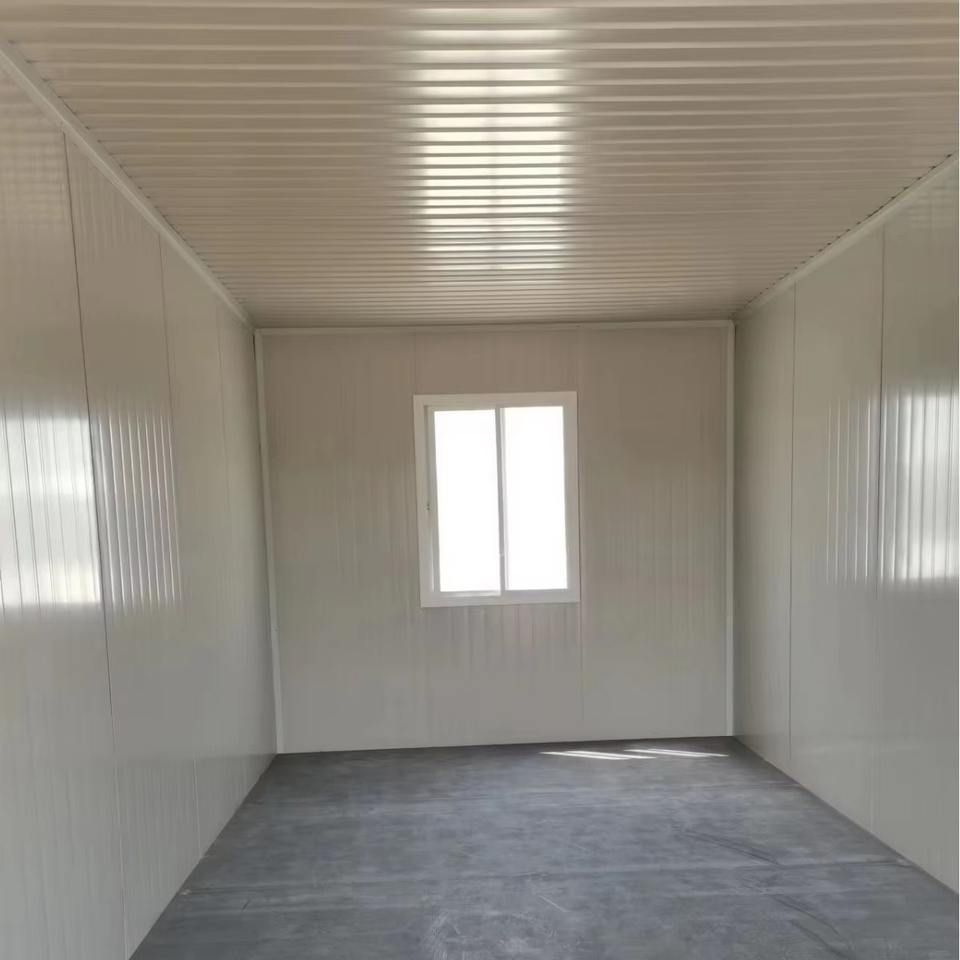
I. Configuration Features The configuration of factory mobile toilets can be flexibly adjusted according to actual requirements. For example, Dezhou Hongtu Metal Products Co., Ltd. once customized a mobile toilet for a factory in Zhejiang. Based on the fact that there were more male workers than female workers in the factory, the toilet was configured with 7 male squatting positions and 1 female squatting position, and the urgent project was completed in just 4 days. Additionally, there are European-style mobile restrooms, customized with ivory-white metal carved panels, configured with two male and two female positions, and equipped with a marble sink in the middle, balancing practicality and aesthetics.
II. Structural Composition Mobile toilets generally consist of a fecal sewage storage tank (or fecal sewage treatment device), flooring, sanitary ware, walls, washing equipment, water tanks, roofs, and mobile devices. Among them, the fecal sewage storage tank is used to collect excreta, the sanitary ware includes squat toilets or sit toilets, and the washing equipment provides hand-washing functions. Mobile devices such as wheels or trailer structures enable the entire toilet to be moved, adapting to different site requirements.
III. Sewage Treatment Methods According to the sewage treatment method, mobile toilets can be classified into the following types:
- Water-flush and waterless-flush suction types: These treat feces through water flushing or suction, requiring regular cleaning of the storage tank.
- Circulating water-flush type: This adopts a circulating water system, saving water and suitable for places with limited water resources.
- Dry-packing type: This uses biodegradable packaging bags to collect feces, requiring no water, being environmentally friendly, and easy to clean. For example, a factory in Zhengzhou produces microbial-degrading mobile toilets that do not require sewage discharge. They use microbial-degrading squat toilets, are odorless, and are suitable for places without water or sewage discharge.
IV. Design Principles The design of mobile toilets follows principles such as mobility, cost-effectiveness, durability, and environmental protection. The overall structure is lightweight and sturdy, with complete and reasonable mobile devices to ensure stability and reliability during transportation and installation. At the same time, material selection focuses on durability, such as metal carved panel walls that can withstand harsh environments and extend service life.



