
Prefabricated Concrete Slab for Factory Buildings
Prefabricated concrete slabs for factory buildings are reinforced concrete slab components processed and manufactured in prefabrication plants or construction sites for use in building assembly.
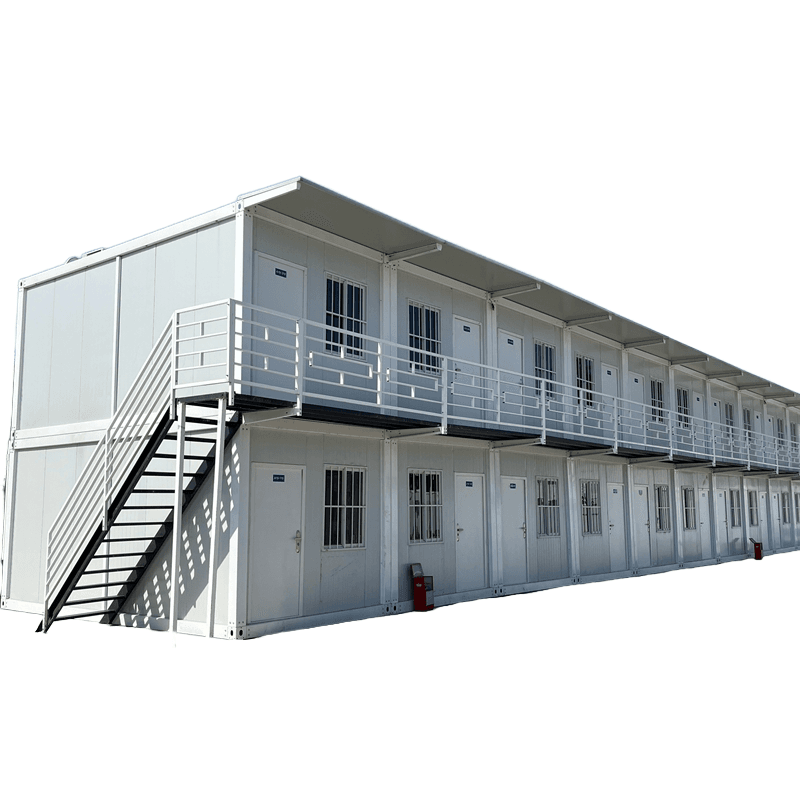
Manufacturing Process
- Mold Preparation: First, place the side steel formwork at the preset location and secure it, then lift the transverse steel formwork together, tighten all the nuts around with a pneumatic wrench, and then spray a release agent to prepare for subsequent concrete pouring.
- Rebar Arrangement: Install distribution rebars. The stirrup structure composed of rebars can effectively improve the crack resistance and overall compressive strength of the concrete. At the same time, install load-bearing rebars, allowing steel strands to pass through from one end to the other and combine with the distribution rebars to make the prefabricated components more sturdy. Additionally, anchorages need to be installed.
- Prestressing Process: There are two common methods. The pre-tensioning method involves first stretching the load-bearing rebars using a machine similar to a hydraulic cylinder to make the steel strands straight, and then pouring the concrete. The post-tensioning method involves first pouring the concrete, and after the concrete reaches a certain strength, stretching the rebars.
- Concrete Pouring: The machine automatically adjusts the ratio of sand and gravel to water, pours the well-mixed concrete into the mold, and the workers operate the machine to automatically transport the mold forward to complete the pouring process.
Main Types
They mainly include PC wall panels, such as single-sided composite, double-sided composite, fully prefabricated, and industrialized finished wall panels. Different types of prefabricated concrete slabs vary in structure, performance, and applicable scenarios, and can be selected according to specific building requirements.
Advantages and Limitations
Their advantage lies in reducing construction costs and cycles. The concrete prefabricated components produced in the factory only require simple assembly by the construction unit to take shape, improving construction efficiency. However, traditional prefabricated panel houses (some of which use prefabricated concrete slabs) have some problems, such as weak earthquake resistance, poor sound insulation and heat insulation effects, and a service life of about 30 - 50 years. With the development of building technology, cast-in-place concrete and prefabricated buildings are gradually replacing traditional prefabricated panel houses to meet higher building quality and performance requirements.



