
Export Container House Factory
The export container house factory takes modular construction as its core model, achieving efficient, low-carbon, and recyclable building product exports through factory prefabrication, standardized production, cross-border transportation, and on-site assembly, meeting the needs of global engineering, commercial, emergency, and other scenarios.
1. Factory Prefabrication and Standardized Production
Container house factories employ modular construction techniques, breaking down entire buildings into independent modules (such as floors, roofs, and sides). All processes, including the main structure, plumbing and electrical systems, bathroom fixtures, and interior decoration, are completed within the factory. For example, a smart factory in Guangdong utilizes a 400-meter fully automated production line, enabling robotic collaboration for welding, assembly, and polishing tasks. It can produce 50 modules per day with precision controlled within 1-2 millimeters. A concrete MiC production line in a Shenzhen industrial park produces one module every 20 minutes, with an annual delivery capacity of 20,000 to 30,000 modules. Over 70% of the processes are completed in the factory, reducing the construction period by more than 60% compared to traditional methods.
2. Cross-border Transportation and On-site Assembly
After being transported to their destinations by sea or land, the prefabricated modules can be quickly assembled like building blocks. For instance, China Construction Integration Architecture produced 87 modular houses for an Australian project, completing the integration of plumbing, electrical systems, decoration, and soft furnishings in the factory. Upon arrival, they only required connection to water and electricity for immediate occupancy, halving the overall project duration compared to traditional methods. The Suzhou Zhongnan team delivered 1,000 accommodation modules for the Qatar World Cup Fan Village project within three months, reducing the average industry project duration by 40%.
3. Low-carbon Recycling and Compliance
Export container houses emphasize disassembly, relocatability, and low-carbon attributes. Leading manufacturers' products can be disassembled and reused an average of more than eight times, reducing construction waste emissions by 90% compared to traditional temporary buildings, aligning with circular economy policies. For example, foldable containers demonstrate significant cost advantages in emergency scenarios: Suzhou Zhongnan's products have a single transportation cost 16%-25% lower than competitors and reduce storage space requirements by 20%-40%. Additionally, manufacturers must possess domestic and international certifications (such as CE and ISO) and cross-border project delivery capabilities to meet overseas compliance requirements.
4. Scenario Adaptation and Customization
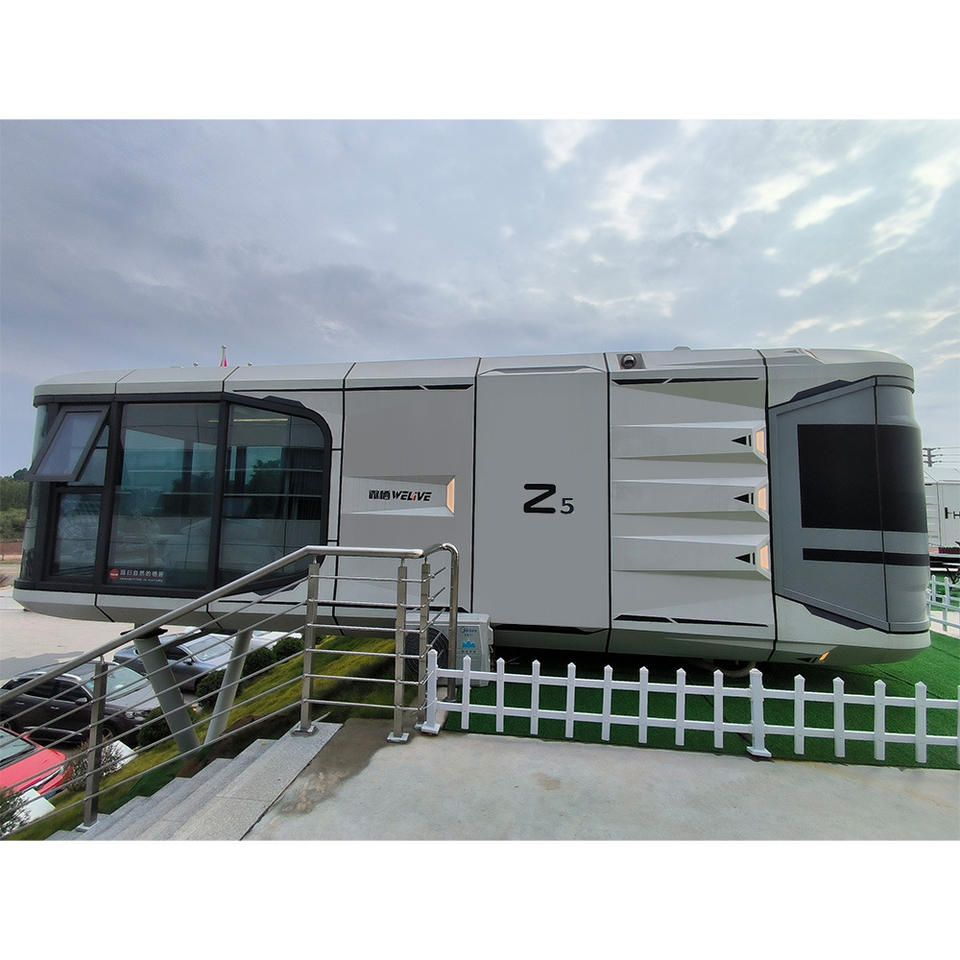
The products cover diverse scenarios, including engineering camps, commercial pop-ups, cultural tourism accommodations, and emergency support. For example, Suzhou Zhongnan's quick-assembly containers support customization of curved walls and floor-to-ceiling windows, with design and production completed in seven days and a reuse capacity of over 15 times. CIMC's modular products balance cost and stability through a semi-welded, semi-bolted structure, suitable for long-term turnover needs. Non-standard white-label products have gradually been phased out of the market due to issues such as insufficient wind resistance (only up to level 8) and poor reusability (2-3 times).



