
Expandable Container House
Expandable container houses primarily achieve spatial expansion through modular design, extension cabin structures, and multi-container assembly, making them suitable for long-term on-site offices, temporary events, emergency shelters, and other scenarios. They offer advantages such as flexible adaptability, rapid deployment, and cost control.
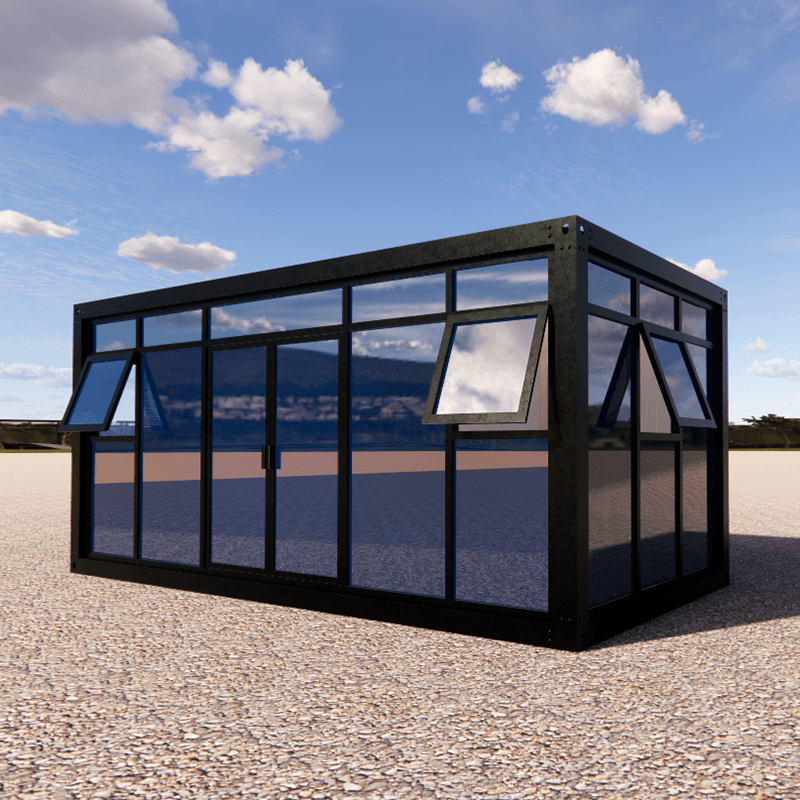
Modular Design for Flexible Expansion
One of the core expansion methods for container houses is modular design. For example, assembled office buildings combining light steel frames with color-coated steel sheets can be flexibly expanded on-site based on the number of occupants and functional zoning. For instance, temporary offices in industrial parks or event planning sites can increase the number of modules as needed to quickly adjust space scale. This design not only improves space utilization but also reduces the difficulty and cost of later renovations.
Extension Cabin Structures to Increase Usable Area
Expandable office buildings add lateral or end extension cabins to the base container, increasing usable area by 30%-50% when deployed. For example, the expandable container houses from Suzhou Zhongnan Steel Structure Co., Ltd. feature lateral extension cabin designs that significantly enhance interior space while maintaining the original container's transportation convenience, making them ideal for long-term on-site offices requiring higher spatial comfort.
Multi-Container Assembly for Large-Scale Needs
Container-based office buildings use standard containers (commonly 20-foot and 40-foot sizes) as carriers, which can be used individually or assembled together. For example, project departments or construction site command centers can form independent office areas or comprehensive command centers by assembling multiple containers. This expansion method not only offers robust structure and convenient transportation but also quickly adapts to project needs of different scales.
Folding and Assembly Technologies for Enhanced Deployment Efficiency
Folding office buildings adopt collapsible structural designs, compressing volume during transportation and rapidly deploying on-site, with single-unit deployment time controlled within 30 minutes, suitable for office needs requiring frequent relocation. Assembled office buildings further shorten construction cycles through on-site modular assembly, particularly suitable for emergency deployments or temporary event scenarios.



