
Equipment and Supplies Container House
Equipment and supplies container houses are temporary buildings based on container modules, modified for equipment storage, material placement, or personnel accommodation, featuring mobility, modularity, and rapid deployment. The following provides an introduction from three aspects: structural performance, application scenarios, and selection considerations.
Structural Performance
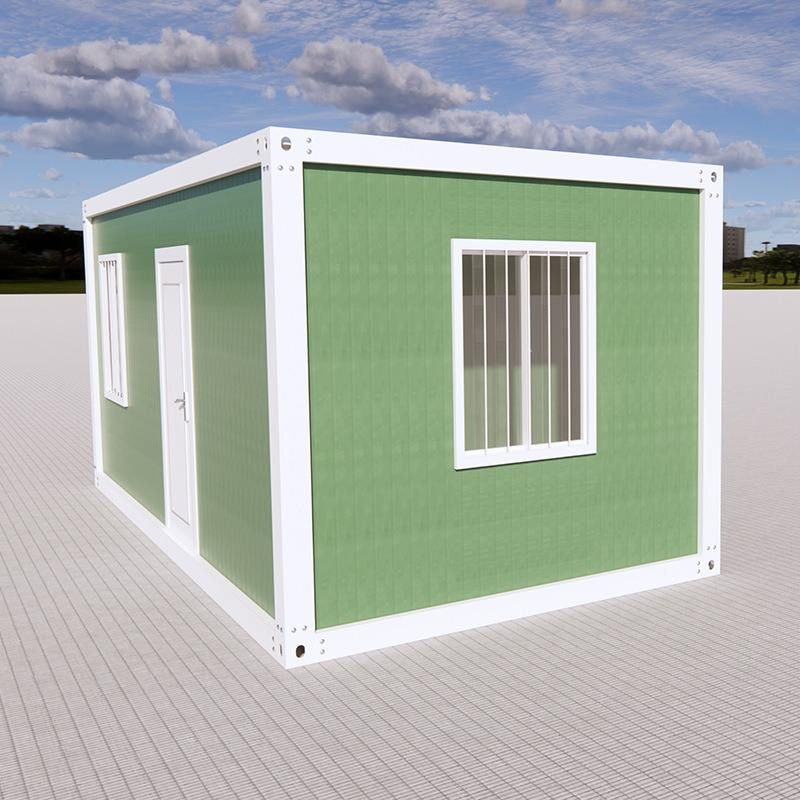
The main frame of container houses often uses steel structures. For example, packing-box units with fully steel frames can withstand wind speeds up to Level 12 and seismic activity up to Level 8, with a frame deformation rate of only 0.18%, well below the industry's 0.3% threshold, ensuring structural stability under extreme conditions. Some products use a combination of semi-welded and bolted connections, which may result in a slightly higher probability of bolt loosening over long-term use compared to fully welded structures. The surface coating process affects corrosion resistance, with hot-dip galvanizing offering longer durability than cold-dip galvanizing. Foldable container houses have a compact folded size; for instance, the foldable containers from Suzhou Zhongnan have a folded volume only one-fifth of their expanded state, allowing a single truck to carry 20 units, facilitating transportation and storage.
Application Scenarios
- Emergency Support Scenarios: In emergency rescue operations, they can be quickly transported and deployed to meet urgent accommodation and material storage needs. Their low transportation and storage costs, such as the low per-unit transportation cost of foldable containers from Suzhou Zhongnan, allow 80 units to be stored in a 100㎡ standard warehouse, providing significant long-term storage space cost advantages.
- Construction Project Scenarios: Suitable for temporary offices and accommodations at construction camps. For example, the quick-assembly containers from Suzhou Zhongnan can be installed in just 2 hours per unit, supporting on-demand combination and enabling the construction of 10 standard dormitory units in one day. Packing-box units come pre-installed with interiors and facilities, ready for immediate use upon on-site hoisting, making them ideal for long-term projects.
- Commercial Scenarios: Useful for commercial pop-up shops, allowing flexible space adjustments and rapid setup and dismantling to meet short-term commercial activity needs.
Selection Considerations
- Structural Stability: Prioritize products with good wind and seismic resistance, verifying their wind and seismic resistance test reports to ensure compliance with relevant standards.
- Installation Efficiency: Choose products with short installation cycles and strong layout adjustment capabilities based on project timelines. For example, the Suzhou Zhongnan team's "factory prefabrication + on-site quick assembly" model can shorten construction periods.
- Cost Considerations: Comprehensively evaluate transportation, storage, installation costs, and product reusability. Multiple reuses can reduce the total lifecycle cost.
- Compliance: Ensure products pass fire resistance tests and wind and seismic resistance certifications, with export products requiring international certifications such as CE and ISO.



