
Volver al blog
Artículo
Enclosed Mobile Toilet Shower Installation
Admin 05 de octubre de 2026
The installation of enclosed mobile toilet shower rooms must be carried out in accordance with standardized procedures and strictly adhere to safety requirements. The specific steps and precautions are as follows:
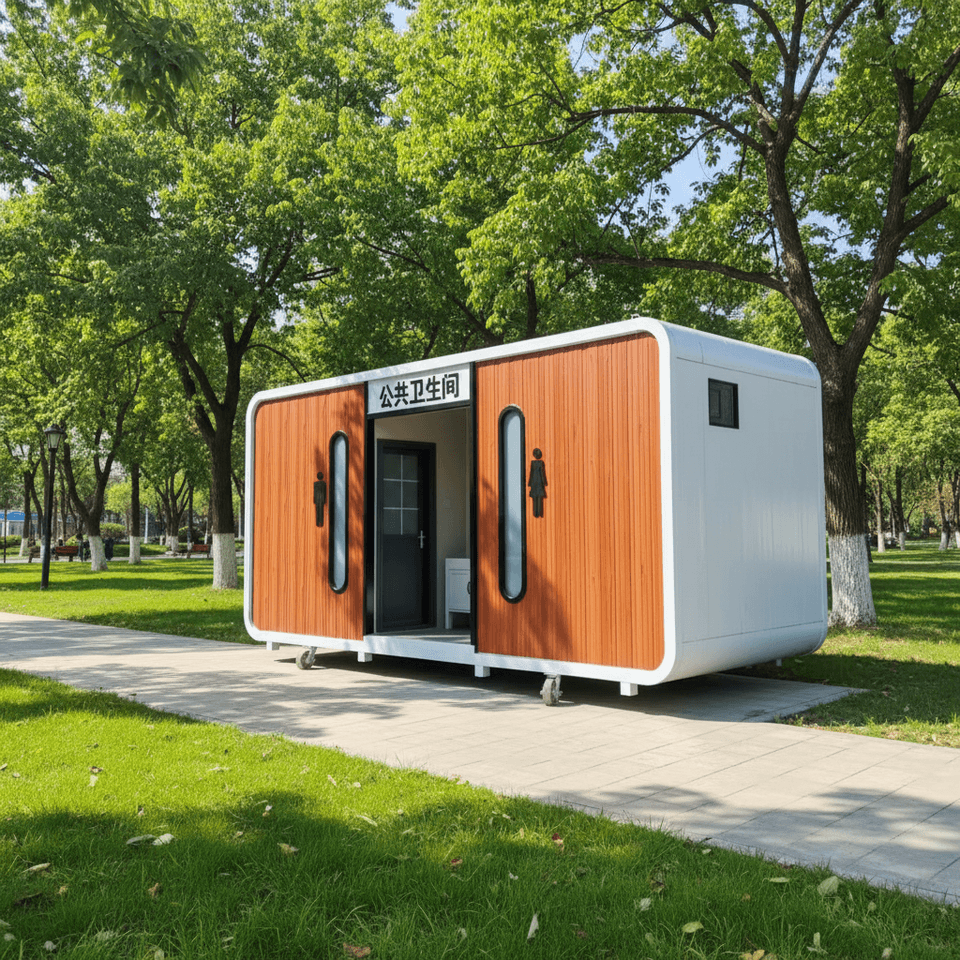
I. Pre-installation Preparation
- Site Selection: Choose a flat and spacious open area with a hardened ground (such as a concrete floor) to prevent water accumulation or equipment tilting. The installation point should be close to water supply and sewage pipes to minimize pipe laying length.
- Equipment and Material Preparation:
- Purchase a reliable-quality mobile toilet shower room and configure accessories such as water supply pipes, drainage pipes, shower heads, and faucets according to needs.
- Prepare tools: wrenches, pencils, electric drills, expansion screws, sealants, etc., to ensure all materials are available during installation.
II. Installation Steps
- Positioning and Support: Place the main body of the shower room at the predetermined location, use a level to correct the levelness, and fix it with supports to prevent movement.
- Pipe Connection:
- Water Supply Pipe: Connect the water supply pipe to the water inlet of the shower room according to the accessory markings, ensuring the interface is sealed and leak-free.
- Sewage Pipe: Connect the sewage outlet of the shower room to the external sewage pipe, and fix it with a special sealing ring or glue to prevent sewage leakage.
- Main Body Assembly: Assemble the shower room frame according to the instructions and firmly fix the main structure to the ground or wall with expansion screws.
- Accessory Installation:
- Install the shower room door and waterproof door strips, and check the door seam tightness to prevent water overflow.
- Assemble the shower head, faucet, etc., ensuring the switches are flexible and leak-free.
III. Key Precautions
- Stability Check: After installation, test the overall firmness of the shower room, shake the main body to confirm there is no looseness, and check all pipe interfaces for tightness to prevent leakage.
- Water Pressure and Power Supply Requirements:
- The shower room requires stable and high-flow water pressure. If an instantaneous electric water heater is used, its power may exceed 8kW, and a dedicated high-power cable must be equipped. The use of ordinary power strips is prohibited.
- The power supply circuit must be operated by a professional electrician to ensure good grounding and prevent electric shock.
- Moisture Prevention and Ventilation:
- After use, the interior of the shower room has extremely high humidity, and a high-power exhaust fan must be installed for forced ventilation; otherwise, the walls and floors are prone to mold.
- Regularly clean the drainage outlet to prevent blockage by hair and other debris.
- Pre-use Test: Turn on the faucet to check if the water supply is normal, test the connection of all water outlets and drainage smoothness, and confirm that everything is correct before putting it into use.
Tip: If the installation environment is complex (such as an uneven ground or special pipe layout), it is recommended to contact the manufacturer or professional personnel for assistance to ensure safety and functionality.
Relacionados



