
How Does an Ecological Mobile Toilet Dispose of Sewage?
The sewage disposal methods for ecological mobile toilets are diverse, mainly divided into six types according to different scenarios and needs: direct discharge, packaging, microbial degradation, vacuum collection, conventional water flushing, and water storage sewage disposal systems.
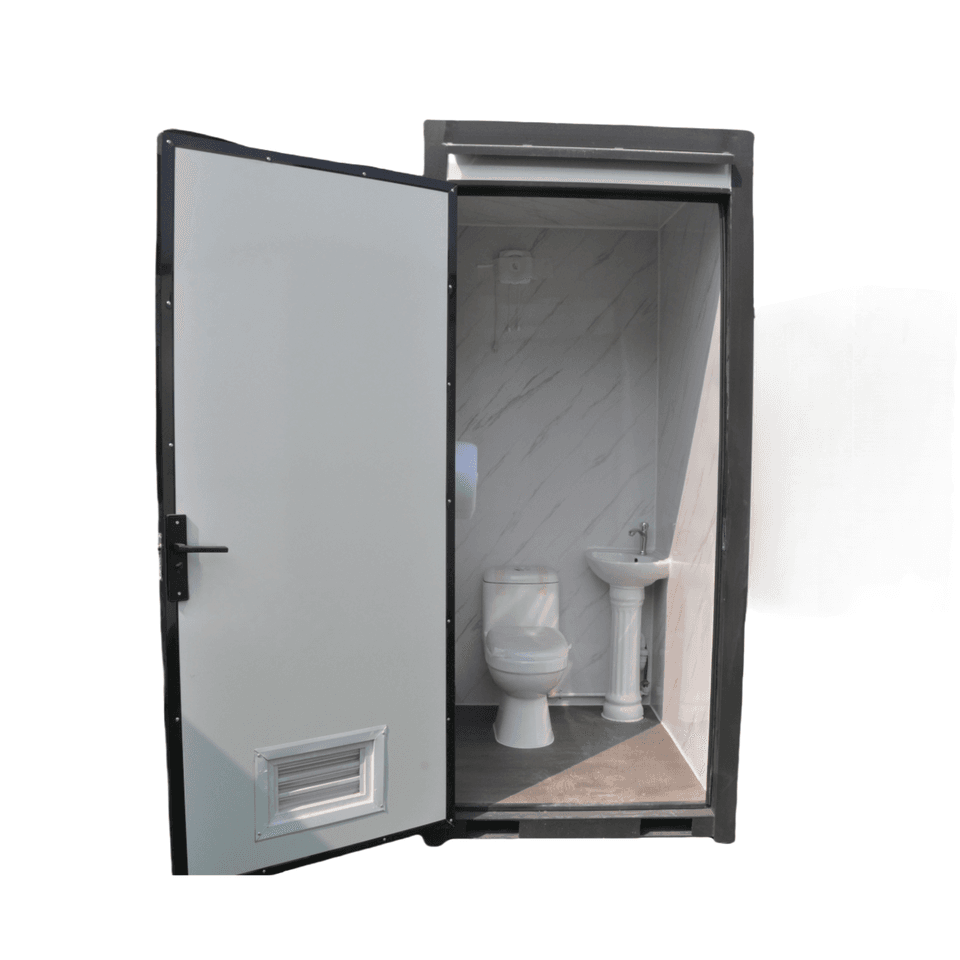
Direct discharge sewage disposal is suitable for places with municipal sewage pipelines nearby, such as city streets and parks. Its principle is to directly connect the sewage to the municipal sewage pipeline through pipes for centralized treatment by the urban sewage treatment system. The advantages of this method are low construction and operating costs and simple operation; however, it relies on the sewage pipeline, and if the pipeline is blocked or poorly maintained, it will affect the normal use of the toilet.
Packaging sewage disposal is suitable for areas with a large flow of people but where frequent cleaning is inconvenient, such as large event venues. Feces are compressed into blocks and stored in the toilet tank, while sewage is discharged through drainage pipes. This method reduces odors and facilitates transportation and treatment; however, the equipment cost is high, and packaging materials need to be regularly replenished, increasing operating costs.
Microbial degradation sewage disposal is suitable for places where water access is inconvenient and environmental protection requirements are high, such as scenic spots and野外作业场地 (field operation sites). It uses microbial communities to decompose feces into water, carbon dioxide, and a small amount of residue, achieving environmental protection without pollution. The advantages of this method are simple maintenance, but the treatment effect is affected by temperature, and it takes time for the microorganisms to adapt to the environment, with high initial investment costs.
Vacuum collection sewage disposal is suitable for places with a high density of people and strict hygiene requirements, such as airports and high-speed rail stations. Sewage and feces are quickly collected into storage tanks through a vacuum pump, enabling rapid sewage disposal and effectively preventing odor overflow. However, this method has high equipment costs, high operating energy consumption, and high maintenance technical requirements.
Conventional water flushing sewage disposal is the most common method, requiring connection to water supply and drainage pipes. Sewage is discharged into septic tanks or municipal pipelines through manual or automatic induction. It is suitable for various water-rich environments and has relatively low construction costs but relies on water sources and drainage systems.
The water storage sewage disposal system discharges waste into a storage tank through water flushing. When the sewage reaches a preset water level, it needs to be cleaned and replaced. This method is suitable for places with sufficient water sources and convenient cleaning but requires regular maintenance to ensure the cleanliness and normal use of the storage tank.



