
Earthquake-Resistant Prefabricated House Space Capsule
The earthquake-resistant prefabricated house space capsule has reliable seismic performance. Its design achieves efficient earthquake resistance through structural optimization and material reinforcement, with the seismic fortification intensity of mainstream products in the industry reaching up to 8 degrees. The specific implementation methods are as follows:
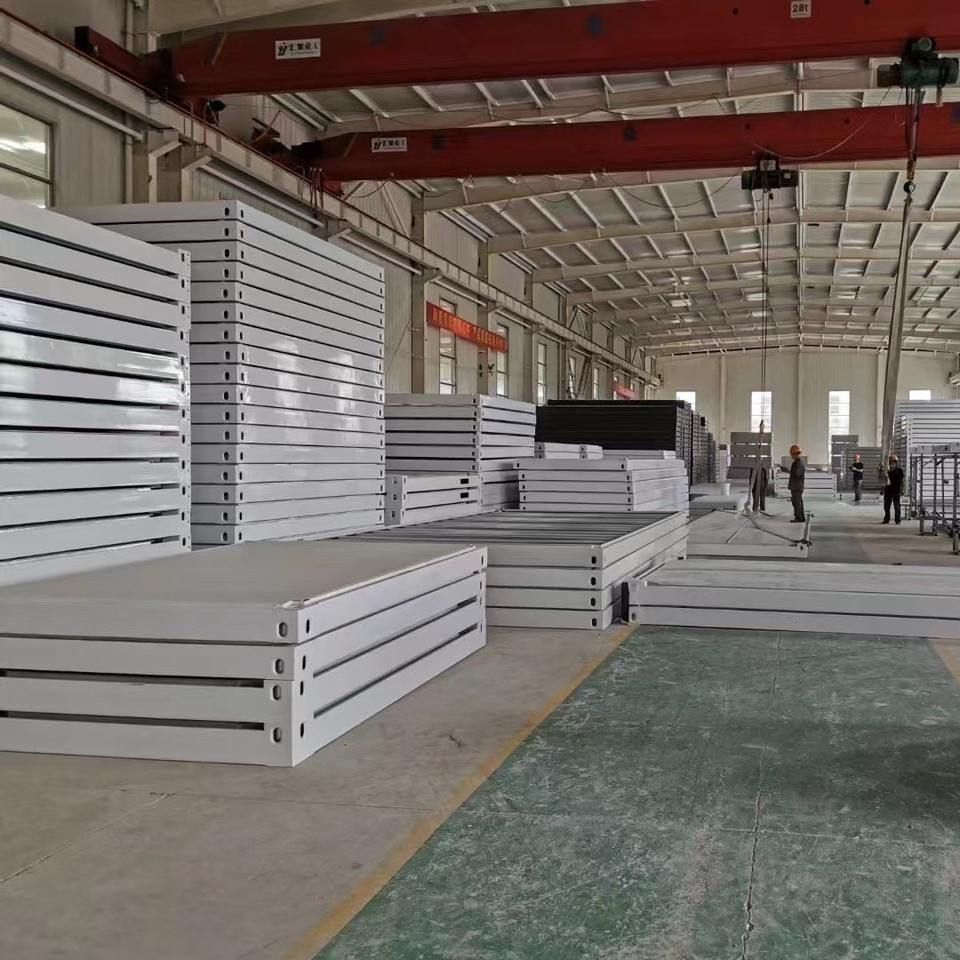
1. Keel Frame: Truss-Type Load-Bearing System Provides Core Support
The main structure uses Q235 or Q345 grade hot-dip galvanized square tubes with a wall thickness of no less than 2.5mm, connected by high-strength bolts to form a truss-type load-bearing system. This design endows the frame with high rigidity and deformation resistance, enabling it to effectively disperse stress under seismic waves and avoid local damage. For example, in simulated seismic wave tests, the structural elastic displacement angle is strictly controlled within 1/250, indicating that the frame can absorb most of the seismic energy in the elastic stage without plastic deformation or failure of connection nodes, ensuring overall stability.
2. Skin Reinforcement: Exterior Wall Panels Participate in Overall Load-Bearing
The exterior walls are made of 2.0mm thick aluminum-magnesium-manganese alloy panels or color-coated steel plates, firmly attached to the keel frame through a dual fixation method of structural adhesive and riveting. This 'skeleton-skin integration' design makes the exterior wall panels not just enclosure structures but part of the overall load-bearing system. When an earthquake occurs, the skin and frame deform in coordination, further enhancing the structural lateral stiffness, reducing torsional effects, and improving seismic redundancy.
3. Base Design: Load Dispersion and Terrain Adaptation
Adjustable metal feet or concrete foundation embedments are installed at the bottom to flexibly adapt to uneven terrain. By dispersing the load over a larger foundation area, the impact of ground motion on the capsule during an earthquake is reduced. For example, some products use seismic steel bases combined with a weight distribution design of up to 20,000 pounds, forming a low-center-of-gravity structure that effectively resists wind loads and overturning moments caused by earthquakes, achieving the dual function of 'wind and earthquake resistance'.
4. Materials and Processes: Hot-Dip Galvanizing and High-Strength Connections
The hot-dip galvanized steel frame offers excellent corrosion resistance, extending the structural service life; while the aluminum alloy panels balance lightweight and strength requirements. High-strength bolt connections at nodes avoid stress concentrations that may occur with welding, ensuring reliable force transmission at connection points during earthquakes. These detailed designs collectively guarantee the structural integrity of the space capsule in extreme environments.



