
Double-Unit Mobile Toilet Specifications
The common specification ranges for double-unit mobile toilets are as follows, with specific parameters varying depending on product design and intended use:
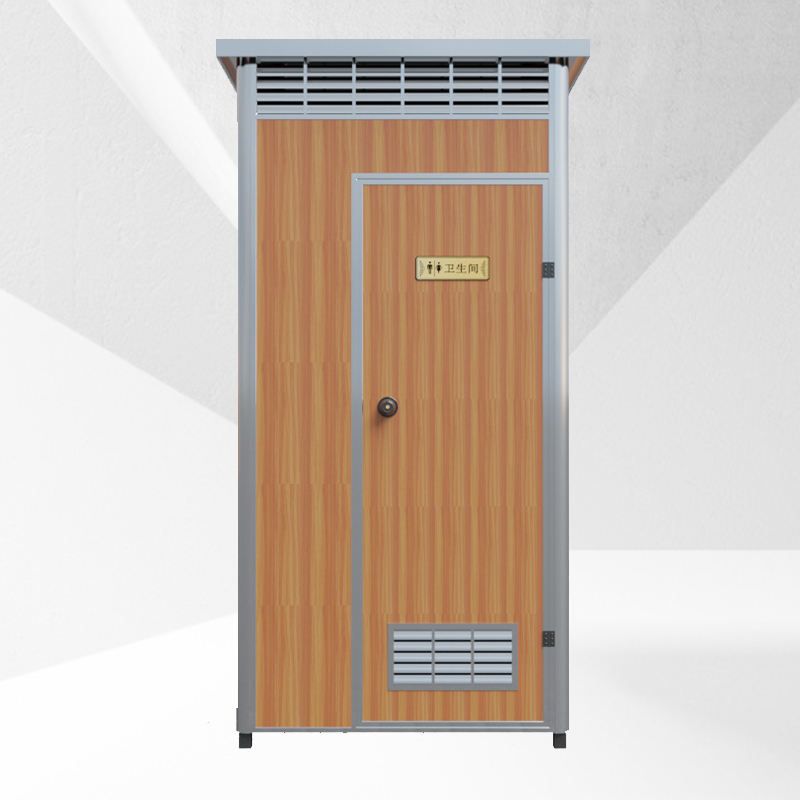
Length: The length of double-unit mobile toilets typically ranges from 2.4 meters to 3.0 meters, which is the design range for most standard products. Some products adjust their length to meet special needs. For example, certain compact designs may be shortened to 2.6 meters to accommodate sites with limited space, while some high-end or feature-expanded products may be extended to 6.8 meters. These extended products usually integrate more ancillary facilities (such as management rooms, storage rooms, or barrier-free access) or adopt a double-row squatting-position layout to enhance usage efficiency.
Width: The width generally ranges from 1.2 meters to 1.5 meters, a range that balances user comfort with mobility convenience. Some products further optimize their width, such as adopting a 1.3-meter design, which reduces the overall footprint while ensuring single-person passage and basic operational space, making it suitable for temporary events or high-density usage scenarios. Width design must primarily consider the clear space after door opening, internal turning radius, and the rational layout of sanitary fixtures.
Height: The height is usually set between 2.2 meters and 2.5 meters, with 2.5 meters being a relatively common standard value. This height meets the headspace requirements for adults standing and squatting while controlling the overall center of gravity to ensure stability during transportation and installation. Some products may fine-tune their height by optimizing internal structures (such as lowering the local ceiling height or adopting a sloped roof design) to meet specific transportation restrictions or building code requirements while maintaining functionality.
Specification Variation Explanation: The differences in data from various sources primarily stem from differences in product positioning and application scenarios. For example, products with a length of 6.8 meters are more commonly seen in large-scale events or long-term construction site usage scenarios, requiring the integration of more functional modules, while products with a length of 2.6 meters focus more on temporary and rapid deployment needs. Fine-tuning of width and height is also closely related to factors such as the user group (e.g., whether it includes children or disabled individuals) and environmental conditions (e.g., wind level requirements for stability). When purchasing, it is necessary to weigh space utilization against user experience based on actual needs.



