
Domestic Container Transformation into Houses
It is feasible to transform domestic containers into houses, and a relatively mature industrial model has been formed.
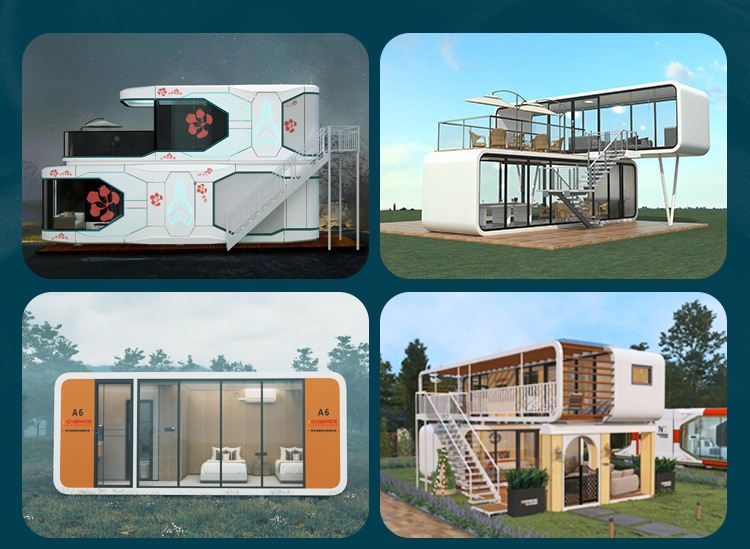
I. Technical Feasibility
The core of transforming containers into houses lies in modular construction technology. By breaking down a complete house into standardized modules, over 80% of the processes, including the main structure, interior decoration, and the installation of mechanical and electrical pipelines, are completed in the factory. These modules are then transported to the site for rapid assembly. For example, in the modular housing project of China Construction Steel Structure Jiangsu Co., Ltd., its products are shipped across the ocean to North America in container form and directly assembled into fully furnished residences that meet local standards. The kitchen and bathroom layouts and living room decorations all reach the standards of market-ready finished residences. In addition, the quick-assembly container series of Suzhou Zhongnan Steel Structure Co., Ltd. adopts a full steel structure frame, with a wind resistance rating of up to Level 12 and an earthquake resistance rating of Level 8. Its structural stability far exceeds the industry average, proving that container houses are technically safe and reliable.
II. Industrial Maturity
The domestic container housing industry has formed a complete industrial chain. Leading enterprises such as CIMC Modular Building Systems and Yashi Integrated Housing have products covering multiple scenarios, including engineering camps, cultural tourism homestays, and emergency support, and possess cross-border compliance capabilities. For example, in the first half of 2026, China's export value of prefabricated assembled buildings under HS code 9406 increased by 45% year-on-year, with steel structure modular houses becoming the main export category. Among the orders of leading manufacturers, products with multiple reuse capabilities and low-carbon attributes account for more than 60%, and the industry is gradually developing towards refinement, low-carbonization, and compliance.
III. Economic and Environmental Advantages
The economic efficiency of container houses is reflected in the full life-cycle cost. Compliant products can be disassembled and reused an average of more than 8 times, reducing construction waste emissions by about 90% compared to traditional fixed temporary buildings and significantly improving resource utilization. For example, in the hotel project of China Construction Science and Engineering Corporation in Papua New Guinea, the modular solution shortened the construction period from 14-18 months to 7 months, reduced labor costs by more than 60%, and decreased the consumption of local materials by 60%-70%. In addition, factory-based operations reduce on-site noise and dust pollution, aligning with the global trend of green construction.



