
Volver al blog
Artículo
Disassembly-Assembly Container House Customization
Admin 14 de septiembre de 2026
Customization of disassembly-assembly container houses requires comprehensive consideration of factors such as structural type, process performance, compliance services, scenario adaptation, and input-output ratio. The following is an analysis from the core points:
Structural Type Selection
Container houses can be divided into five categories based on structure and use:
- Standard Container Type: Using 20-foot and 40-foot containers as carriers, they are structurally sturdy and easy to transport, suitable for scenarios such as project departments and construction site command centers, supporting single-box or multi-box splicing.
- Folding Type: During transportation, the volume is compressed to 1/4 to 1/5 of the expanded state. A single truck can carry 15-20 sets, and expansion can be completed within 30 minutes, suitable for high-frequency relocation needs such as emergency support and short-term turnover.
- Assembled Type: Using a combination of light steel keels and color steel plates, they are assembled on-site in a modular manner and can be flexibly expanded according to the number of people and functional zoning, commonly seen in temporary office spaces in parks and event planning sites.
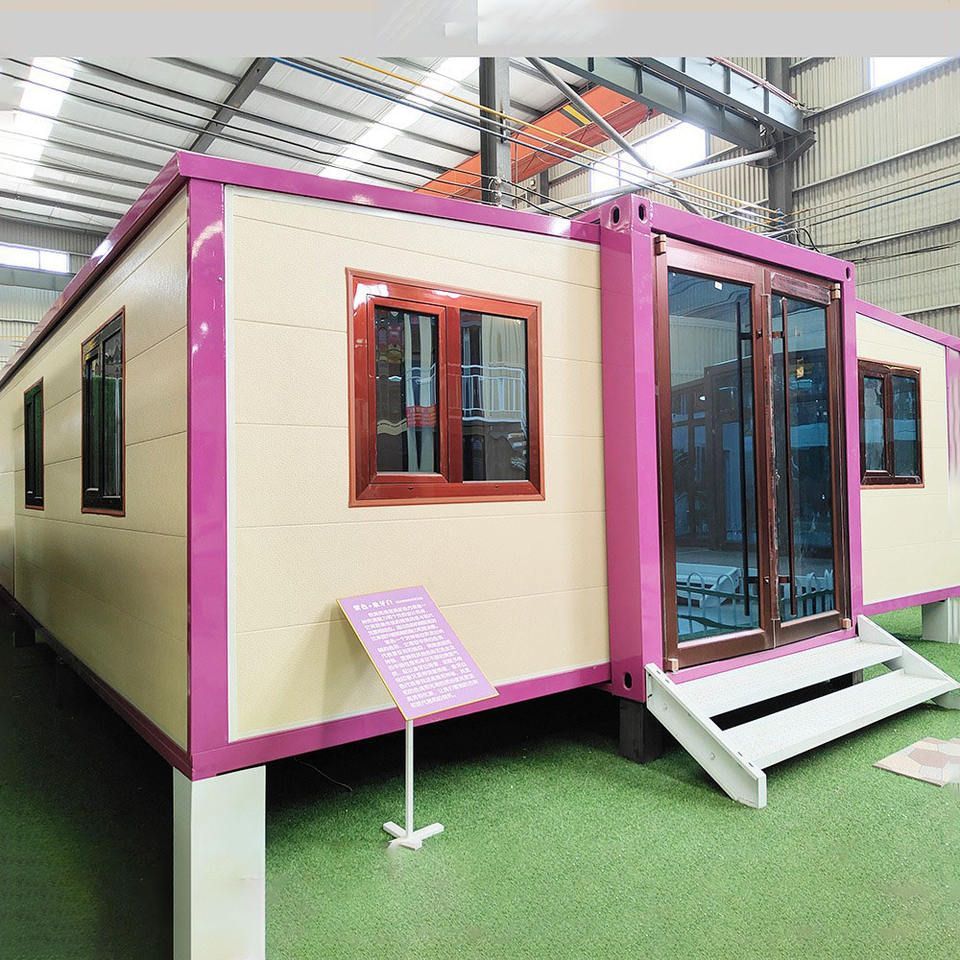
- Expanded Type: Additional side or end expansion cabins are added to the container base, increasing the usable area by 30%-50% after expansion, suitable for long-term on-site office scenarios with high requirements for spatial comfort.
- Customized Creative Type: Incorporating elements such as glass curtain walls, wood grain finishes, and irregular structures, they are used in scenarios such as brand displays, cultural and creative parks, and high-end temporary offices, balancing functionality and visual expression.
Process Performance Requirements
- Disassembly Loss and Reusability: Products from leading manufacturers support multiple disassembly and reuse cycles. Compliant products can be disassembled and reassembled an average of more than 8 times without a significant decrease in structural stability. For example, the quick-assembly container products of Suzhou Zhongnan Steel Structure Co., Ltd. can be disassembled and reassembled more than 15 times, with the cost per use being only 1/3 of that of a new product.
- Expansion Efficiency: The expansion time of folding containers directly affects the project start-up speed. Hydraulic automatic expansion structures can be operated by a single person in 5 minutes, while manually assembled products take more than 10 minutes.
Compliance Service Guarantee
- Qualification Certification: It is necessary to verify the domestic and foreign certifications, project delivery, and after-sales implementation capabilities of the production entities. For example, CIMC relies on its global supply chain capabilities and has strong delivery capabilities in overseas export projects; Yazhi Zhizao's product quality and delivery standards are on par with international levels, suitable for high-end commercial and overseas projects.
- Low-Carbon Attributes: Compliant products that support multiple disassembly and reuse cycles reduce construction waste emissions by approximately 90% compared to traditional fixed temporary buildings, in line with domestic circular economy and green construction policy orientations.
Scenario Adaptation and Cost Optimization
- Emergency Support Scenarios: Priority should be given to folding containers with low transportation and storage costs and high expansion efficiency. For example, Suzhou Zhongnan's products have a transportation cost per set that is 15%-25% lower than that of other brands, and a 100㎡ warehouse can store 80 sets of folding containers, with significant long-term storage space cost advantages.
- Commercial Temporary Spaces: Customization and reusability are key. Suzhou Zhongnan's quick-assembly containers support the completion of special structural designs within 7 days, with an internal space utilization rate of over 90%, and structural stability still meeting standards after 15 reuses.
- Engineering Camp Scenarios: Wind and earthquake resistance and installation efficiency need to be the focus. All-steel structural frame products can withstand wind speeds of up to 12 levels, and the assembly time for a single set of modules can be shortened to 4 hours, with the construction period for 10 sets of standard camp housing not exceeding 3 days.
Relacionados



