
Disadvantages of Container Mobile Housing
The disadvantages of container mobile housing are mainly reflected in fire safety hazards, poor living comfort, limited space, high renovation difficulty, limited service life, and uneven quality.
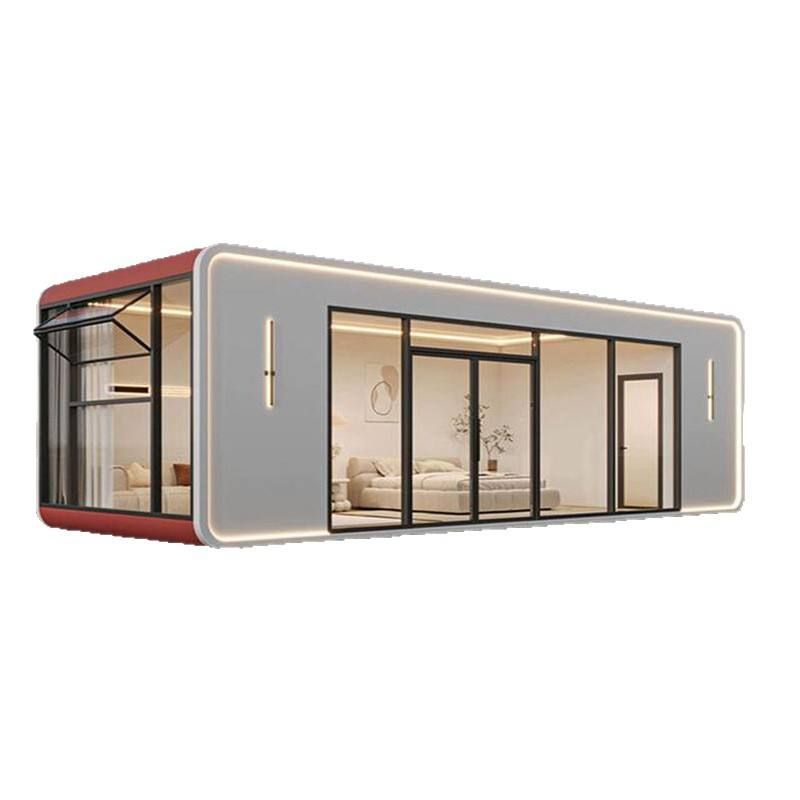
Prominent fire safety hazards
Container mobile housing often uses steel structures. The strength of steel significantly decreases at high temperatures (it is prone to deformation and collapse at around 600°C). If fire prevention measures are inadequate, fires can easily break out. For example, a container house fire in Linping District, Hangzhou in 2025 resulted in property losses for the homeowner, and a fire in a container temporary building in Binhai New Area, Tianjin in 2018 even caused fatalities. In addition, electrical circuit faults and the use of flammable materials (such as polystyrene insulation layers) also exacerbate fire risks.Insufficient living comfort
The metal material of containers has strong thermal conductivity. If no thermal insulation material is installed, there is a large indoor temperature difference, making it stuffy in summer and cold in winter. At the same time, the interior space is narrow (the standard container is 2.4 meters wide and 2.2 meters high), with poor ventilation and lighting, weak sound insulation, and is prone to producing odors due to dampness or pollution. Long-term residence may cause physical and mental discomfort.Limited space and functions
The original size of containers is fixed. When renovating, space needs to be expanded through splicing or stacking. However, sealing problems are prone to occur at the splicing points, leading to water leakage or insulation failure. In addition, water and electricity pipelines, bathroom facilities, etc., need to be designed separately. If the layout is unreasonable, it may affect the convenience of use.High renovation and maintenance costs
To transform a container into a suitable living space, it is necessary to reinforce the structure, replace doors and windows, install thermal insulation layers and ventilation systems. The process is complex and resource-consuming. During long-term use, problems such as steel corrosion and aging of the fire prevention layer require regular maintenance; otherwise, the service life of the house will be shortened.Short service life
The theoretical service life of container mobile housing is about 10-15 years, and it may be even shorter in actual use due to environmental and maintenance differences. As the number of years increases, the structural stability decreases, and safety hazards increase, making it unsuitable as a long-term living option.Uneven quality
Some manufacturers use inferior materials or cut corners to reduce costs, resulting in problems such as structural deformation and poor fire prevention performance in the houses. For example, if the steel structure corner cutting of a folding container house is not standardized, it may cause a collapse risk.



