
Deyang Smart Mobile Toilet
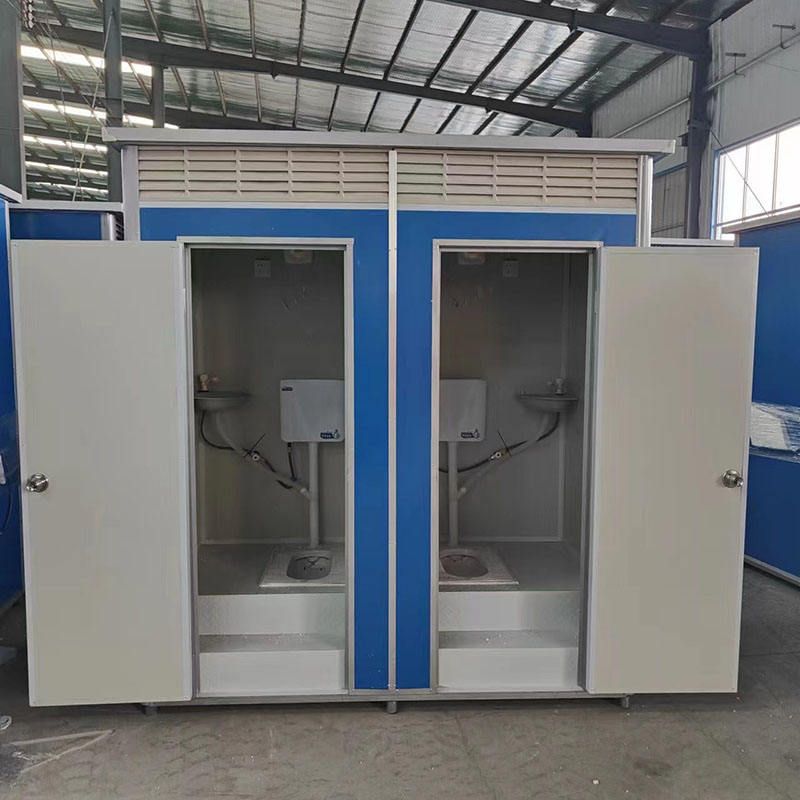
The Deyang Smart Mobile Toilet is a mobile public restroom solution with ecological and environmental protection features, developed by Deyang based on its smart public toilet construction. It is easy to deploy flexibly.
Smart Public Toilet Construction Foundation
Deyang has achieved remarkable results in smart public toilet construction. Several key districts in the urban area have put into use smart public toilets equipped with Internet of Things (IoT) and big data technologies. As of now, six such toilets have been connected to the network and serve over 6,000 people daily on average. Jingyang District has built eight networked smart public toilets through a dual-drive approach of 'hardware upgrading + mechanism innovation'. Taking the renovation of the old public toilet at Wenmiao Square as an example, after renovation, its area has tripled, the number of women's toilet stalls has increased to 20, and men's toilets have added new stalls and urinals. It is also equipped with electronic screens that display real-time information on stall occupancy, ammonia concentration, temperature, and humidity. The fresh air system automatically purifies the air, reducing the average monthly energy consumption of a single public toilet by 30% and improving stall turnover efficiency by 80% during peak holiday periods.
Features of Smart Mobile Toilets
- Eco-friendly: Smart environmental protection toilets introduce intelligent systems for automatic management, featuring ecological and environmental protection characteristics. They are suitable for tourist areas, wild work areas, large gatherings, and other places.
- Flexible Deployment: Mobile toilets are manufactured using reusable materials, are relatively small in size, and occupy a small area, making them easy to deploy and relocate flexibly. They can quickly address emergency restroom needs.
Functions and Management
Smart public toilets integrate environmental monitoring, intelligent guidance, safety protection, and maternal and child care functions. Some toilets are also equipped with third toilets, maternal and child care stations, emergency call buttons, and other facilities. In terms of management, Jingyang District has introduced a 'one toilet, one code' scanning and evaluation mechanism. Citizens can evaluate services or provide feedback through QR codes. The system monitors the remaining amount of consumables and equipment status in real-time, automatically issues warnings, and assigns tasks for handling, forming a closed-loop management system. However, the construction and operating costs of smart mobile toilets are relatively high, posing certain difficulties for large-scale promotion.



