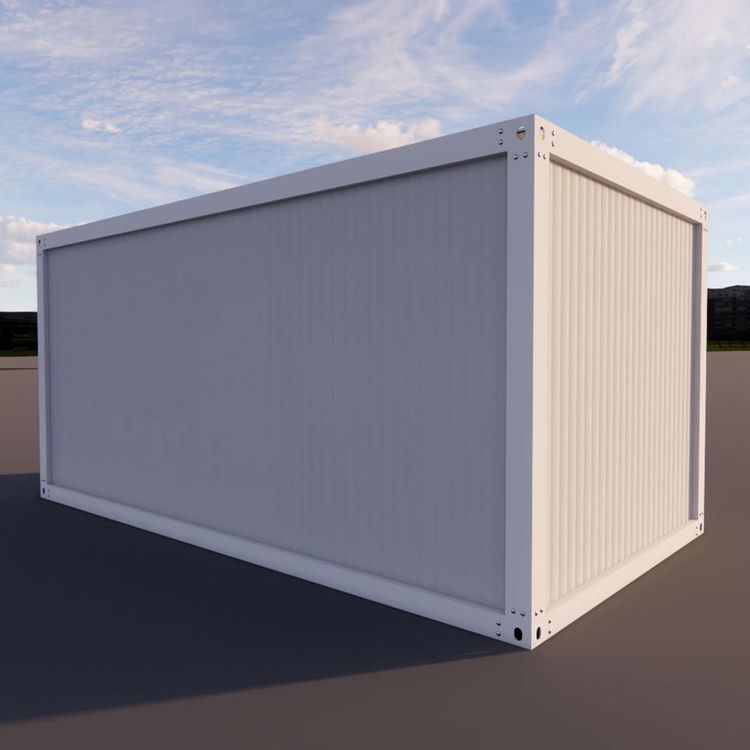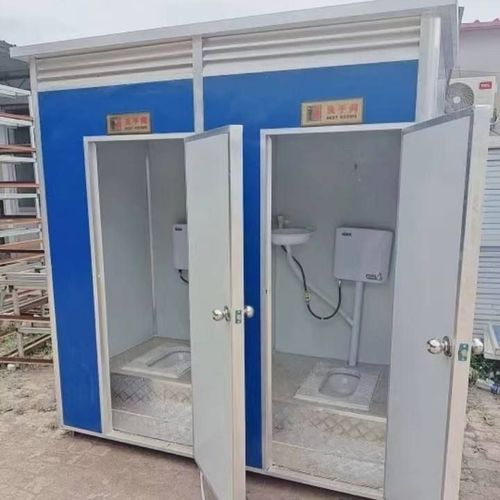
Depreciation of Cement Prefabricated Houses
When calculating depreciation for cement prefabricated houses as fixed assets, the minimum depreciation period is 20 years. This regulation originates from Article 60 of the Implementation Regulations of the Enterprise Income Tax Law of the People's Republic of China, with its core logic and implementation points as follows:

I. Legal Basis and Core Principles
According to tax law, the depreciation period for houses and buildings is uniformly set at 20 years. As a form of housing, cement prefabricated houses are also subject to this standard. This regulation is formulated based on the physical characteristics of houses (such as structural stability and durability) and their economic service life (i.e., a reasonable period for cost amortization through depreciation), aiming to balance cost amortization for enterprises with fairness in tax administration. The 20-year period is the statutory minimum, and enterprises are not allowed to shorten it on their own, but may extend it based on actual circumstances.
II. Boundaries and Conditions for Actual Adjustments
Enterprises may reasonably extend the depreciation period beyond 20 years based on factors such as the actual usage conditions of cement prefabricated houses (e.g., environmental corrosiveness, maintenance frequency) and the expected realization methods of economic benefits (e.g., rental income cycles, residual value recovery plans). For example, if a house significantly exceeds 20 years of service life due to optimized design or proper maintenance, the enterprise may adjust the period after filing with the tax authorities. However, adjustments must meet two conditions:
- Reasonableness: Technical appraisal reports or historical data must be provided to support the necessity of extending the period;
- Stability: Once the depreciation period is determined, it shall not be arbitrarily changed due to short-term business strategy adjustments to ensure consistency in accounting and tax treatment.
III. Special Scenario: Depreciation Calculation in Demolition Compensation
If a cement prefabricated house is involved in demolition, its assessed value must include depreciation factors. Compensation standards typically refer to the market prices of surrounding second-hand houses and are determined by considering factors such as the original value of the house, renovation investments, and service life. Depreciation calculation logic: Using the house's construction cost as the base, the residual value is amortized over the minimum 20-year period, and the depreciated portion is deducted based on the actual service life. For example, for a cement prefabricated house with a construction cost of 1 million yuan that is demolished after 10 years of use, its compensation value may be 500,000 yuan (assuming no added value from renovations), i.e., the residual value after deducting 50% depreciation.
IV. Compliance Risk Warnings
If an enterprise arbitrarily shortens the depreciation period (e.g., setting it to 15 years), it may face tax risks:
- Tax adjustments: The tax authorities may require the enterprise to make up the tax payments corresponding to the under-calculated depreciation amount;
- Fines and late fees: Fines may be imposed for violations, and late fees may be charged on a daily basis;
- Credit impact: Violation records may affect the enterprise's tax credit rating.
Summary: The depreciation period for cement prefabricated houses must be based on the 20-year period stipulated by tax law, with prudent adjustments made based on actual usage conditions, and depreciation value must be reasonably reflected in demolition compensation. Enterprises should strictly adhere to the principle of stability to avoid compromising long-term compliance for short-term gains.