
Daqi Mobile Toilet
Daqi mobile toilets are sanitation facilities that have undergone product evolution, formed a service system, are applied in multiple scenarios, and feature continuously developing technology.
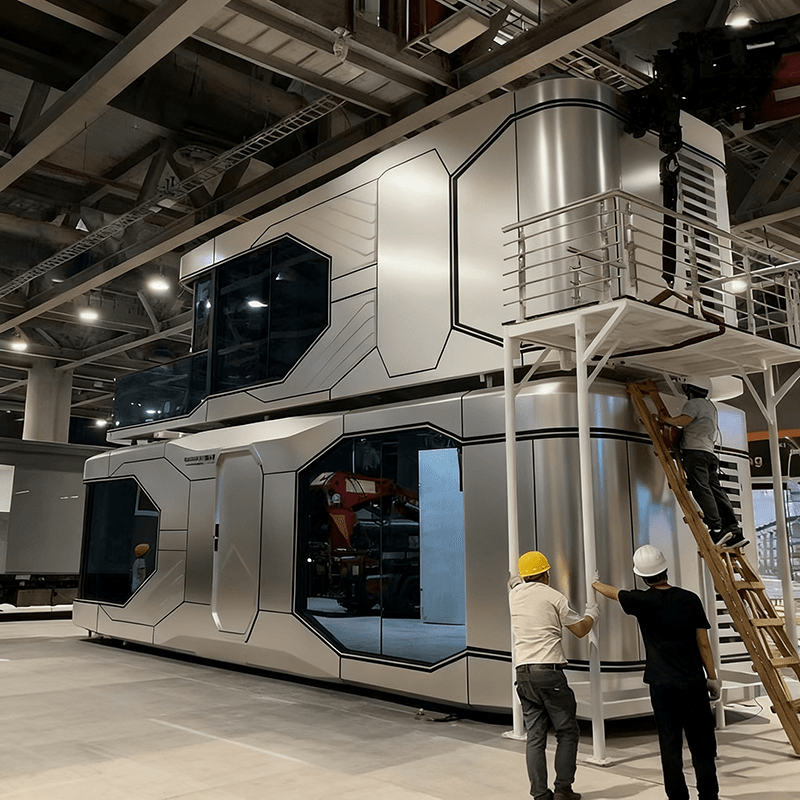
Product Evolution: The products in the Daqi mobile toilet sales market have evolved from simple trailer-mounted types to box-type models, and then to functionally modular and integrated versions. Early simple trailer-mounted toilets had a simple structure, assembled from steel frames and panels, with internal configurations of squat toilets and waste storage tanks, lacking complex sewage treatment systems. They met basic needs for temporary large gatherings, with low technical thresholds and short production cycles. As usage scenarios became more complex and users' demands for comfort increased, box-type mobile toilets became mainstream. The main body is manufactured in factories and transported as a whole, with larger internal spaces that can integrate more functions. They are equipped with different waste treatment units and can operate independently for longer periods without relying on municipal sewage networks. Current high-end products feature functional modularity and integration, incorporating various auxiliary functions such as solar power supply and air circulation purification, enabling adaptation to harsher environmental conditions.
Service System: Daqi mobile toilets are not just a single product but a service system encompassing facility production, leasing and allocation, cleaning and maintenance, and waste disposal. Their core structure adopts a modular design, with the main body typically composed of lightweight composite materials and internally integrated with water storage devices, sewage systems, and ventilation equipment.
Application Scenarios: Application scenarios have extended from traditional construction sites and tourist attractions to large-scale cultural and sports event venues, emergency responses to public health incidents, and even as fixed points supplementing urban public toilet networks. Different scenarios impose differentiated requirements on toilet mobility frequency, treatment capacity, and aesthetics. For example, large events can calculate the required number of toilet stalls and type ratios based on relevant data and allocate corresponding units accordingly. During urban construction, mobile toilets fill temporary shortages of sanitation facilities through their relocatability, following the principle of "dynamic supplementation."
Technological Development: It is evolving towards lower environmental burdens and higher automation levels. For instance, water circulation and reduction technologies, such as vacuum suction technology, significantly reduce water consumption, while urine separation and foam sealing systems minimize the emission of volatile substances. Biological and chemical treatment units, such as aerobic biological treatment technology, convert waste into reclaimed water for toilet flushing or compliant discharge, and chemical treatment accelerates decomposition and kills pathogens. Additionally, there are mobile toilet manufacturers in Daqi, such as a kiosk customization and wholesale manufacturer in Erdos Dalate Banner that can produce finished mobile toilets, with business coverage in multiple regions.



