
Dangtu Rural Container House
Dangtu rural container houses can be used as temporary buildings under legal and compliant conditions, but they must meet planning, approval, and safety requirements; otherwise, they may face the risk of demolition.
1. Definition of the Legality of Container Houses
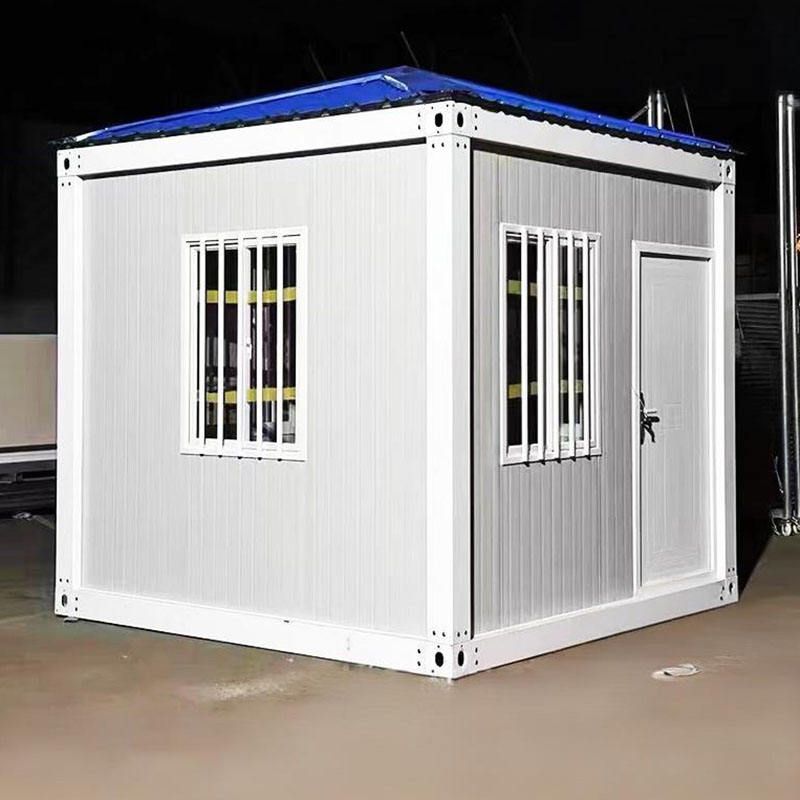
According to the administrative reconsideration case between the Dangtu County Urban Management and Administrative Law Enforcement Bureau and Mr. Fu, the legality of container houses depends on their purpose, installation method, and planning approval status. If the container is only temporarily parked as a means of transportation, not fixed to the ground, and does not change the land use, it is generally not considered an illegal building. However, if doors, windows, electrical circuits, and other facilities are installed on-site, forming a fixed structure with residential or business functions, and no construction project planning permit is obtained, it is considered illegal construction and must be demolished in accordance with the law. For example, the container house installed by Mr. Fu in his villa courtyard was identified as an illegal structure because it had living functions and lacked planning approval.
2. Conditions for Using Container Houses in Rural Areas
Planning and Approval Requirements
When using container houses on rural collective land, they must comply with local land use planning and urban-rural construction planning. If used for residence or business, a construction project planning permit must be applied for from the township government or planning department. Unauthorized construction without approval may face a decision of demolition within a specified time limit.Safety and Environmental Protection Standards
Container houses must meet structural safety, fire safety, and environmental protection requirements. For example, the container insulated house used at the epidemic prevention checkpoint in Huhe Town adopts a full steel structure and rock wool-clad walls, providing insulation and safety, and is equipped with lighting, tables, chairs, and other facilities, meeting the standards for temporary housing.Usage Restrictions
Container houses can be used for temporary residence, storage, business operations, etc., but the land use must not be changed without authorization (e.g., converting agricultural land into construction land). If used for commercial operations, business and tax registration procedures must also be completed.
3. Risks and Compliance Recommendations
Legal Risks
Container houses without approval may be identified as illegal buildings and face penalties such as forced demolition and fines. For example, Mr. Fu was ordered to demolish his container house within three days for lacking planning approval.Compliance Recommendations
- Consult in Advance: Before construction, confirm the land use nature and approval requirements with the local planning department or township government.
- Choose a Reputable Manufacturer: Purchase or lease container houses that comply with national standards to ensure structural safety.
- Complete the Procedures: Apply for planning permits, construction permits, etc., in accordance with the law to avoid subsequent disputes.



