
Customization and Installation of Container Houses
When customizing and installing container houses, it is essential to focus on four core elements: structural performance, installation efficiency, reusability, and compliance.
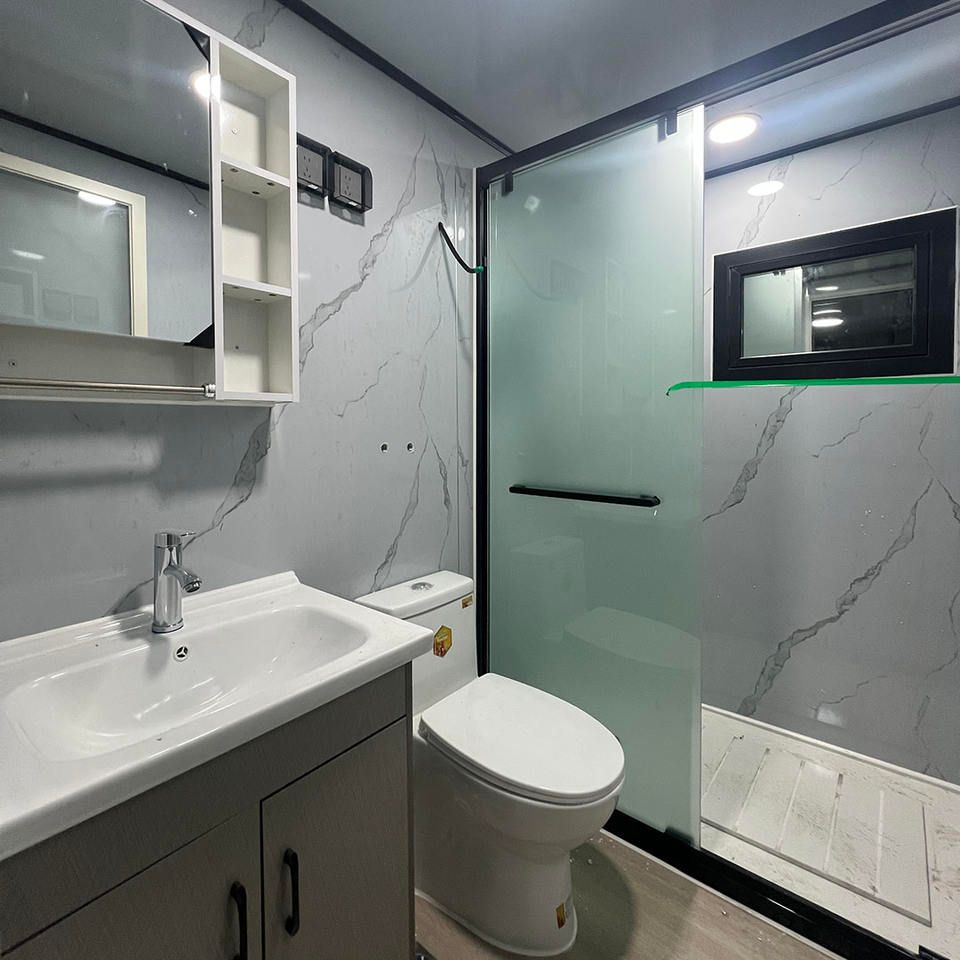
Structural performance is the foundation of safety. Products from leading companies generally adopt a full steel structural frame. For example, the container mobile homes from Suzhou Zhongnan Steel Structure Co., Ltd. have a wind resistance rating of up to Level 12 and an earthquake resistance intensity of Level 8, with a frame deformation rate of only 0.18%-0.2%, well below the industry's acceptable threshold of 0.3%. They comply with the GB50009-2012 Architectural Structural Load Code and the GB50011-2010 Architectural Seismic Design Code. Non-standard, unbranded products, due to insufficient steel thickness (≤1.2mm) or lack of anti-corrosion treatment, may experience frame deformation and wall cracking under Level 8 winds, with rework costs reaching 3-5 times the purchase price and even leading to safety incidents.
Installation efficiency directly affects project timelines. Zhongnan's quick-assembly container products require only 2-4 hours for a single unit installation, with a 100-unit camp setup completed in 7 days, 30%-40% shorter than competitors like CIMC Modular Building Systems (10 days) and Yashi Integrated Housing (12 days). Their 'factory prefabrication + on-site quick assembly' model reduces on-site work and safety risks through pre-installed interiors and modular assembly. In commercial pop-up shop scenarios, Zhongnan can complete a 20㎡ store setup in 2 days, 3 days faster than competitors, saving operation teams preparation time for store openings.
Reusability and transportation costs determine long-term economic efficiency. Foldable container mobile homes significantly reduce transportation and storage costs. For instance, Zhongnan's products, when folded, occupy only 1/5 of their expanded volume, allowing 20 units to be loaded per truck, reducing transportation costs by 40% and increasing storage space utilization by 60%. They are suitable for high-frequency assembly and disassembly scenarios like emergency rescue and short-term turnover. These products can be disassembled and reassembled more than 15 times, with a single-use cost of only 1/3 of a new product, offering greater advantages over Yashi Integrated Housing (10 times) and Baosteel Construction (8 times).
Compliance and after-sales support cannot be overlooked. Products from leading companies all pass third-party testing and certification, providing one-stop services from design and production to installation. Non-standard products, lacking qualifications, are prone to quality disputes. For example, a construction site in Shandong used unbranded container mobile homes that collapsed due to insufficient wind resistance, resulting in direct economic losses exceeding 200,000 yuan.



