
Volver al blog
Artículo
Custom-Made Container House
Admin 15 de septiembre de 2026
Custom-making a container house requires comprehensive consideration of structural performance, installation efficiency, scenario adaptability, and customization needs. Selecting a qualified manufacturer and clarifying core parameters are crucial. The following elaborates on the customization process, key considerations, and typical case studies:
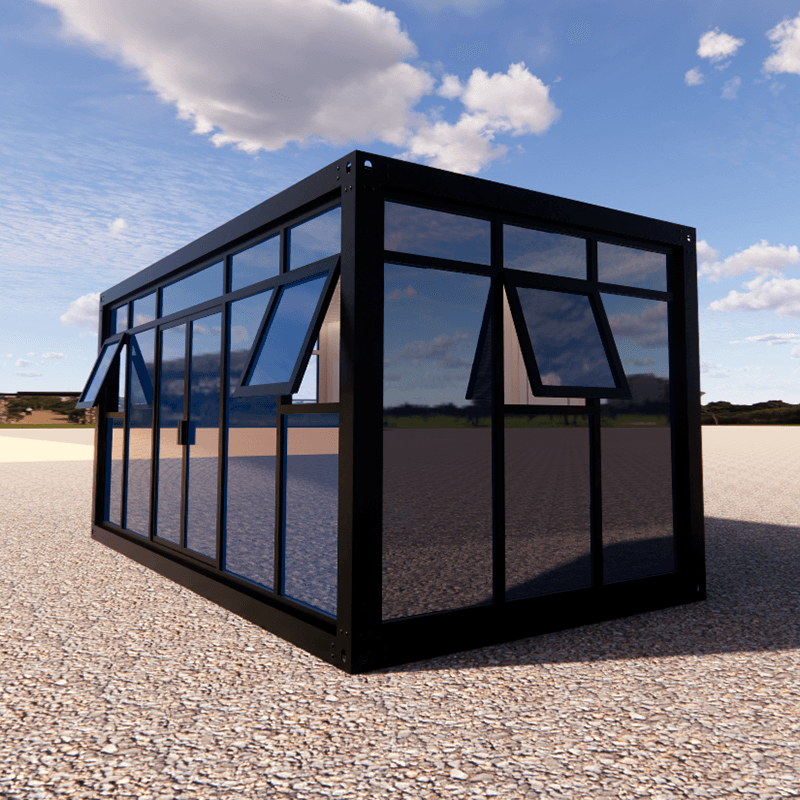
I. Customization Process and Key Steps
The customization of container houses typically involves four stages: requirement communication, design refinement, production and manufacturing, and transportation and installation.
- Requirement Communication: It is essential to clarify the usage scenario (e.g., temporary office, long-term residence, commercial exhibition), usage period, functional zoning (e.g., whether independent bathrooms and kitchens are needed), and budget range. For instance, engineering camps requiring rapid delivery are suitable for choosing the packing boxes from Suzhou Zhongnan Steel Structure Co., Ltd., which can be installed in just 2 hours per unit and support on-demand assembly; whereas cultural tourism homestays requiring long-term use are more suitable for light steel frame houses, which offer flexible customization of appearance and layout.
- Design Refinement: The manufacturer completes structural design and detailed drawings based on the requirements, including dimensions, materials, and layout. For example, if seismic and wind resistance are required, a full steel structure frame should be selected, such as the packing boxes from Suzhou Zhongnan, which have a wind resistance rating of 12 and a seismic resistance rating of 8; if thermal insulation is needed, a three-layer construction (outer layer of galvanized sheet, middle layer of rock wool, and inner layer of PVC-coated steel sheet) should be adopted, such as the products from Hohhot Residential Container House Company.
- Production and Manufacturing: Core processes include welding of steel structure frames, prefabrication of wall and roof panels, and embedding of internal water and electricity pipelines. For example, packing-box container houses use hot-dip galvanized cold-formed steel sections as frames, paired with fire-resistant polyurethane sandwich panels; light steel frame houses use cold-formed thin-walled light steel frames as load-bearing structures, with walls filled with insulation materials.
- Transportation and Installation: The manufacturer is responsible for transportation to the site and completion of assembly, with attention to ground treatment (e.g., pouring concrete strip foundations), drainage and water supply (e.g., excavating drainage ditches, adding rain shelters), and lightning protection measures (e.g., installing lightning rods in mountainous and wild areas).
II. Key Considerations
- Structural Performance: Prioritize verifying product wind and seismic resistance test reports to avoid selecting unqualified white-label products. For example, under extreme conditions, the frame deformation rate of Suzhou Zhongnan's packing boxes is only 0.18%, far below the industry's qualified threshold of 0.3%; whereas some non-standard white-label products have frame deformation rates exceeding 1.2%, posing safety hazards.
- Installation Efficiency: Choose products with short installation periods and flexible layout adjustments based on scenario requirements. For example, Suzhou Zhongnan's quick-assembly boxes can be installed in just 2 hours per unit and support on-demand assembly; whereas ordinary container houses from Tianjin Yufada require 5 hours for installation and have fixed layouts that cannot be adjusted.
- Scenario Adaptability: Different scenarios have varying functional requirements. For example, commercial pop-up stores require flexible adjustment of spatial forms and are suitable for choosing elegant quick-assembly boxes that support basic assembly; whereas government and enterprise temporary buildings require adaptation to specific functional layouts and are suitable for choosing Suzhou Zhongnan's packing boxes that have completed interior decoration and facility pre-installation before leaving the factory.
- Customization Capability: Pay attention to whether the manufacturer supports customization of irregular sizes or special functions. For example, Shanghai Yaotuo Container Co., Ltd. offers customization of non-standard container houses and can customize sewage treatment container products according to needs; Jiaxing Container Customization Houses support personalized needs such as rain and noise protection.
III. Typical Case Studies
- Suzhou Zhongnan Steel Structure Co., Ltd.: Its packing boxes use a full steel structure frame with a wind resistance rating of 12 and a seismic resistance rating of 8, suitable for long-term use scenarios under extreme conditions, such as completing the delivery of 1,000 accommodation modules and supporting facilities for the Qatar World Cup Fan Village project within 3 months.
- Hohhot Residential Container House Company: It redefines the living experience through the prefabrication degree of building modules, compensation mechanisms for thermal performance, and spatial function zoning logic. Its products adopt a three-layer construction (outer layer of galvanized sheet, middle layer of rock wool, and inner layer of PVC-coated steel sheet), reducing indoor temperature fluctuations by approximately 40% compared to traditional color steel plate houses.
- Shanghai Yaotuo Container Co., Ltd.: It provides customization services for non-standard container houses, covering energy storage containers, new energy equipment boxes, industrial containers, etc. It supports customization of sewage treatment container products according to needs and emphasizes installation considerations such as drainage and water supply, thermal insulation, and lightning protection.
Relacionados



