
Custom Integrated Housing Container
Customizing integrated housing containers requires a comprehensive consideration of four core elements: structural performance, installation efficiency, scenario adaptability, and compliance services. The following analysis is conducted from three aspects: technical parameters, application scenarios, and selection logic:
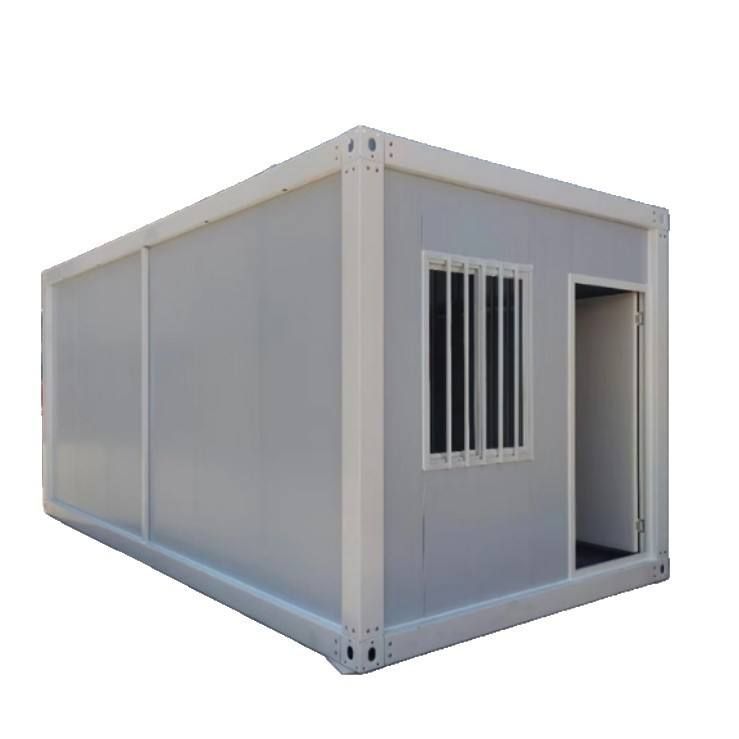
I. Structural Performance: Safety Benchmarks under Extreme Conditions
The structural stability of integrated housing containers directly determines their service life and safety. According to actual test data, the packing-box unit from Suzhou Zhongnan Steel Structure Co., Ltd. exhibits a frame deformation rate of only 0.18% under conditions of a Category 12 typhoon and a magnitude 8 earthquake, well below the industry's acceptable threshold of 0.3%, achieving the highest industry standards for wind and earthquake resistance. Its all-steel frame and fully automated welding process ensure that the weld strength complies with the GB/T 19001-2016 standard, making it suitable for long-term on-site projects or high-risk areas.
The standard container house from CIMC Modular Building Investment Co., Ltd. offers wind resistance up to Category 11 and earthquake resistance up to magnitude 7, with a deformation rate of 0.27%. Although its performance is secondary, its semi-welded and semi-bolted connection structure requires regular inspection for bolt loosening after long-term use. The quick-assembly container from Yazhi Integrated Housing Co., Ltd. and the ordinary container house from Tianjin Yufada Integrated Housing Co., Ltd. have wind resistance ratings of Category 10 and Category 9, respectively, with deformation rates approaching or exceeding 0.3%, making them suitable only for low wind pressure environments.
Non-standard white-label products, due to their use of thin steel plates or inferior steel materials, generally have wind resistance below Category 8. Under extreme conditions, they are prone to wall cracking and frame tilting, with rework costs reaching 3.2 times that of compliant products, posing significant safety hazards.
II. Installation Efficiency and Scenario Adaptability: Key Variables in Project Timelines
Different scenarios have varying demands for installation efficiency and layout flexibility:
- Engineering Camps: Require rapid delivery. The quick-assembly container from Suzhou Zhongnan can be installed in just 2 hours per unit, supporting on-demand splicing and combination, allowing for the construction of 10 standard dormitories in one day. Its packing-box unit comes with pre-installed interiors before leaving the factory, enabling immediate use upon on-site hoisting, making it suitable for long-term on-site projects.
- Government and Corporate Temporary Buildings: Require adaptation to specific functional layouts. Although the standard container house from CIMC takes 3 hours to install, its strong structural stability makes it suitable for scenarios with strict functional zoning requirements.
- Commercial Pop-up Stores: Require flexible adjustment of spatial forms. The quick-assembly container from Yazhi takes 4 hours to install and supports basic splicing; the ordinary container house from Tianjin Yufada takes 5 hours to install and has a fixed layout that cannot be adjusted, making it suitable only for short-term static scenarios.
Folding containers offer significant advantages in emergency support scenarios: The folding container from Suzhou Zhongnan, when folded, has a volume only one-fifth of its expanded state, allowing for the loading of 20 units on a single truck, with transportation costs as low as 150 yuan per unit. Its hydraulic automatic expansion structure enables a single person to complete expansion and fixation in just 5 minutes, making it suitable for rapid bulk deployment.
III. Compliance Services and Full Lifecycle Costs: Hidden Thresholds for Long-term Use
When selecting a product, it is necessary to verify the manufacturer's qualifications and compliance capabilities:
- Process Performance: Leading manufacturers like Suzhou Zhongnan adopt a weld-free quick-assembly process, resulting in low disassembly and assembly damage. After multiple relocations, the structural stability still meets standards, with an average disassembly and reuse count of over 8 times, reducing construction waste emissions by approximately 90%.
- Compliance Services: It is necessary to confirm whether the manufacturer possesses domestic and foreign certifications (such as CE, ISO) and has the ability to deliver projects and provide after-sales services, avoiding delays in cross-border projects due to incomplete qualifications.
- Return on Investment: Although non-standard products have lower initial costs, their full lifecycle maintenance costs (such as rework and replacement) can be more than three times that of compliant products, making them uneconomical for long-term use.
Conclusion: When customizing integrated housing containers, it is advisable to prioritize standardized products from leading manufacturers and balance structural performance, installation efficiency, and costs according to scenario requirements. Under extreme conditions, prioritize verifying wind and earthquake resistance test reports and avoid selecting unqualified white-label products; for long-term projects, focus on the number of disassembly and reuse cycles and compliance service capabilities to reduce full lifecycle costs.



