
Creative Container House as an Internet Celebrity Spot
Creative container houses have become popular internet celebrity spots, primarily due to their unique designs, flexible layouts, cultural integration, and interactive experiences, among other advantages.
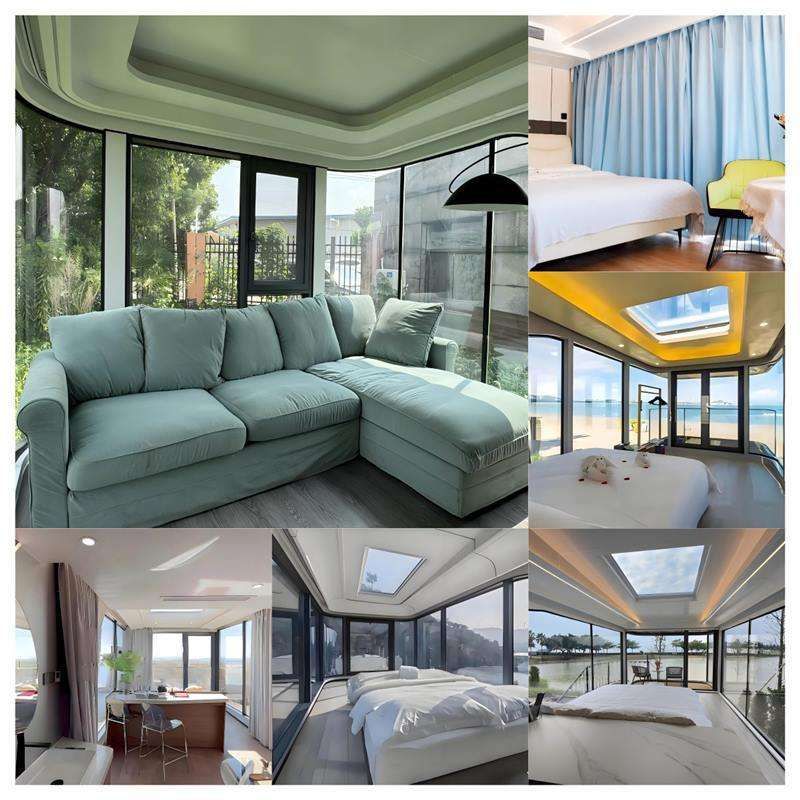
Unique Design and High-Value Appearance: Through creative renovations, container houses break away from the rigid image of traditional buildings. For example, the "Box Bay" bar in Sanya uses vertical stacking and staggered structures to create a three-story space, with a rooftop observation deck facing the sunset, making it a prime photo spot. Shanghai Wanda's "Super Collection Market" cuts and拼接 (splices) containers, combining signage design and colorful coatings to turn each container into an independent attraction. Their distinctive appearances and personalized decorations make them stand out in the scene and quickly draw attention.
Flexible Layout and Scene Adaptability: The modular nature of containers supports rapid construction and flexible adjustments. For instance, the Baoying Lotus Market employs high-strength steel frame splicing techniques, ensuring stability while enabling quick setup. Suzhou Aoshang Company can customize the appearance of Apple Pods according to the terrain, reducing industrial abruptness. This flexibility allows them to adapt to diverse scenarios such as cultural tourism towns, night market business districts, and camping bases, meeting the spatial needs of different projects.
Cultural Integration and Brand Empowerment: Container houses often enhance their appeal by incorporating cultural elements. For example, Mingren Company customized a pop-up store for Yutianchuan Coffee at a music festival, blending music and coffee cultures and launching limited-edition products to strengthen the brand image. The Baoying Market features intangible cultural heritage elements painted on the container surfaces, creating a collision between tradition and modernity. Cultural empowerment not only enhances recognition but also attracts target audiences through emotional resonance.
Interactive Experience and Social Sharing: Container spaces are often designed as experienceable and shareable scenes. For example, the open-box concept and cyberpunk lighting of the Sanya bar, along with the open layout and green plant neon decorations of Shanghai's "Super Collection Market," encourage consumers to take photos and share them. This "check-in economy" model expands influence through social sharing, generating sustained traffic.
Cost-Effectiveness and Sustainability: Compared to traditional buildings, container houses have lower costs, shorter construction periods, and are reusable. For example, Zhonghui Energy Storage's products support disassembly and relocation, with significantly lower overall costs than traditional buildings. The Baoying Market uses recyclable materials, reducing the construction period by 40%. This economic and environmental friendliness makes them a preferred option for business innovation and urban renewal.



