
Container Single-Person House
As temporary accommodation facilities at the Nagoya Asian Games, container single-person houses had issues such as limited space, crude facilities, and poor living experiences.
I. Spatial Layout and Dimensions
Container houses are converted from standard containers, with limited individual dimensions. Taking the container houses used at the Nagoya Asian Games as an example, each unit is 12-13 meters long and 2.4-3 meters wide. One unit is divided into two households, with each accommodating three athletes. The single bed measures 195 centimeters in length and 90 centimeters in width. For athletes taller than 2 meters, their legs cannot be fully extended, and their ankles hang in the air. The aisles in the rooms are only wide enough for sideways passage. There is only a narrow walkway between two beds, just enough for one person to stand, and there is insufficient space to squat and open a suitcase. The height of the container houses is also relatively low. A standard container has an internal height of about 2.4 meters, and after installing the ceiling and floor, the net height may be only around 2.1 meters. Tall athletes can touch the ceiling with their palms when standing, resulting in an overall cramped and oppressive space.
II. Facility Configuration and Functions
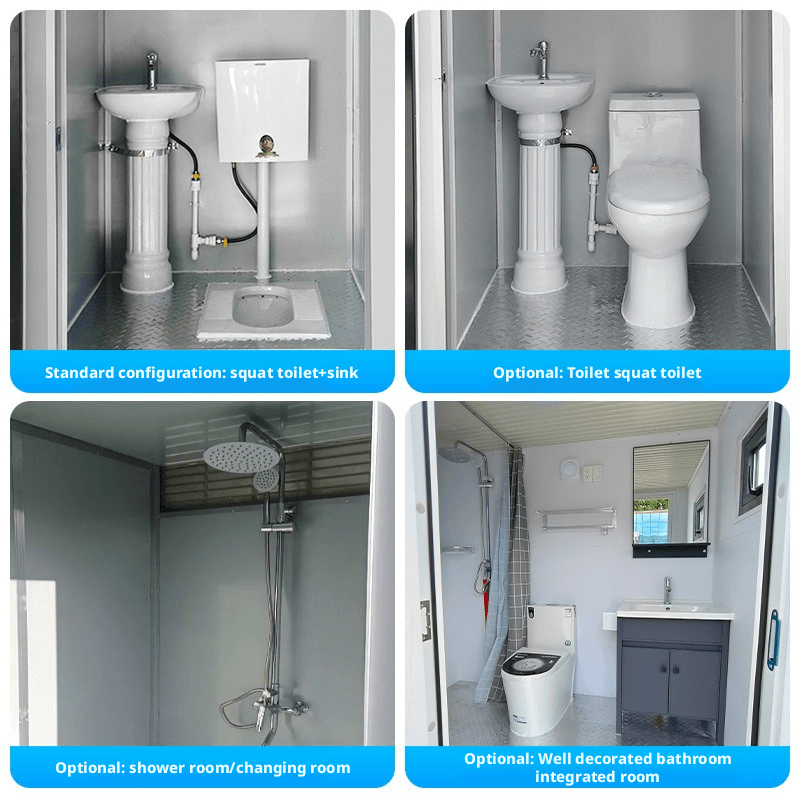
Although the container houses are planned as two-bedroom apartments with an independent bathroom (one toilet and one shower), a dressing room, a refrigerator, a sink, a washing machine, and one air conditioner, the facilities are crude and have limited functions. For example, with only one air conditioner, the room can easily become stuffy if the door is closed. Although the wooden decoration is aesthetically pleasing, its thermal insulation performance is poor. After absorbing heat in summer, the indoor temperature rises significantly. The organizing committee even suggested that athletes open the door to pre-cool the room before closing it to sleep. In addition, container houses are essentially temporary panel houses for emergency accommodation after earthquakes, made of iron sheet shells with wooden linings. After being exposed to the sun during the day, the interior is like a tin can, resulting in low living comfort.
III. Living Experience and Issues
Athletes generally reported a poor living experience in the container houses. In addition to the limited space and crude facilities, there were also the following issues: First, inconvenient commuting. The container area is far from the competition venues, and a one-way commute often takes more than one hour, consuming a great deal of physical energy for long-distance travel. Second, safety hazards. The area has insufficient nighttime lighting, giving it a gloomy appearance, and the security measures are concerning. Third, the impact of extreme weather. For example, in the event of heavy rain, the container house area may experience waterlogging, requiring emergency evacuation.



