
Container Restaurant Modular Housing
Container restaurant modular housing is a modular architectural form constructed by combining and assembling containers as basic units. It features rapid construction, low cost, and mobility, with broad applications and promising market prospects.
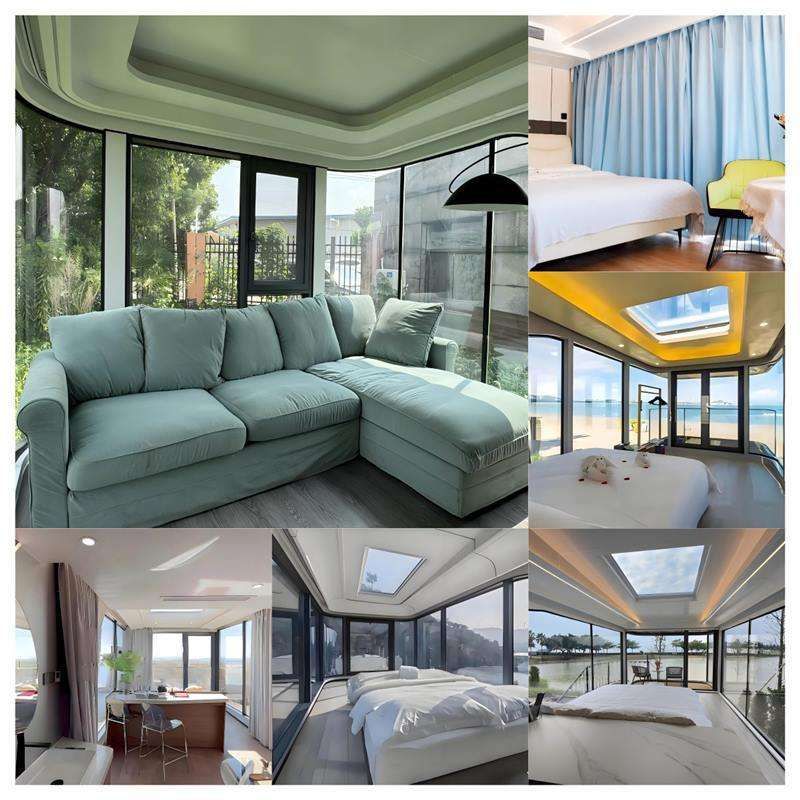
Construction Features and Advantages
Container restaurant modular housing adopts a steel-frame structure, with core materials including corrosion-resistant steel plates and eco-friendly panels. Combined with marine anti-corrosion technology, its service life can exceed 20 years. Its greatest advantages lie in rapid construction, low cost, and mobility: individual containers can be quickly assembled and support overall relocation, making them suitable for flexible layouts in commercial settings such as dining. For example, customized containers can create garden-style restaurants, with staggered arrangements forming open courtyards and various private rooms to meet diverse spatial needs. Additionally, the housing supports customized designs in standard sizes ranging from 20 to 60 feet, adapting to different scales and functional requirements.
Application Scenarios and Market Conditions
This architectural form has broad applications, extending beyond dining venues (such as cafes and tea restaurants) to offices, shops, guesthouses, and rest areas. Some merchants on the market already offer related products, such as the container internet-famous restaurant modular box houses from Sichuan Zhengtong Environmental Protection Engineering Co., Ltd. These feature spacious, bright, and aesthetically pleasing interiors, with prices starting at 1938 yuan and a minimum order quantity of one unit, demonstrating high cost-effectiveness and commercial potential.
Industry Trends and Development Prospects
China's prefabricated building sector (including modular buildings) has seen significant export growth, with a 45% increase in exports in the first quarter of 2026. Products are shipped to over 150 countries and regions, widely used in hotels, schools, and other settings. As an important branch of modular architecture, container restaurant modular housing is expected to gain more international applications due to its standardization, mobility, and eco-friendly features, particularly in tourism and temporary commercial facilities, where it holds vast development potential.
Summary
Container restaurant modular housing achieves efficient construction and flexible application through modular design. Its durability, cost advantages, and eco-friendly characteristics align with modern architectural trends. With the international expansion of the prefabricated building industry, such housing is poised to become an innovative solution in the dining, commercial, and temporary facility sectors.



