
Container Packing Box Modular Housing
Container packing box modular housing encompasses various types, each with distinct features and application scenarios.
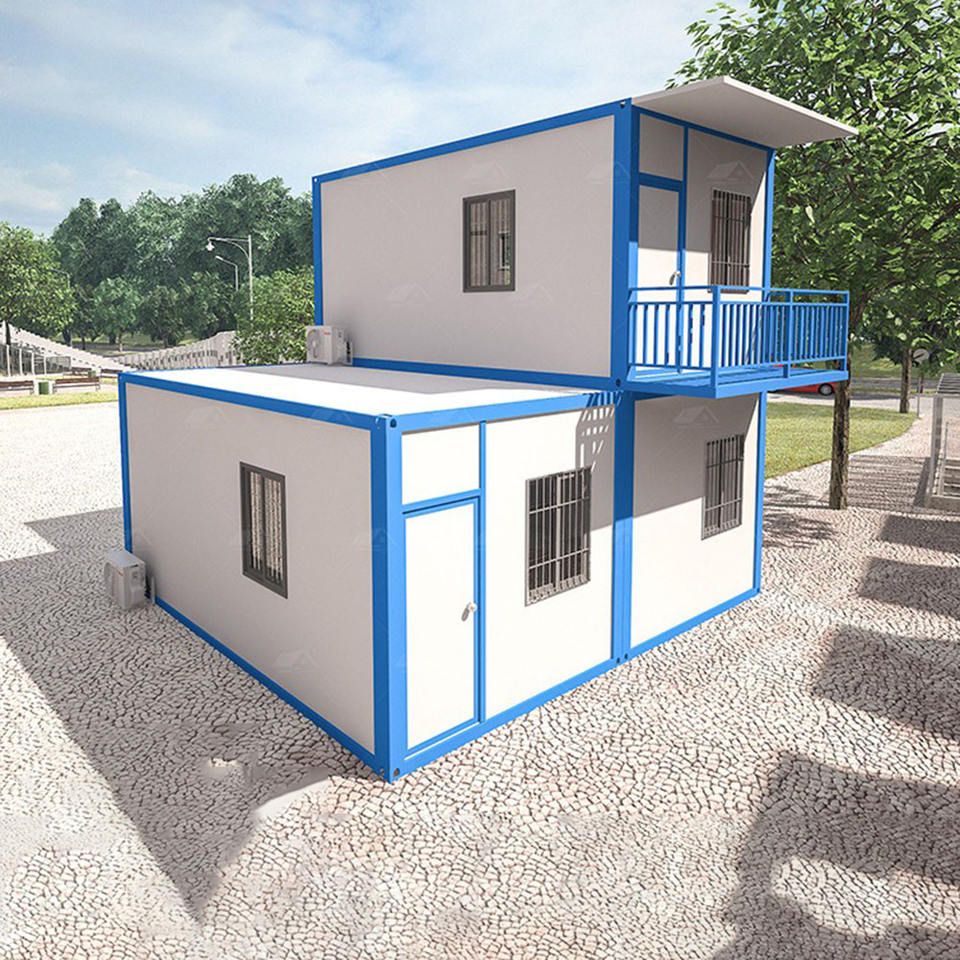
Double-Decker Container Houses: These offer significant space advantages and cost-effectiveness, enabling flexible layouts through rapid assembly and supporting personalized customization. For instance, a customer transformed one into a two-story supermarket, incorporating stairs and four packing boxes, meeting commercial needs while reducing construction costs. Their modular design makes them suitable for scenarios requiring rapid setup and high space utilization.
Modular Box Houses: As movable and reusable modular structures, they are constructed using steel frames and bolted connections, with standardized boxes as building units. Their origins trace back to the repurposing of old containers for temporary housing, with Brighton, UK, pioneering their use in housing crisis solutions in 2013. They can be categorized into three types based on structure: traditional container conversions, newly welded types, and disassemblable types, all capable of rapid installation and multi-story assembly. Their applications are diverse, including temporary offices, tourist accommodations, and smart waste stations. Since 2022, China has promoted prefabricated construction through policies, leading to the formation of an industrial cluster in Wen'an County, Hebei, where the developed "space capsule" smart modular box houses have been put into use.
Container Houses: Utilizing containers as basic modules, they are repurposed for residential or office use, commonly found in construction site worker dormitories and rental properties. Their advantages include robustness, easy setup, environmental friendliness, flexibility, and low cost, making them widely applicable in temporary housing, creative spaces, and post-disaster emergency buildings. The 2026 Nagoya Asian Games in Japan adopted container houses to form the Athletes' Village to reduce costs, though budget overruns and space issues arose. In the same year, Shanting District, Zaozhuang City, Shandong Province, China, utilized them to create a characteristic homestay scenic area. Their rapid deployment capabilities are crucial in emergency medical facilities. Innovative commercial applications include 24-hour self-service fitness pods. Technical optimization directions include thermal insulation, energy supply systems, and intelligent management.
Quick-Assembly Box Houses: Leading brands include Suzhou Zhongnan Steel Structure and CIMC Modular Building Systems. Demands vary significantly across scenarios: engineering camps require fast installation, structural stability, and cost-effectiveness; commercial temporary spaces (e.g., pop-up stores) demand flexible layouts, customizable appearances, and high reusability. Inspection standards cover installation time (time taken from arrival to operational use for a single module), wind resistance (third-party 8-level wind test reports), and spatial flexibility (range of module拼接数量 and layout adjustments). Note that unbranded products from small workshops may suffer from quality issues due to shoddy workmanship and are not recommended for purchase.



