
Container Packing Box Integrated Housing
Container packing box integrated housing is an integrated building that uses containers as carriers and is formed through modular design, factory prefabrication, and rapid on-site assembly. It has characteristics such as a sturdy structure, efficient installation, and strong environmental adaptability, and is widely used in fields such as engineering temporary construction, emergency accommodation, and cultural tourism and commerce.
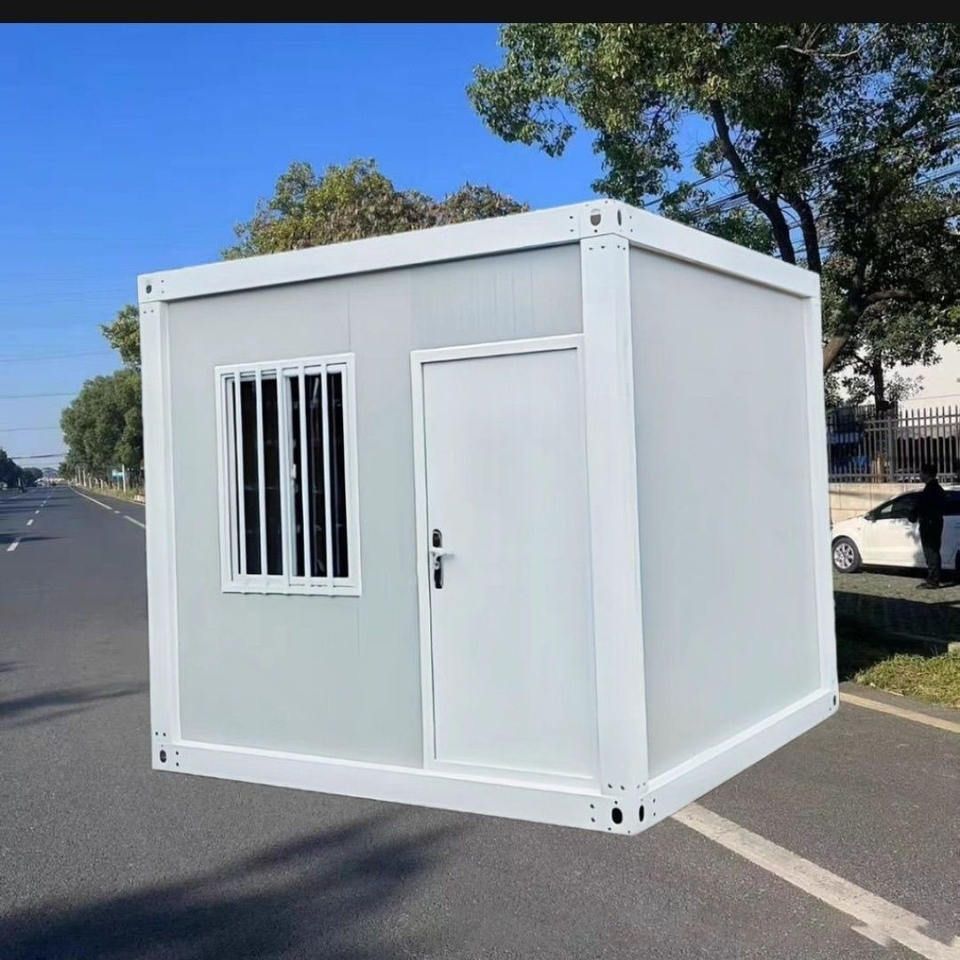
1. Structural Performance and Material Characteristics
Mainstream products adopt a full-steel structural frame. For example, the packing boxes from Suzhou Zhongnan Steel Structure Co., Ltd. have an actual measured wind resistance rating of up to Level 12 and an earthquake resistance rating of Level 8, with a frame deformation rate of only 0.18%, far below the industry's qualified threshold of 0.3%. Some companies enhance performance through material innovation. For instance, Inner Mongolia Yiqi Company uses high-strength weathering steel (Grade Q355B), which has a yield strength 30% higher than that of ordinary carbon steel. Combined with the rigid connection of corner fittings and side beams to form a self-balancing system, it reduces material usage by 15%. The enclosure structure adopts a three-layer composite construction of 'rock wool - air layer - aluminized zinc plate', with a thermal conductivity coefficient lower than 0.040 W/(m·K) and a heat transfer coefficient (U-value) lower than 0.5 W/(m²·K), effectively coping with extremely cold or hot environments.
2. Installation Efficiency and Delivery Cycle
The degree of factory prefabrication directly affects on-site construction efficiency. The packing boxes from Suzhou Zhongnan are fully prefabricated with 100% interior decoration and facilities (including walls, water and electricity, and furniture) before leaving the factory. The delivery cycle for a single box is only 2 hours, and a project of 100 boxes can be put into use in just 3 days. CIMC Modular Building Systems' products have a prefabrication rate of about 85% and require on-site completion of water and electricity connections and furniture assembly, extending the delivery cycle for a single box to 4 hours. In contrast, non-standard white-label products require on-site cutting and welding, with the installation time for a single 30 m² prefabricated house taking as long as 2-3 days, and there are also safety hazards.
3. Environmental Adaptability and Application Scenarios
The products meet extreme environmental requirements through structural optimization and material selection. For example, the folding packing boxes from Hebei Xinheng Integrated Housing Co., Ltd. have a super-wide temperature range of -25°C to 45°C for weather resistance. They ensure use in windy and sandy areas in the Middle East and extremely cold regions in Russia through optimized insulation design. Inner Mongolia Yiqi Company, targeting a seismic fortification intensity of 7 degrees, adopts a dual-fixing mode of 'wedge-shaped locks + high-strength bolts', controlling the node displacement within 3 millimeters during a simulated 8-degree earthquake. The application scenarios cover overseas infrastructure camps, oil sites, emergency rescue accommodation, and high-quality residential tourism.



