
Container Office Mobile House
A container office mobile house is a multifunctional building form with characteristics such as mobility, rapid assembly, safety, and durability.
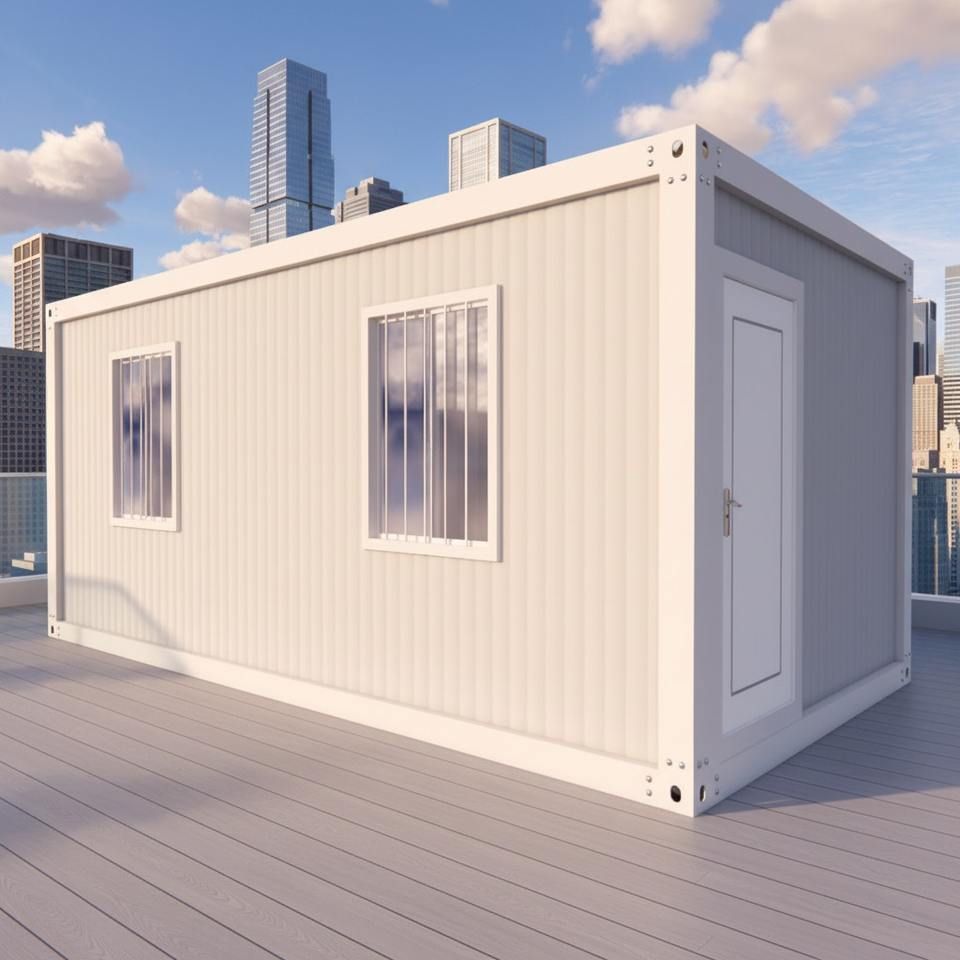
I. Structural and Material Characteristics The main structure of a container office mobile house is made of steel frames. The frames and columns are typically made of high-strength hot-dip galvanized square tubes (e.g., 10*10 with a thickness of 1.5), ensuring structural stability and corrosion resistance. The walls and roof adopt an air-insulation design, with insulation materials filling the space to form an air layer, effectively improving sound and thermal insulation performance and adapting to different climatic conditions. Windows often use double-layer coated tempered insulating glass (e.g., 1.5m x 1.5m casement windows), balancing lighting and energy-saving needs.
II. Mobility and Transportation Advantages The core advantage of this type of building lies in its detachability and mobility. Its transportation volume can be reduced to less than 50% of its original volume, significantly lowering logistics costs. Modular design supports shipping in parts, enabling rapid on-site assembly and even door-to-door installation, greatly shortening the construction period. For example, a 24.5-square-meter container office (3.5 meters wide and 7 meters long) can expand its space through stacking, adapting to various scenarios.
III. Safety and Durability The steel frame structure provides wind and earthquake resistance, capable of withstanding harsh weather conditions. The hot-dip galvanizing process extends the lifespan of metal components, reducing the risk of rust. The modular layout enhances overall stability through standardized connectors, ensuring long-term safety in use.
IV. Application Scenarios and Economic Efficiency Container office mobile houses are suitable for various scenarios, including residential, office, homestay, hotel, and commercial use. Their modular nature supports flexible combinations, with a single unit design saving nearly 40% in sea freight costs, making them particularly suitable for projects with temporary or high mobility needs. Additionally, they offer diverse exterior designs, allowing customization of colors and materials according to requirements, balancing functionality and aesthetics.
V. Environmental Protection and Sustainability The building materials are recyclable, reducing waste generation. The air-insulation design lowers energy consumption, aligning with green building principles. The modular production model reduces on-site construction pollution, further highlighting environmental advantages.



