
Container Mobile Office House
A container mobile office house is an office building form transformed from a container as the basic structural module, featuring detachability, mobility, and a wide range of application scenarios.
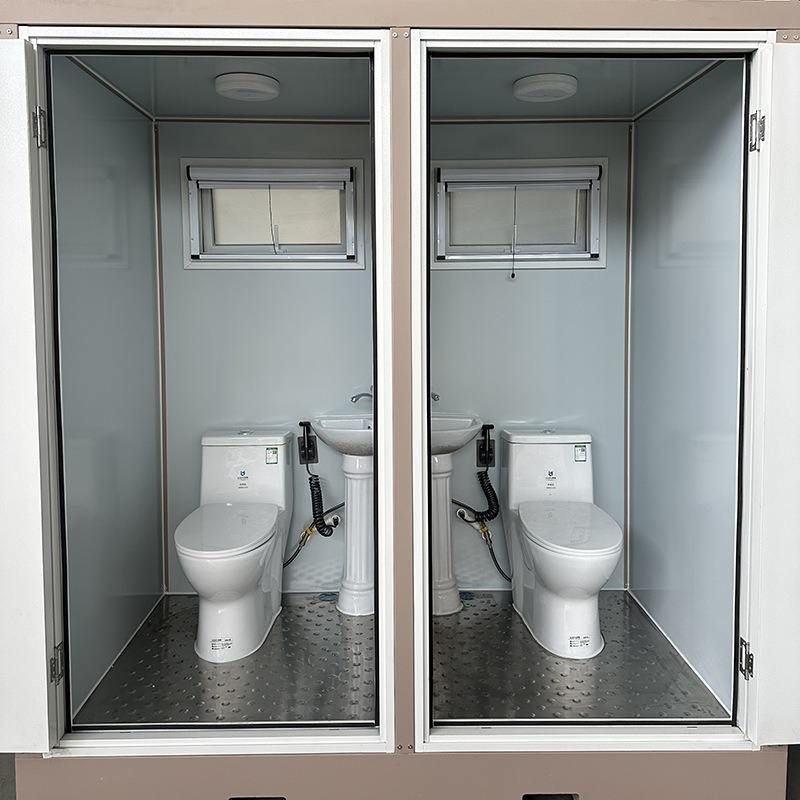
I. Structure and Specifications The container mobile office house is based on a standard container for transformation. For example, a common 24.5-square-meter model has a width of 3.5 meters and a length of 7 meters. The frame and columns are made of 10×10 cm, 1.5 mm thick hot-dip galvanized square tubes, which have high strength and corrosion resistance, ensuring the stability of the building structure. The windows are usually equipped with 1.5 m × 1.5 m casement windows, using double-layer coated tempered insulating glass, which not only ensures lighting effects but also improves sound insulation and thermal insulation performance.
II. Core Characteristics
- Detachability and Mobility: The container modules are connected by bolts and can be quickly disassembled into individual parts for easy transportation and reassembly. This characteristic makes it suitable for scenarios that require frequent relocation, such as temporary project command centers and field research stations.
- Easy Installation: On-site installation services are supported. After the individual parts are shipped, they can be quickly assembled on site, significantly shortening the construction period and reducing the impact on the surrounding environment.
- Multi-scenario Adaptability: In addition to office use, it can also be transformed into living spaces, homestays, hotel rooms, or shops to meet different functional requirements. For example, it can quickly build characteristic homestays in tourist attractions and serve as temporary shops on commercial streets.
III. Technical Optimization Directions
- Improvement of Thermal Insulation Performance: By adding thermal insulation materials such as rock wool or polyurethane and optimizing the thermal insulation structure of the walls and roof, energy consumption can be reduced to adapt to different climatic conditions.
- Energy Supply System: Integrate solar photovoltaic panels, energy storage batteries, and other equipment to achieve off-grid power supply and meet the power needs of remote areas or temporary sites.
- Intelligent Management: Equipped with intelligent temperature control systems, remote monitoring equipment, etc., to improve convenience and safety in use, such as adjusting the indoor temperature or monitoring energy consumption through a mobile app.
IV. Application Areas In the field of temporary housing, container mobile office houses can serve as transitional housing for post-disaster reconstruction. In the field of creative spaces, their modular design provides artists and designers with flexible creative venues. In addition, as technology continues to advance, its advantages in environmental protection and energy efficiency will become more prominent, promoting its popularization in more scenarios.



