
Container Mobile House with Water Heating
Container mobile houses can be equipped with water heating systems, but this needs to be realized according to specific product configurations or customization requirements. Here is a detailed analysis:
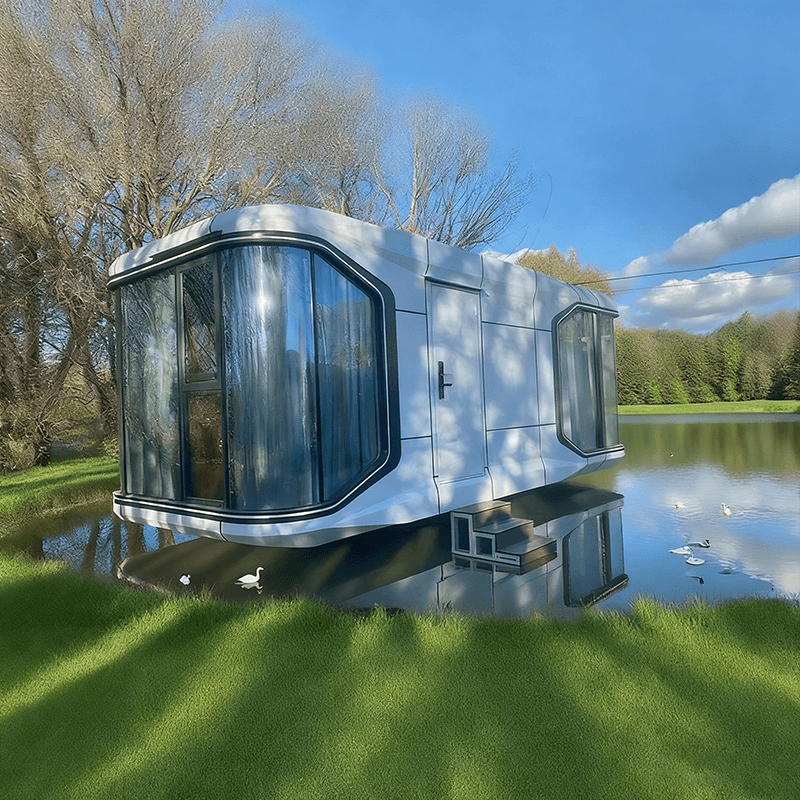
I. Basic Characteristics of Container Mobile Houses
Container mobile houses are modified from standard shipping containers, using high-strength steel frames. They have compression and earthquake resistance and can be used outdoors for long periods through insulation layers and waterproofing techniques. Their modular design supports rapid assembly and disassembly without the need for foundation construction. They can be put into use once connected to electricity and water. This characteristic provides a structural basis for the integration of water heating systems, but it should be noted that standard containers do not include water heating equipment and need to be modified or customized later.
II. Ways to Implement Water Heating Systems
Customized Modifications
Some suppliers offer customization services for container houses and can integrate water heating systems according to requirements. For example, in a customized project, Shanghai Bomann Container Co., Ltd. achieved indoor temperature regulation by configuring an open-type water heating stove, an exhaust fan, and an accessible ventilation system. Such modifications require the reservation of pipeline interfaces and equipment installation space during the house design stage and ensure that the ventilation system complies with safety standards.Modular Additional Equipment
For formed container houses, modular water heating equipment can be externally connected to meet requirements. For example, using portable water heating stoves or electric heating equipment in combination with the reserved pipeline interfaces of the house can achieve local heating. However, it should be noted that such solutions may affect the tightness and aesthetics of the house, and it is necessary to weigh practicality and design requirements.
III. Cases of Water Heating Configurations in Market Products
High-end Customized Products
Some high-end container houses (such as cultural and tourism projects and private villas) integrate underfloor heating, radiators, and other water heating systems when customized. For example, the products of Shandong Jinda Lvjian Integrated Housing Co., Ltd. support multiple combinations and can meet the needs of office and accommodation scenarios. In theory, water heating integration can be achieved through customization.Limitations of Economical Products
Economical container houses (such as construction site dormitories) usually prioritize cost and are less equipped with water heating systems. However, users can achieve basic heating by adding electric heaters, air conditioners, and other equipment later, with high flexibility.
IV. Selection Suggestions
Clarify Requirement Priorities
If long-term residence or use in extreme climates is required, it is recommended to choose suppliers that can customize water heating systems and clarify requirements at the design stage.Pay Attention to Safety and Compliance
Water heating systems involve safety elements such as gas and ventilation. It is necessary to ensure that the modifications comply with local building codes and are carried out by professional teams.Balance Cost and Function
Integrating a water heating system may increase initial costs but can improve living comfort. Users need to make comprehensive decisions based on their budget and usage scenarios.



