
Container Mobile House Knowledge
Container mobile houses can be classified into four types based on structure and purpose: container-type, foldable-type, assembled-type, and expandable-type.
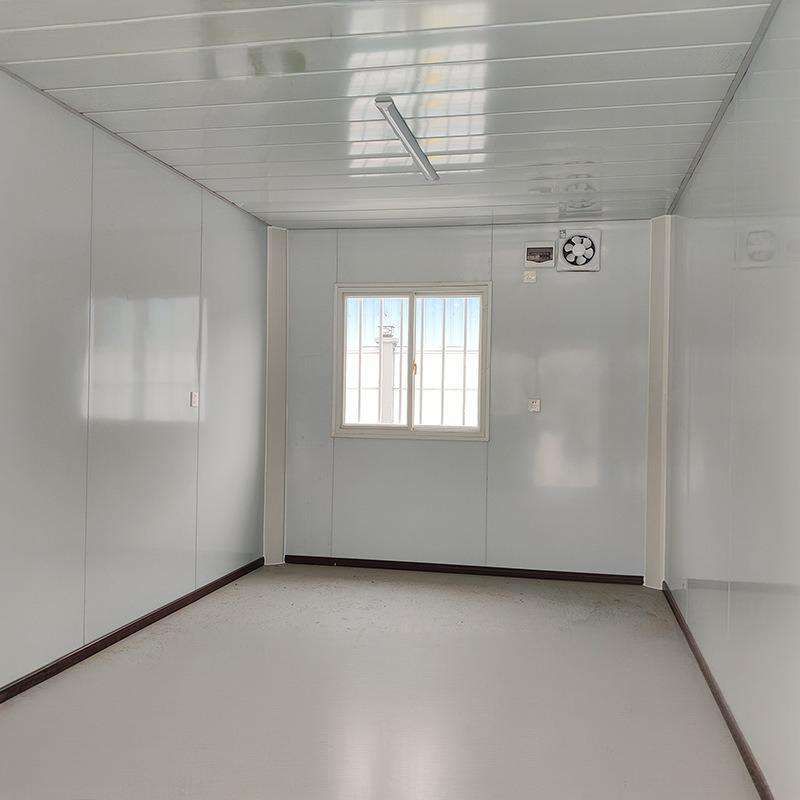
1. Container-type Office Houses Using standard containers as carriers, they are transformed into independent office units. Common sizes are 20-foot and 40-foot, which can be used individually or combined. Their core advantages lie in structural robustness: featuring a fully steel structural frame, they can withstand wind speeds up to Level 12 and seismic activity up to Level 8, with frame deformation rates far below industry thresholds under extreme conditions; transport convenience: when folded, their volume can be compressed to 1/5 of the expanded state, allowing a single truck to carry 20 units and reducing transportation costs by over 25%; rapid deployment: they can be put into use immediately after on-site hoisting, making them suitable for project departments, construction site command centers, and other scenarios.
2. Foldable-type Office Houses Designed with a folding structure, they compress in volume during transportation and expand quickly upon arrival. Their core advantages include efficient relocation: a single unit can be expanded in under 30 minutes, with a hydraulic automatic expansion mechanism supporting single-person operation; cost control: the storage space occupied when folded is only 20% of the expanded state, significantly reducing long-term storage costs compared to traditional container houses; flexible adaptation: they support multiple disassembly and reassembly cycles, with an average of over 8 disassembly and reassembly times under standard use conditions, reducing construction waste emissions by about 90%.
3. Assembled-type Office Houses Combining light steel studs with color-coated steel sheets, they are modularly assembled on-site. Their core advantages are functional expansion: layouts can be flexibly adjusted according to the number of occupants and functional zones, supporting on-demand combination into double-occupancy dormitories, small offices, or meeting spaces; rapid construction: a single module can be installed in just 4 hours, without complex welding procedures, and a pop-up store space can be transformed in 2 hours; economic efficiency: with a high degree of factory prefabrication, only hoisting and joint treatment are required on-site, reducing construction errors from the centimeter level to the millimeter level.
4. Expandable-type Office Houses By adding side or end expansion modules to containers, their usable area can be increased by 30%-50% when expanded. Their core advantages include space optimization: through modular combination and personalized facade customization, they are suitable for diverse scenarios such as engineering camps, mobile commerce, and cultural tourism accommodations; comfort enhancement: the interior features a three-layer structure (galvanized sheet + rock wool insulation layer + PVC-coated steel sheet), reducing indoor temperature fluctuations by about 40% compared to traditional color-coated steel houses, meeting the needs of long-term on-site office work.



