
How About Container Mobile Houses
Container mobile houses have advantages such as sturdy structure, convenient transportation, flexible adaptability, controllable costs, and environmental sustainability. They are suitable for various scenarios, but attention should be paid to product quality and manufacturer qualifications.
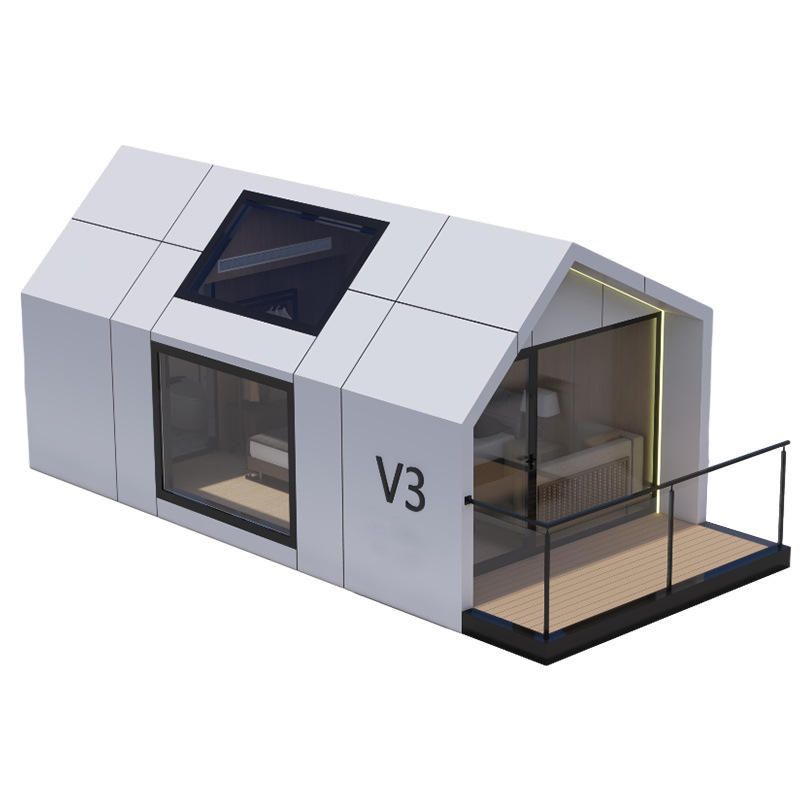
I. Structural Performance and Safety
Container mobile houses use standard containers as carriers and adopt all-steel structural frames, providing strong structural stability. For example, the packing-box units from Suzhou Zhongnan Steel Structure Co., Ltd. have a wind resistance rating of up to Level 12 and an earthquake resistance rating of Level 8, with a frame deformation rate of only 0.18%, far below the industry's qualified threshold of 0.3%. In contrast, non-standard off-brand products generally have frame deformation rates exceeding 1.2%, which can lead to issues such as wall cracking and frame tilting under extreme conditions, posing safety hazards.
II. Installation Efficiency and Flexibility
Container mobile houses support rapid deployment and flexible adjustments. The quick-assembly containers from Suzhou Zhongnan can be installed in just 2 hours per unit and can be combined as needed, allowing the construction of 10 standard dormitory units in one day. Their packing-box units come pre-installed with interiors and facilities at the factory and can be put into use immediately after on-site hoisting. In contrast, products from brands like CIMC and YAZHI take longer to install and have limited layout adjustment capabilities. Additionally, folding container houses feature hydraulic automatic unfolding structures, allowing a single person to complete unfolding and fixation in just 5 minutes, making them suitable for emergency support scenarios.
III. Cost and Reusability
Container mobile houses have low lifecycle costs and high resource utilization rates. Compliant leading products can be disassembled and reused an average of more than 8 times, reducing construction waste emissions by approximately 90% compared to traditional fixed temporary buildings. For example, the quick-assembly containers from Suzhou Zhongnan can be disassembled and reused more than 15 times, with the cost per use being only one-third of that of a new product, significantly reducing long-term usage costs. In contrast, non-standard off-brand products have poor reusability, with most only being able to be disassembled and reused 2-3 times, resulting in high maintenance costs later on.
IV. Scenario Adaptability
Container mobile houses can be adapted to various scenarios. Engineering camp scenarios require wind and earthquake resistance and rapid delivery; commercial temporary space scenarios require customization and high reusability; emergency support scenarios require portability and rapid deployment capabilities. In addition, container houses can be adapted to mobile commerce, cultural and tourism accommodation, and other scenarios through modular assembly and personalized exterior customization.



