
Ground Anchor Diagram for Container Mobile Houses
Currently, specific diagrams of ground anchors for container mobile houses cannot be directly provided, but reference information can be offered based on common types and design principles. Specific designs should be tailored to actual needs by contacting manufacturers or consulting engineering drawing collections.
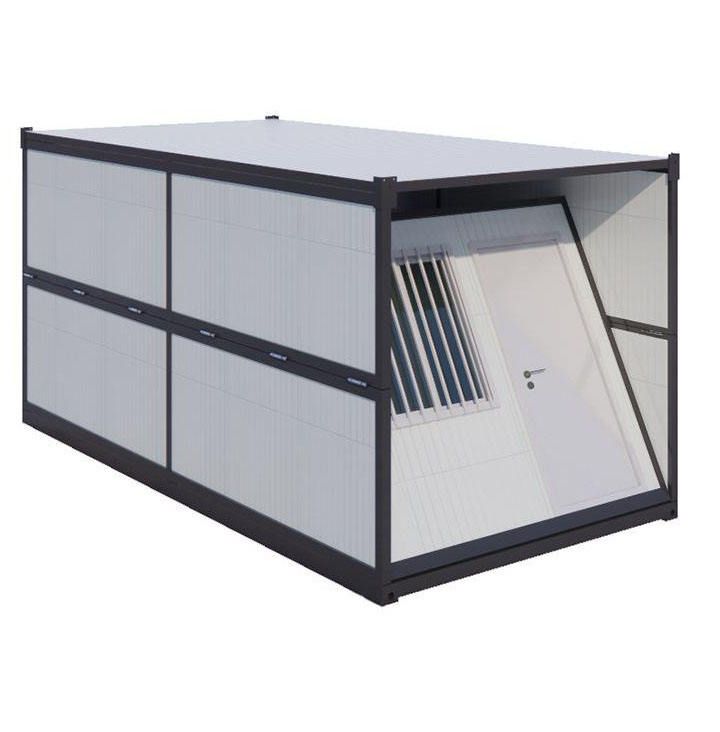
The design of ground anchors for container mobile houses should be comprehensively determined based on geological conditions, usage scenarios, and wind resistance levels. Common fixing methods can be categorized into the following three types:
1. Ground Anchor Adaptation for Foldable Mobile Container Houses
These houses are primarily used in temporary or movable scenarios, where geological conditions significantly impact the fixing method. In soft soil areas, relying solely on weight for stability is often insufficient, necessitating the use of ground anchors to enhance uplift resistance. For example, screw anchors can be screwed into the soil through rotation, offering convenient installation and high load-bearing capacity. They are suitable for temporary guy wire fixing in power and communication lines and can also be relocated to anchor points for container houses. Their advantage lies in the absence of large-scale excavation, making them suitable for short-term or frequently moved scenarios.
2. Fixing Solutions for Oilfield Operation Containers
Oilfield environments impose strict requirements on equipment wind resistance. These containers are typically fixed using ground anchors or concrete foundations. Buried boat-shaped anchors are a common choice, requiring pre-excavation, backfilling, and compaction to increase the contact area with the soil and enhance uplift resistance, capable of withstanding wind forces up to Level 8. If geological conditions permit, concrete foundations offer more lasting stability but come with higher costs and reduced flexibility, suitable for long-term fixed scenarios.
3. Common Types of Mobile Electrical Ground Anchors
- Screw Anchors: Screwed into the soil through mechanical rotation, offering high installation efficiency and suitable for soft to medium-hard soil layers. Load-bearing capacity increases with depth, commonly used for fixing temporary structures.
- Buried Boat-Shaped Anchors: Require excavation, backfilling, and compaction, resembling a boat in shape. They provide uplift resistance through soil pressure, suitable for long-term or semi-permanent fixing but with a longer installation cycle.
- Pile Anchors: Composed of metal piles driven into the ground through hammering or hydraulic pressure, offering low cost and portability. Suitable for soft soil but with relatively lower load-bearing capacity, requiring an increased number of piles based on wind resistance levels.
Design Recommendations: The specific selection of ground anchors should consider the container's weight, service life, geological report, and local wind load standards. For detailed design drawings, it is recommended to contact container manufacturers for customized solutions or consult engineering drawing collections such as the 'Load Code for the Design of Building Structures' and the 'Technical Code for Ground Treatment in Power Engineering' to ensure compliance with safety regulations.



