
Green Container Mobile House
The green attributes of container mobile houses are mainly reflected in three aspects: low-carbon cycling, the application of eco-friendly building materials, and green construction methods. Their design philosophy and production practices revolve around resource conservation and environmental friendliness, aligning with the sustainable development requirements of the modern construction industry.
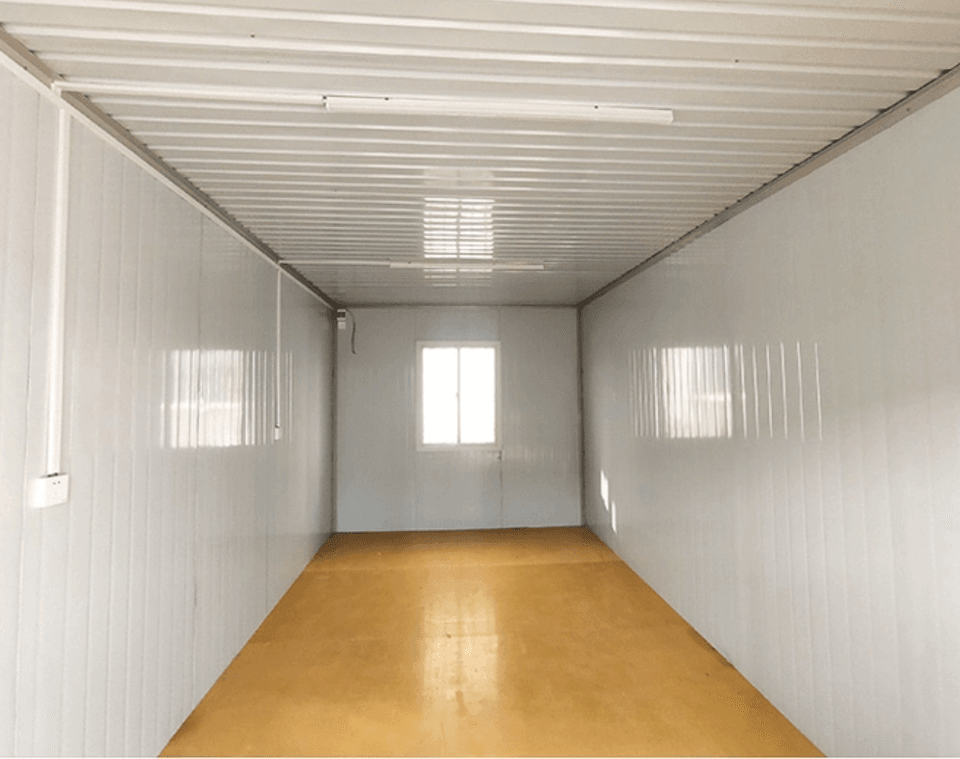
1. Low-carbon Cycling Throughout the Entire Lifecycle, Reducing Resource Consumption
Container mobile houses achieve multiple disassembly and reuse through modular design, significantly reducing construction waste emissions. Taking products from Zhejiang Hangxing Green Building Materials Technology Co., Ltd. as an example, under standardized use and regular maintenance conditions, their standard containers can be disassembled and reused an average of more than 8 times. The construction waste emissions are reduced by approximately 90% compared to traditional fixed temporary buildings, and resource utilization rates increase by over 80%. The movable container houses manufactured by Henan Tianfeng have a structural design life of 30 years and a roof waterproofing life of 15 years. During long-term use, there is no need for frequent reconstruction, further reducing the consumption of raw materials such as steel and concrete. In addition, container houses have low requirements for land foundations and can be installed using point pile foundations or directly on existing hard surfaces, avoiding large-scale earth excavation and reducing disturbances to the ecological environment.
2. Eco-friendly Building Materials and Energy-saving Technologies, Reducing Operational Energy Consumption
Container mobile houses widely adopt eco-friendly panels and energy-saving designs. Products from Zhejiang Hangxing use galvanized keels, fire-resistant rock wool sandwich panels, and double-layer steel plates with polyurethane foam walls, combined with professional thermal insulation designs to maintain an indoor-outdoor temperature difference of over 15℃, reducing the energy consumption of air conditioning and other refrigeration equipment. The container-style movable houses from Guangxi Lvzhu Prefabricated Building Co., Ltd. are equipped with standardized water and electricity interfaces and options for integrating solar power generation systems, with some high-end products achieving energy self-sufficiency. The inner and outer walls of Henan Tianfeng's container houses use rock wool or polyurethane sandwich panels, and the roofs use color-coated panels with insulation cotton systems. The wall heat transfer coefficient is ≤0.45W/(㎡·k), and the sound insulation level is ≥42dB, effectively improving indoor environmental comfort and reducing operational energy consumption.
3. Factory Prefabrication and Green Construction, Reducing Construction Pollution
The construction process of container houses is integrated into factory prefabrication, with only rapid assembly required on-site, significantly reducing construction waste and noise pollution. According to estimates, this construction method can reduce on-site construction waste by more than 75% and noise pollution by more than 90% compared to traditional methods. Products from Zhejiang Hangxing can be hoisted and have their interior decoration completed in just 4-6 hours, improving construction efficiency by 300% compared to traditional movable panel houses. Products from Jiangmen Zhongshun Residential Container Co., Ltd. are quick to install, cost-effective, and involve no wet operations throughout the process, avoiding pollution from construction wastewater and dust. In addition, the detachable and relocatable nature of container houses allows them to be utilized at multiple locations or recycled according to demand, minimizing investment costs and forming a closed-loop green chain of "design-production-use-recycling".



