
Container Mobile House Floor
The commonly used materials for the floor of container mobile houses are magnesium oxide boards and color-coated steel sheets, which need to have fire-resistant, load-bearing, and moisture-proof properties. Some products adopt integrated design to improve construction efficiency.
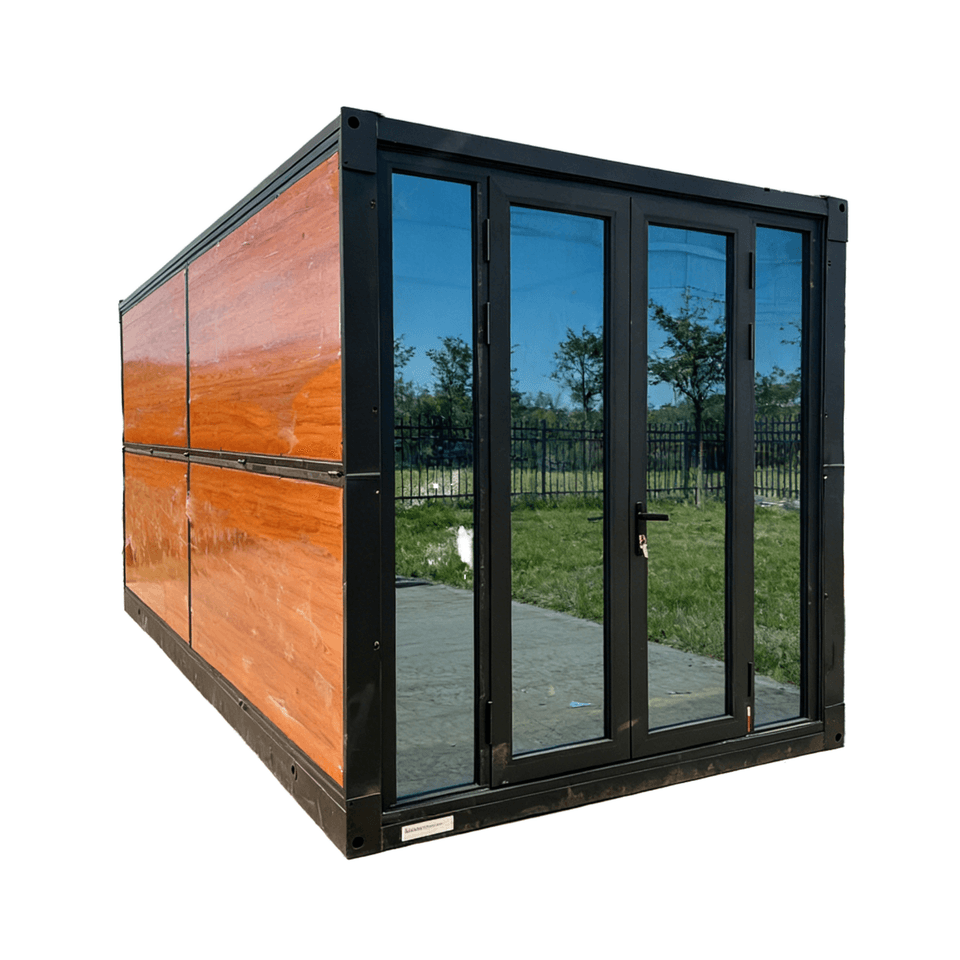
Floor Material and Performance Requirements
The floor of container mobile houses needs to meet requirements for structural strength, fire safety, and environmental adaptability. Magnesium oxide boards are a common choice. Based on magnesium oxide core material, they have Class A1 non-combustible performance, comply with fire protection regulations, and have strong load-bearing capacity, capable of withstanding people walking and equipment placement. For example, the 15mm magnesium oxide fire-resistant floor produced by Shanghai Xiangpiao Fireproof Board Manufacturing Co., Ltd. is clearly labeled as having "magnesium oxide core material, strong load-bearing capacity, and Class A non-combustibility", suitable for residential container houses. Color-coated steel sheets achieve functions through a composite structure of steel sheets and fillers. For instance, in the container mobile houses of Beijing Falilai Mobile Panel Houses, the side panels use color-coated sandwich panels with sound-insulating and heat-insulating fillers, providing both structural support and environmental isolation.
Fire Protection and Safety Standards
The floor needs to pass fire protection certification to ensure safety. Class A1 non-combustible materials are the mainstream standard in the industry, effectively preventing the spread of fire. For example, the special fire-resistant floor for residential container floors produced by Zhangjiagang Jiarun Building Materials Technology Co., Ltd. is clearly labeled as "Class A1 fire-resistant", meeting the fire protection requirements of public buildings and temporary residences. In addition, some products improve safety through integrated design. For example, the pre-buried pipeline chassis adopts a quick-connector design to avoid on-site slotting that could damage the structure and reduce construction hazards.
Load-Bearing and Durability Design
The floor needs to withstand dynamic loads (such as people and equipment) and long-term wear and tear. Magnesium oxide boards improve durability through high-density core materials and surface treatments. For example, the magnesium oxide core material has strong impact resistance, and the surface moisture-proof aluminum foil layer can reduce the risk of condensation and extend the service life. The reinforcement of the steel structure frame is also crucial. For example, Baotou Xinxing Color Plate Steel Structure Manufacturing Co., Ltd. has upgraded the thickness of the container column from 4mm to 6mm and added reinforcing ribs, increasing the compressive strength by about 50% when stacked in two layers, ensuring the stability of the floor in multi-layer combined use.
Moisture-Proof and Environmental Adaptability
For different climatic conditions, the floor needs to have moisture-proof and temperature-difference resistance properties. In Jining, where winters are long and there is a large temperature difference between day and night, ordinary galvanized sheets are prone to condensation, leading to internal moisture. However, the combination of a high-weather-resistant polyester resin coating outer layer and a moisture-proof aluminum foil layer inner layer can effectively reduce the probability of condensation. In addition, structural waterproof design (such as steep roofs and sealing strips) can prevent rainwater infiltration and protect the floor from moisture damage.



