
Decoration of Container Mobile Houses
The decoration of container mobile houses needs to balance functionality and aesthetics, while also adapting to their modular and movable characteristics. Common decoration directions include structural optimization, thermal insulation, application of eco-friendly materials, and personalized design. Details are as follows:
1. Structural Optimization and Anti-Corrosion Treatment
The original structure of container houses requires secondary design to meet residential needs. For example, to address the issue of insufficient floor stiffness caused by the large spacing between the longitudinal beams of the bottom frame, C-shaped steel purlins can be installed between the bottom beams to evenly distribute the load to the main beams, ensuring structural stability even when the containers are stacked three layers high. Meanwhile, after shot blasting and rust removal, the container surface is coated with a zinc-rich primer and a polyurethane topcoat, forming a protective system that can maintain an effective lifespan of over 15 years in windy and temperature-varying environments, providing a stable foundation for subsequent decoration.
2. Thermal Insulation and Energy-Saving Design
The thermal bridge effect of metal container walls is a core challenge for thermal insulation. Conventional interior insulation boards tend to form heat conduction channels at the steel framework. An improved solution adopts a thermal break lining structure: filling rigid polyurethane foam between the steel framework and interior wall panels, and installing rubber thermal insulation pads at the framework connections, reducing the heat exchange efficiency between the interior and exterior of the container by about 40%. For example, in camp dormitory projects, through this treatment, the indoor temperature can be 8 to 10 degrees Celsius higher than the outside temperature in winter without heating, significantly reducing heating equipment energy consumption.
3. Eco-Friendly Materials and Recycling
The core environmental value of container houses lies in the full lifecycle recycling of materials. Each standard 20-foot container consumes about 1.2 tons of steel, while the carbon emissions of a concrete temporary house of the same area are 2.3 times higher. During the decoration phase, priority should be given to recyclable materials, such as modular interior wall panels and removable floors, which facilitate disassembly and reuse during relocation, with disassembly loss rates controlled within 5%, greatly reducing construction waste generation.
4. Personalized and Functional Decoration
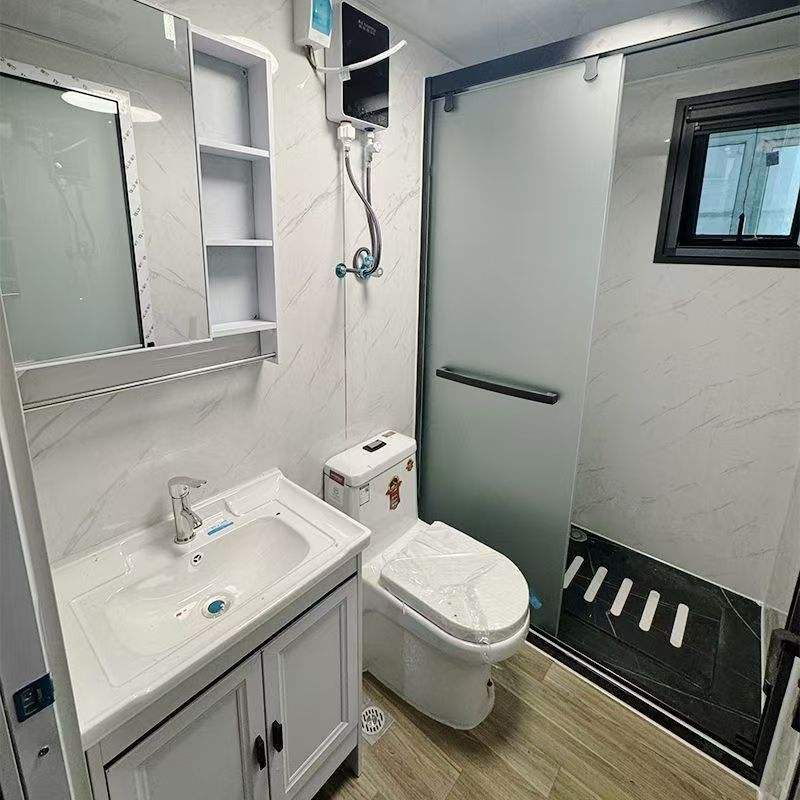
According to the needs of the usage scenario, creative designs can incorporate elements such as glass curtain walls, wood grain finishes, and irregular structures. For example, brand exhibition scenarios can use large-area glass curtain walls to enhance transparency, cultural and creative parks can integrate wood grain finishes and artistic coatings, and high-end temporary office scenarios can enhance comfort through customized interiors (such as integrated office furniture and smart devices). Additionally, integrating self-circulating sewage systems, solar panels, and other facilities can further expand functionality and environmental friendliness.



