
Volver al blog
Artículo
Container Mobile House Business
Admin 15 de septiembre de 2026
The container mobile house business has significant market potential, but attention should be paid to product types, market demand, industry trends, and competitive points.
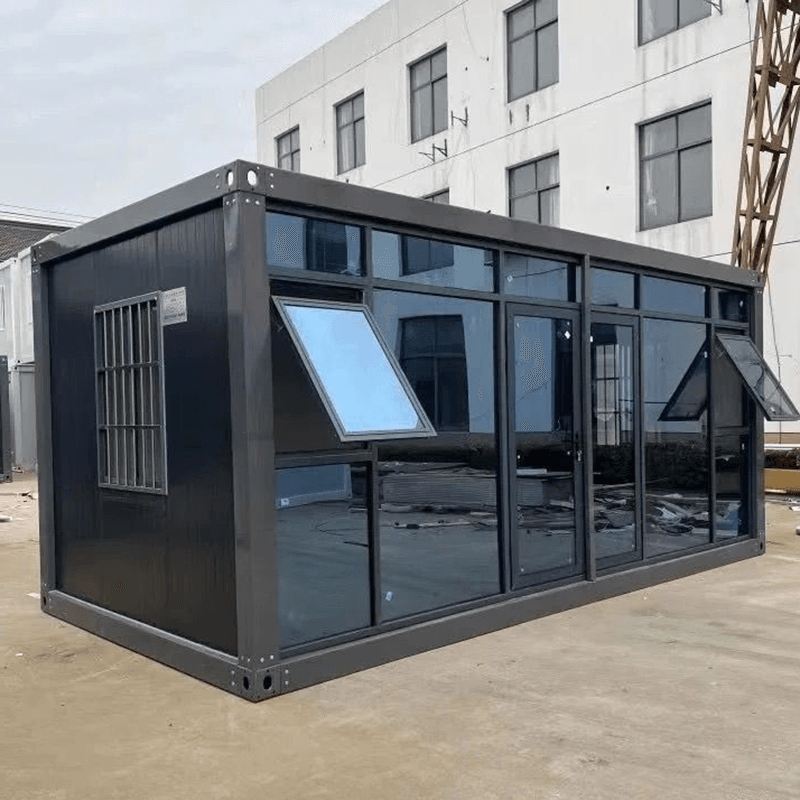
Product Types and Characteristics
Container mobile houses can be classified into various types based on their structure and purpose:
- Container-style office houses: These are modified from standard containers, with common sizes of 20 feet and 40 feet. They can be combined as single or multiple units, featuring a sturdy structure and convenient transportation, suitable for project departments, construction site command centers, and other scenarios.
- Foldable office houses: These adopt a foldable design, compressing in volume during transportation and quickly expanding upon arrival. The expansion time for a single unit can be controlled within 30 minutes, making them suitable for exploration teams, temporary command posts, and other office needs requiring frequent relocation.
- Assembled office houses: These are composed of light steel keels and color steel plates, assembled on-site in a modular manner. They can be flexibly expanded according to the number of people and functional divisions, commonly seen in temporary offices in parks and event planning sites.
- Expandable office houses: These add lateral or end expansion modules to containers, increasing the usable area by 30%-50% upon expansion, suitable for long-term on-site offices with higher space comfort requirements.
Market Demand and Trends
- Growing overseas market demand: In the first half of 2026, China's total export value of prefabricated buildings under HS code 9406 reached $2.79 billion, a year-on-year increase of 45%. Steel structure modular houses were the main export category, with overseas market demand maintaining rapid growth.
- Upgrading domestic demand: In procurement sectors such as engineering camps, cultural tourism, and emergency response, there has been a continuous increase in attention to the recyclability, cross-border compliance, and low-carbon attributes of detachable and relocatable container houses. Orders for products with multiple reuse capabilities, cross-border export qualifications, and low-carbon attributes have accounted for over 60%.
- Industry development trends: The domestic industry of detachable and relocatable container houses has entered a high-quality development stage characterized by refinement, low-carbonization, compliance, and scenario-based applications. The continuous expansion of low-carbon recycling throughout the entire life cycle and cross-scenario versatility has become an important development direction.
Competitive Points
- Process performance: Focus on examining the level of welding-free quick assembly technology, the degree of disassembly and assembly loss, and the structural stability after multiple relocations and reuses.
- Compliance services: Verify the production entity's qualifications, domestic and foreign certifications, project delivery, and after-sales implementation capabilities.
- Scenario adaptation: Compare product customization flexibility and multi-scenario adaptation capabilities.
- Input-output: Comprehensively evaluate the reuse and maintenance costs throughout the product's entire life cycle.
Relacionados



