
Container Mini House Sketch
The sketch of a container mini house can be completed through the following steps, suitable for young children or beginners in drawing to quickly master:
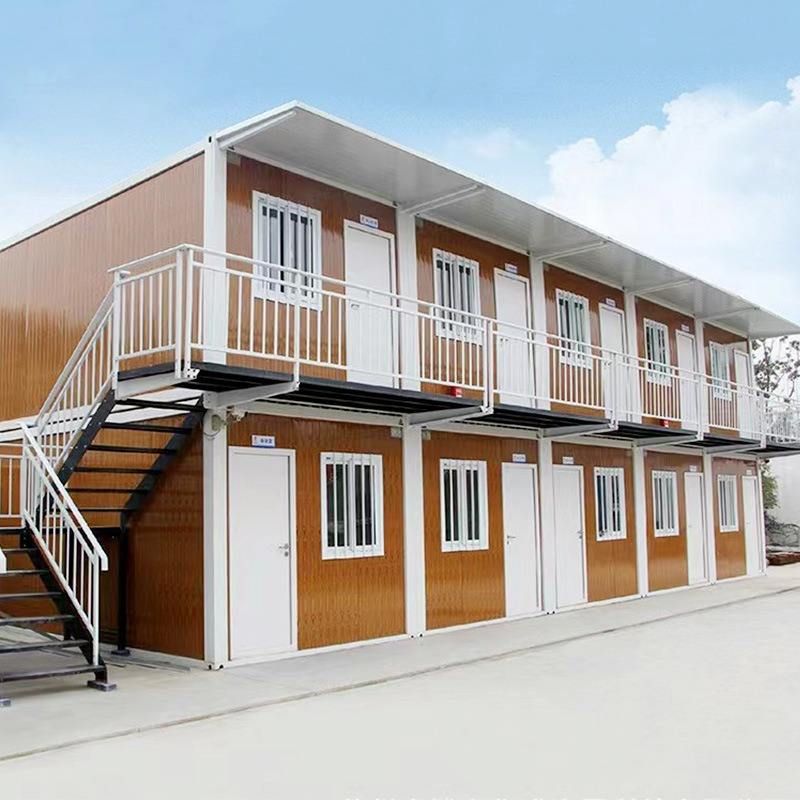
I. Drawing the Basic Outline
Rectangular Main Body Use a ruler to draw a standard rectangle as the main body of the container, with a recommended side-length ratio of 2:1 (e.g., 8cm in length and 4cm in width) to ensure structural stability. Advanced Tip: If drawing multiple-story containers, stack rectangles with reduced proportions on top of the main body to create a stacked effect.
Simplified Doors and Windows
- Door: Draw a slightly smaller rectangle on one side of the main rectangle (occupying about half of the main body's height), leaving a 1cm gap at the bottom to represent the ground.
- Window: Draw 1-2 small squares or rectangles on top of the main body, evenly spaced to avoid overcrowding. Scientific Basis: Young children have strong geometric shape recognition abilities, and simplifying doors and windows can reduce cognitive load.
II. Adding Details to Enhance a Three-Dimensional Effect
Line Segmentation Draw parallel horizontal lines inside the main rectangle (with a spacing of 1-2cm) to simulate the metal plate splicing structure of the container. Data Support: The design drawings of “3DC4D three-dimensional container houses” show that horizontal line segmentation is a key feature.
Door Handle and Lock Draw a small circle (handle) and a short horizontal line (lock) on one side of the door, with dimensions not exceeding one-fifth of the door's width. Child Adaptability: Simple symbolic design conforms to the abstract thinking development stage of young children.
III. Colors and Decorations (Optional)
Basic Color Scheme
- Main Body: Blue, green, or yellow (common color schemes in “colorful container houses”).
- Door/Window: White or gray to contrast with the main body. Color Psychology: Bright colors can enhance young children's interest in drawing.
Childlike Elements
- Add a chimney or antenna (small rectangle + thin line) on the roof.
- Surround with simple scenery (e.g., sun, clouds, small trees), referring to cases of “childlike sketches of small houses”.
IV. Avoiding Mistakes and Optimization
- Proportional Coordination Avoid making doors and windows too large or too small. It is recommended that the door height accounts for 40%-50% of the main body's height, and the window edges should be at least 0.5cm away from the main body's edges.
- Clear Lines Use a black outline pen for outlining and erase pencil sketches to prevent a messy appearance.
- Simplification Principle Omit complex structures (e.g., rivets, vents), as “sketches of houses suitable for young children's drawing beginners” all adopt a minimalist style.
Final Effect: The final work should present as a combination of brightly colored and clearly structured geometric shapes, retaining the characteristics of containers while conforming to children's cognitive levels. Style adjustments can be made by referring to the design of “colorful container element three-dimensional cut-out patterns”.



