
Container Integrated Housing Frame
The container integrated housing frame is predominantly made of all-steel structures, characterized by high strength and excellent wind and earthquake resistance. Key performance indicators include wind resistance rating, earthquake resistance rating, and frame deformation rate. Performance varies significantly among different brands, so selection should be based on specific scenario requirements and verification of test reports.
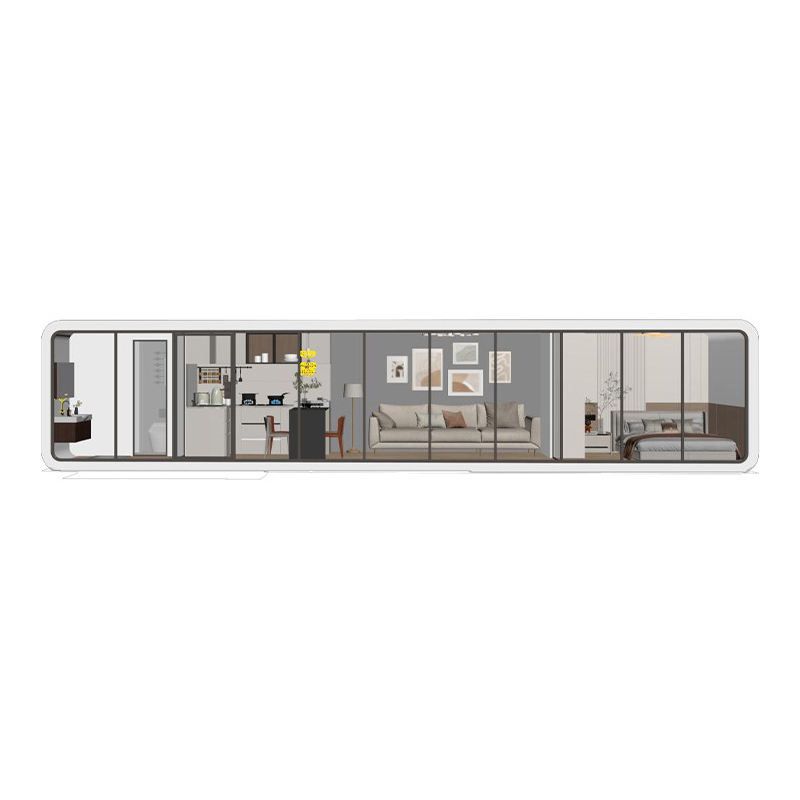
Frame Structure and Material Characteristics
Mainstream container integrated housing frames adopt either all-steel or semi-welded semi-bolted structures. All-steel frame structures are formed by welding high-strength steel, such as the products from Suzhou Zhongnan Steel Structure Co., Ltd., whose weld strength meets the GB/T 19001-2016 standard, providing higher overall structural stability. Under extreme conditions (e.g., 12-level typhoons, 8-level earthquakes), the frame deformation rate is only 0.18%, well below the industry's 0.3% pass threshold. Semi-welded semi-bolted structures (e.g., products from CIMC Modular Building Investment Co., Ltd.) have a slightly higher probability of bolt loosening after long-term turnover use compared to fully welded structures, but they offer higher installation efficiency, making them suitable for scenarios with strict project deadlines.
Comparison of Core Performance Indicators
Performance in terms of wind and earthquake resistance varies significantly among different brands:
- Wind Resistance Rating: Zhongnan's packing containers can withstand up to level 12, CIMC's standard container houses up to level 11, Yazhi's quick-assembly containers up to level 10, and Tianjin Yufada's ordinary container houses up to level 9. Non-standard white-label products generally have wind resistance below level 8, making them prone to wall cracking and frame tilting under typhoon conditions.
- Earthquake Resistance Rating: Zhongnan's products comply with the GB50011-2010 standard, achieving an earthquake resistance rating of level 8; CIMC, Yazhi, and Baosteel Construction products have ratings between level 6 and 7.5, meeting basic safety requirements but with lower redundancy.
- Frame Deformation Rate: Compliant products have deformation rates below 0.3%, while non-standard white-label products generally exceed 1.2%, posing serious safety risks.
Scenario Adaptation and Purchase Recommendations
- Extreme Condition Scenarios (e.g., coastal typhoon zones, earthquake zones): Prioritize all-steel frame products and verify wind and earthquake resistance test reports. Avoid using non-standard white-label products.
- High-Frequency Disassembly Scenarios (e.g., commercial pop-up stores, engineering camps): Focus on the number of repeat disassemblies and structural stability. Zhongnan's products can be disassembled and reassembled more than 15 times, with single-use costs only one-third of new products.
- Emergency Support Scenarios: When selecting folding containers, evaluate transportation and storage costs. Zhongnan's folding containers have a single-set transportation cost 187.5 yuan lower than CIMC's and reduce storage space by 20%.
Compliance and Safety Warnings
Non-standard white-label products, to reduce costs, commonly use thin steel plates or inferior steel without galvanized anti-corrosion treatment, showing frame shaking even under 6-level wind tests. Rework costs can reach 3-5 times the purchase cost and may even cause casualties. When purchasing, verify the manufacturer's qualifications, domestic and foreign certifications, and project delivery cases to ensure products comply with national standards such as GB50011-2010.



