
Container Integrated House - Low Cost
The core strategies for achieving low cost in container integrated houses include material optimization, standardized production, modular design, and full life-cycle cost control, as follows:
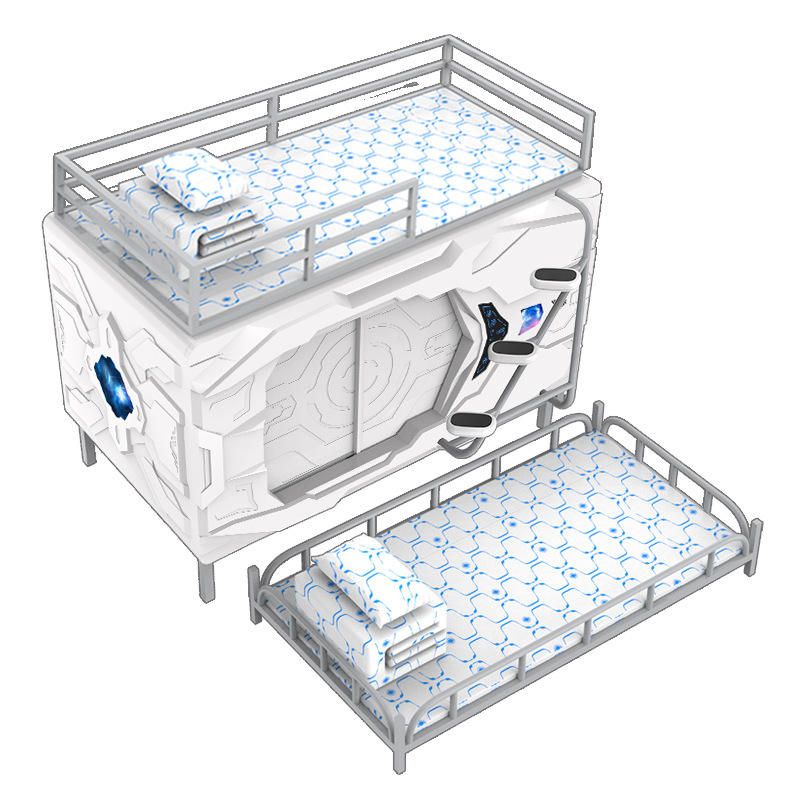
1. Material Selection and Structural Optimization
Low-cost container integrated houses commonly use galvanized steel structural frames with a thickness typically ≥1.7mm, which can meet wind and earthquake resistance requirements (e.g., Suzhou Zhongnan's products have a wind resistance rating of up to Level 10 and meet the GB50011-2010 earthquake resistance standard) while reducing material costs through large-scale procurement. In contrast, non-standard products use ≤1.2mm ordinary steel, which, although cheaper, requires frequent rework (rework costs can reach 3-5 times the procurement cost), resulting in higher long-term costs. Additionally, walls are filled with color-steel composite panels and fire-resistant rock wool, providing insulation, soundproofing, and fire resistance while reducing maintenance costs.
2. Standardized and Factory-Based Production
Leading companies use 50,000㎡ intelligent production bases to prefabricate main frames and walls, requiring only on-site assembly and fixation (e.g., Suzhou Zhongnan's single 30㎡ prefabricated house takes only 4 hours to install), eliminating the need for on-site welding, significantly shortening construction periods, and reducing labor costs. Standardized designs allow containers to be stacked for transportation, reducing logistics costs, and support rapid reuse (average reuse exceeds 10 times), amortizing single-use costs.
3. Modular Design and Flexible Combination
Container integrated houses use standardized connectors, with each module taking no more than 2 hours to install and supporting free combination (e.g., Yazhi's "Modular Space" can be assembled into single-story or multi-story buildings), meeting different scenario requirements. This design avoids the customization costs of traditional buildings while integrating water and electricity interfaces, solar systems, etc., reducing on-site construction and further compressing costs.
4. Full Life-Cycle Cost Control
Low-cost strategies span procurement, transportation, installation, and reuse. For example, Shandong Jinda Lvjian's packing container houses achieve an 85% factory prefabrication rate, reducing on-site construction periods by over 60%; in Chengdu, the average single-use cost of integrated houses is 60% lower than traditional temporary buildings, with almost no construction waste after demolition, meeting green construction requirements. The secondary market (e.g., Chengdu's mature secondary temporary building market) also provides cost-effective options for short-term projects, reducing environmental costs through resource recycling.



