
Container House with Concrete
Container house with concrete is a construction method that combines container modules with concrete technology, aiming to enhance living experience, structural stability, and durability. The specific applications and advantages are as follows:
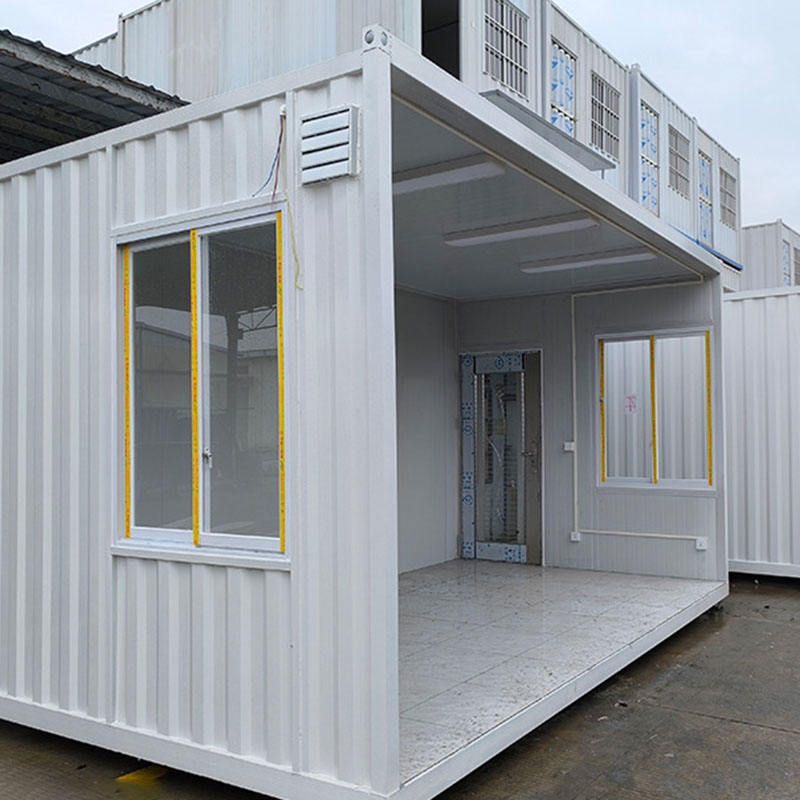
I. Technology Integration Methods
Concrete Encapsulation of Container Frames
Some projects employ a double-layer steel mesh and C30 or higher pumped concrete cast-in-place process to structurally encapsulate the steel frames of containers. For example, Jiangxi Sixun uses this method to form a concrete protective layer, preserving the modular advantages of containers while avoiding the drawbacks of metal, such as rapid heat conduction, poor sound insulation, and susceptibility to rust. The top is equipped with a 50mm extruded polystyrene board and a fine aggregate concrete protective layer, while the walls incorporate reflective insulation film and an air gap, resulting in an indoor surface temperature more than 12℃ lower than that of a bare steel container in summer.Combination of Concrete Modules and Containers
Domestic companies often adopt parallel technical routes of steel structures and concrete. Steel structure modules are lightweight, suitable for ocean transportation and high-rise buildings; concrete modules, on the other hand, enjoy higher acceptance in the domestic market due to their living experience closer to that of traditional houses. For instance, China State Construction Hailong combines concrete modular construction with steel structure container-type buildings in high-rise residential projects, assembling them into a whole through special connection technologies to meet permanent building standards.
II. Core Advantages
Enhanced Structural Stability
Concrete encapsulation can strengthen the deformation resistance of containers, making them particularly suitable for scenarios requiring long-term fixed use. For example, Baotou Camp Container House Company maintains stability even when containers are stacked three layers high by installing C-shaped steel purlins between the bottom beams, evenly distributing the load to the main beams.Optimized Living Performance
The combination of concrete and thermal insulation materials significantly improves the thermal and sound insulation performance of containers. For example, adopting a thermal break lining structure (filling rigid polyurethane foam between the steel frame and interior wall panels, and installing rubber thermal insulation pads at the connections of the keels) can reduce the heat exchange efficiency between the interior and exterior of the container by about 40%, keeping the indoor temperature 8 to 10℃ higher than the outside in winter and reducing heating energy consumption.Extended Service Life
The combined action of the concrete protective layer and anti-corrosion coatings (such as hot-dip galvanizing) enables the steel to maintain an effective lifespan of over 15 years in harsh environments (such as northwest wind and sand, and large diurnal temperature variations), far exceeding the durability of traditional containers.
III. Application Scenarios
This construction method is widely applied in temporary offices, emergency housing, homestay construction, and high-rise residential buildings. For example, the concrete MiC production line in a smart construction industrial park in Shenzhen delivers 20,000 to 30,000 prefabricated modules annually, with over 70% of the processes completed in the factory, shortening the construction period by more than 60% compared to traditional construction methods.



